Congress did something extraordinary this week: By a unanimous voice vote, the House passed a bill that would ease government barriers to unlock geothermal energy. The package was championed by an eclectic mix of lawmakers, from Rep. Bruce Westerman (R-Arkansas), a staunch ally of the oil and gas industry, to Rep. Alexandria Ocasio-Cortez (D-New York).
The achievement reflects how geothermal has managed to escape the nasty politics that has bogged down other industries. If only lawmakers would apply the same desire to cut red tape for every other form of energy development.
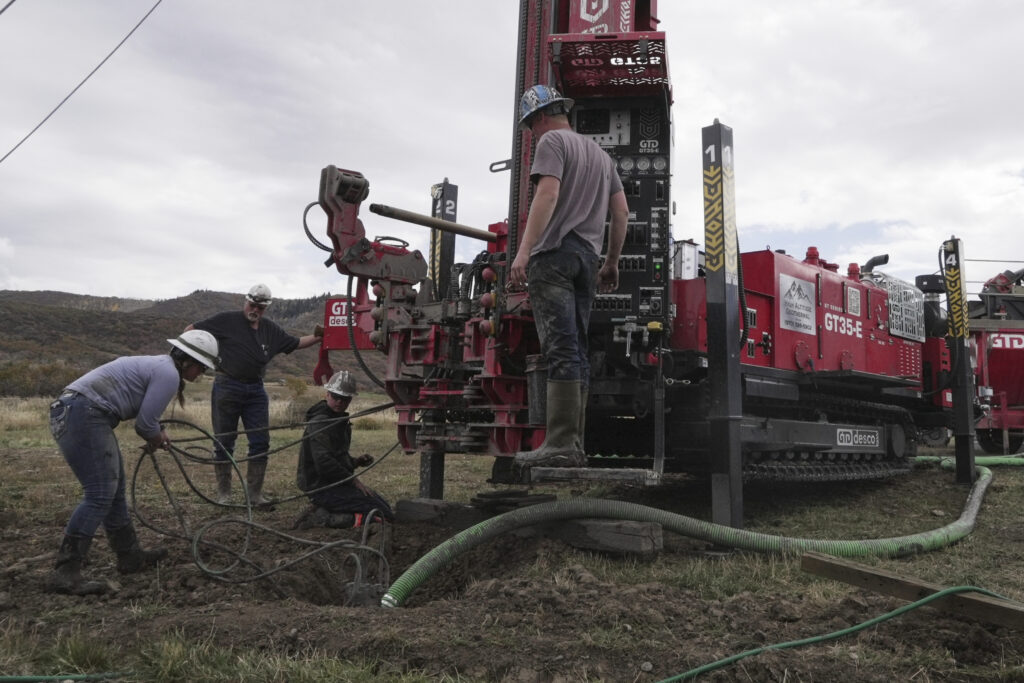
Geothermal technology works by pumping fluid deep into the ground, where it is heated by tthermal energy in the Earth’s crust. It is then pumped back up to the surface and converted into electricity. The process is carbon-free, can operate without interruption and requires far less land than solar and wind energy.
The downside is that geothermal is expensive to develop, and large-scale electricity generation is limited by geography. Currently, it makes up less than 1 percent of total U.S. energy production. Still, the Energy Department estimates that, as the technology improves, it could generate as much as 8.5 percent of all U.S. electricity by 2050.
That might not seem like much, but given the crushing demand for energy, every little bit counts.
A big reason geothermal projects are so costly is because of how long they take to complete — often between five and 10 years, due to extensive permitting processes and environmental reviews. Easing federal requirements is especially important because more than 90 percent of geothermal resources lie beneath public lands.
The legislation that the House passed includes several provisions that would help speed things up. It would grant geothermal developers the same streamlined environmental permitting process that oil and gas companies can already access on certain public lands. It would also require the Interior Department to process all drilling applications for geothermal leases within 60 days of completing reviews and appoint an ombudsman at the Bureau of Land Management who can tackle the agency’s confusing permitting rules.
Those are all solid ideas that should be able to pass the Senate, especially because the Trump administration also supports geothermal energy. Still, it’s a shame that Congress has failed to reach consensus on broader, tech-neutral permitting reforms for energy projects. Last year, a bipartisan effort stalled over the Trump administration’s efforts to stymie wind projects.
Americans are concerned about rising electricity costs, which is a big explanation for why 7 in 10 now oppose the construction of data centers powering the artificial intelligence boom. The ultimate solution is to make energy as abundant as possible, regardless of where it comes from.
The post The energy permitting bill that won unanimous support in Congress appeared first on Washington Post.