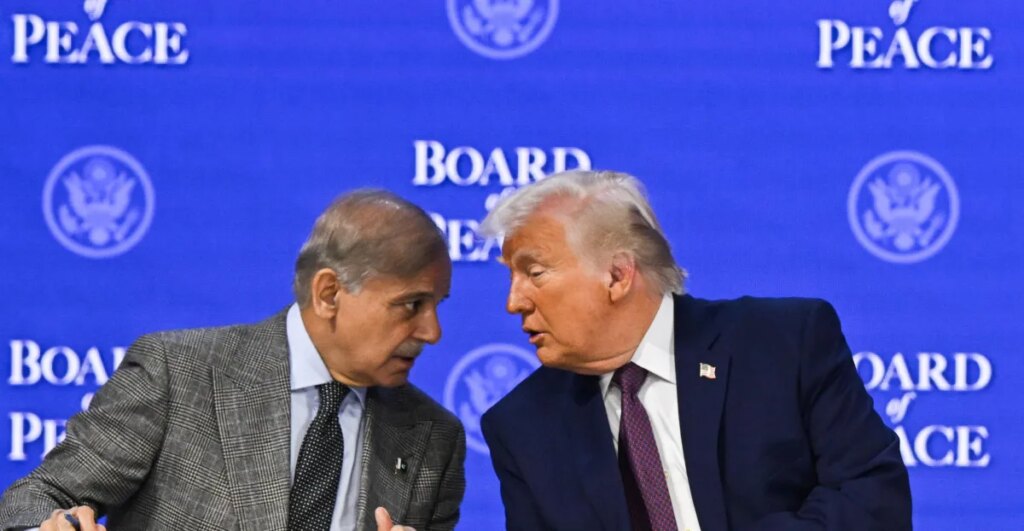
As the world waits to see if President Donald Trump will give his final approval to a deal to reopen the Strait of Hormuz and, perhaps, finally bring the 2026 US-Iran conflict to a close, it’s already clear that one of the more surprising developments of the conflict has been the prominent role of Pakistan as a mediator.
It was Pakistan’s military leader, Field Marshal Asim Munir, who served as the key go-between in the talks that led to the initial two-week US-Iran ceasefire in early April, and Prime Minister Shehbaz Sharif who announced that it had gone into effect. Several days later, Islamabad hosted the highest level talks between the US and Iranian governments since 1979, including US Vice President JD Vance. On April 21, Trump announced the ceasefire had been extended, saying it was at Pakistan’s request. Munir has made two personal visits to Iran as part of his mediation efforts, the most recent on May 21.
Whereas the “P5+1” countries of the UN Security Council — the US, China, the UK, France, and Russia, plus Germany — helped bring about the 2015 Iran nuclear deal, and Oman hosted the US-Iran talks in the lead-up to the war, Pakistan has been the intermediary and negotiating venue of choice since the conflict began. The world’s only predominantly Muslim nuclear power is a rare country with credibility on both sides of this war.
Pakistan’s prominent diplomatic role in the conflict is the latest sign of the unexpectedly close relations between the country’s government and the second Trump administration. “Thank you to Pakistan and its great prime minister and field marshal, two fantastic people!” Trump wrote in a characteristic Truth Social post in April. He has lavished particular praise on Munir, whom he has called an“exceptional man” and “my favorite field marshal.”
Pakistan’s new role as an indispensable US partner is partly due to some skilled Trumpian diplomacy by its government and partly due to just how much this administration’s global priorities have changed from the days when China and jihadist terrorism were the top of the agenda.
How Pakistan went from pariah to partner in Washington
All of this would have been difficult to imagine during Trump’s first term, when Pakistan was often treated as a pariah.
On New Year’s Day in 2018, Trump suspended most security assistance to Pakistan, tweeting, “The United States has foolishly given Pakistan more than 33 billion dollars in aid over the last 15 years and they have given us nothing but lies & deceit, thinking of our leaders as fools.”
Trump would go on to cancel hundreds of millions of dollars in aid to Pakistan, which had been a close US counterterrorism partner even amid widespread allegations that it had provided safe harbor to the Taliban militants fighting US forces in Afghanistan and maintained relations with other anti-US militants. Pakistan responded by halting intelligence-sharing with the US amid widespread anti-American protests.
At the same time, Trump cultivated a close relationship with Pakistan’s arch-rival India and its prime minister, Narendra Modi. Modi’s brand of majoritarian populist politics made him a natural Trump ally, and India’s position as a superpower counterweight to China made it a natural security partner for the US. The pro-Indian tilt in US foreign policy continued into the Biden administration, and there was every expectation it would carry through when Trump returned in 2025.
Flattery and crypto: How Munir won over Trump
Pakistan’s turnaround with the new Trump administration began in early March 2025, when the country arrested an ISIS-K operative who was allegedly a key planner of the Kabul airport suicide bombing that killed 13 US troops during the withdrawal from Afghanistan, and extradited him to the United States, earning public gratitude from Trump.
Then came the brief May 2025 war between India and Pakistan. Pakistan’s government publicly praised Trump for his “pivotal leadership” in the diplomacy that ended the conflict and nominated him for a Nobel Peace Prize. The flattery worked: Trump brought up Pakistan’s nomination during a phone call with Modi and was reportedly irritated that the Indian leader did not follow suit and, by contrast, seemed to go out of his way to downplay America’s role.
Pakistan has also seemed particularly well-attuned to the personalist style of diplomacy in the Trump era, where the line between business and politics can be extremely blurry. Pakistan’s finance minister has signed a deal with World Liberty Financial, the cryptocurrency company co-founded by Trump’s sons and the sons of his diplomatic envoy, Steve Witkoff.
Last year, Sharif also signed several memoranda on deals to deliver critical minerals and rare earth elements from Pakistan to the US. Pakistani officials have taken to referring to counterterrorism, critical minerals, and crypto as the “3 Cs” underlying their relationship with the Trump administration.
The current relationship has also doubtless been helped by the ascendance of Munir, a man who Trump might describe as a military strongman out of “central casting.” Pakistan would certainly not be playing the same role today if Imran Khan, the former cricket star turned anti-American populist prime minister — who took power halfway through Trump’s first term — were still in office. Khan was removed in a vote of no confidence in 2022, which Khan blamed on the military establishment, and has been detained on corruption charges since 2023. With his removal, the military moved quickly to consolidate power.
Pakistan’s military has always played a significant and complex role in Pakistan politics, exercising a significant amount of power behind the scenes; the country has suffered several military coups. Since Munir, formerly chief of the country’s powerful military intelligence agency, was appointed army chief by Sharif in 2022, the nation has veered closer to an outright military dictatorship: A constitutional amendment passed in 2025 gave Munir full control over all branches of the military including the nuclear forces, for the duration of a term that could last until 2030, and immunity from prosecution.
Trump has helped cement Munir’s status by hosting the field marshal for a working lunch at the White House — the first time a Pakistani military leader rather than its elected prime minister has been hosted for such an event.
How Pakistan is navigating America’s new priorities
If things are different now for the US and Pakistan, it’s partly just because the world is different. The US military’s withdrawal from Afghanistan in 2021 removed one of the major sources of tension in the US-Pakistan relationship: the Pakistani government’s alleged double game with the Taliban. In fact, Pakistan and the now Taliban-controlled Afghanistan have been fighting a brutal border conflict for months.
It also helps that the Trump administration is generally less focused on Islamist terrorism this time around. It has pivoted away from “great power competition” with China, decreasing the importance of India’s role. US-India relations are generally frostier over a variety of issues ranging from India’s agricultural protectionism, to immigration in the US, to India’s economic relationship with Russia.
“The second Trump administration, in its foreign policy, is aggressively transactional; it’s not changed by strategic considerations, even compared to how it was during its first term,” said Michael Kugelman, senior fellow for South Asia at the Atlantic Council. “So in that regard, [the Trump administration] would not have any concerns about embracing Pakistan, even though Islamabad has a very close alliance with Beijing.”
Pakistan has been accumulating an unlikely set of friends and partners in recent years. Even amid its rapprochement with the US, Pakistan has deepened its military and economic relationship with China. (Xi Jinping hailed his country’s “unbreakable” friendship with Pakistan during a visit by Sharif last month.)
In 2025, Pakistan signed a nuclear defense pact with Saudi Arabia. This is particularly notable given Pakistan’s possession of nuclear weapons: Some analysts saw this as effectively extending Pakistan’s nuclear umbrella to its allies in the Persian Gulf, though others disputed this interpretation.
Pakistan’s relations with Saudi Arabia’s rival, Iran, are complex, to put it mildly. It was only in 2024 that the two countries were lobbing missiles at each other’s territory, but they quickly deescalated the tensions;they have since cooperated in combating separatist militants and smugglers along their shared border. Munir, in particular, is believed to be deeply familiar with Iran’s military establishment from his days as Pakistan’s spy chief.
“They have proven remarkably adept and agile in ensuring that they’re able to keep all of these balls in the air,” said Elizabeth Threlkeld, director of the South Asia program at the Stimson Center, referring to Pakistan’s global web of alliances. “But they are also vulnerable to a number of different shocks from different sources, given their positioning right now.”
Pakistan’s involvement in US-Iran diplomacy is not just an effort to gain favor with Trump. Islamabad genuinely needs the war to be over as quickly as possible. Pakistan is one of the countries most exposed to the economic impact of the war: It normally imports almost two-thirds of its natural gas and 30 to 40 percent of its total imports via the Strait of Hormuz. Food and fuel prices are surging in the country. Add to that the strong domestic opposition to the US-led war among Pakistan’s population, particularly its large Shiite minority. Pakistan’s defense pact with Saudi Arabia also raises the risk of it being drawn into a conflict in the Gulf.
If the war has highlighted Pakistan’s diplomatic savvy, it has also at times exposed its limits. For all its efforts, Pakistan’s mediation has been unable to turn April’s ceasefire into a permanent end to the conflict that reopens the Strait. At times, Pakistan has appeared to be misrepresenting the sides’ actual positions in hopes of pushing a deal through. Trump’s recent demand that a number of Muslim countries including Pakistan join the Abraham Accords as part of a final Iran deal did not go over well in Pakistan, which has refused to recognize Israel since its founding.
The longer the war goes on, the more Pakistan’s involvement will look less like a diplomatic masterstroke and more like a credibility-taxing quagmire. As India’s experience has illustrated, foreign governments are often lavished with praise by Trump only so long as they’re useful. If Pakistan can’t deliver the ceasefire deal Trump is looking for, or if his priorities simply shift again, it may once again find itself on the receiving end of Trump’s attacks.
The post How Pakistan became Trump’s most surprising ally appeared first on Vox.