Poland is among America’s most loyal allies, a bulwark of European security, and the rare NATO nation that has escaped the wrath of President Donald Trump. But the last few weeks have left many Poles with a case of Washington-induced whiplash.
In mid-May, Defense Secretary Pete Hegseth canceled the deployment of more than 4,000 soldiers to Poland. Some of those troops from the 2nd Armored Brigade Combat Team in Fort Hood, Texas, had already arrived.
Pressed by the House Armed Services Committee for an explanation, Army acting Chief of Staff Chris LaNeve said it “made the most sense for that brigade to not do its deployment in theater.” Committee member Don Bacon, a Nebraska Republican, called the cancellation “reprehensible” and said Polish officials had called him seeking clarification.
“They did not know, they were blindsided,” Bacon said. “These are some of our best allies, and they had no idea. They still don’t know what the plan is.”
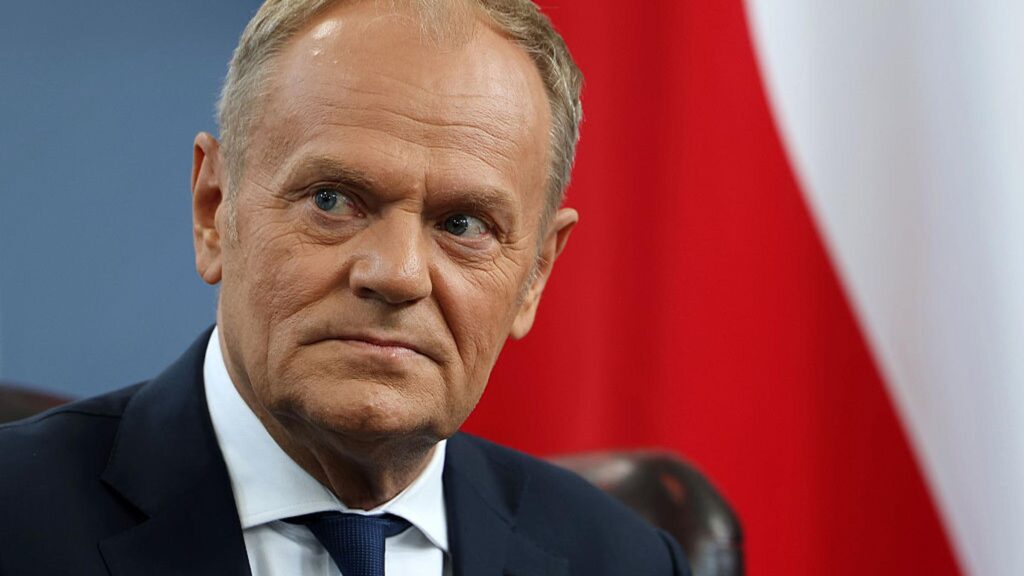
I was in Warsaw when news of the cancellation broke, and “blindsided” did indeed seem to be the right word. Still, Polish government officials were careful not to publicly rebuke the Trump Administration; Prime Minister Donald Tusk responded by stressing Poland’s longstanding loyalty to the U.S. “You have a friend here … you have the most loyal ally,” Tusk said. “America won’t find a better ally anywhere.”
In the days that followed, confusion reigned. A Pentagon spokesman insisted the cancellation “was not an unexpected, last-minute decision.” Then, Vice President JD Vance said the deployment had merely been paused—“just a standard delay”—and not scrapped entirely. Later, in a reversal that appeared to be news to Pentagon officials, Trump posted to Truth Social that he had ordered an additional 5,000 forces to deploy to Poland, “based on the successful Election of the now President of Poland, Karol Nawrocki.” It wasn’t clear where those troops were coming from or when that deployment would happen. Trump’s timing seemed odd. Nawrocki was elected last June.
Poles were left “dazed, confused and disappointed” by the episode, Ray Wojcik, a former U.S. Army attache in Warsaw who still lives in Poland, told me. “It’s a huge, chaotic communications issue, and it’s a very substantial blow to the Poles.”
Meanwhile, Jacek Siewiera, a former head of Poland’s National Security Bureau, said the confusion had created “unnecessary strategic ambiguity” because “parts of the Western security community are shooting themselves in the foot through poor strategic communication.”
“Contradictory political messaging,” Siewiera explained, “weakens deterrence and creates the perception of instability precisely when Russia is actively testing Alliance cohesion.”
A second bombshell
That test is playing out on multiple fronts.
Less than a week before the deployment/non-deployment story broke, Warsaw was jolted by another headline from Washington: the former Justice Minister Zbigniew Ziobro, who is wanted in Poland on 26 criminal charges, including the misuse of funds meant to help crime victims, had landed in the U.S. Reuters reported that the State Department had expedited his visa.
Ziobro is a member of Poland’s conservative Law and Justice party, which President Trump has publicly supported, and his welcome in the U.S. put some Polish leaders in between a rock (domestic law) and a hard place (their American allies).
Prosecutors in Poland said they were investigating whether Ziobro had been aided in “fleeing and evading criminal liability.”
“We don’t want this issue to become political,” Polish Foreign Ministry spokesperson Maciej Wewiór told the Associated Press. “Our relationship with the U.S. goes much deeper than what happens with Ziobro. But we do want our citizen to eventually return to Poland and face justice.”
A difficult history
It all made for a dizzying week in a country that has a long history of snubs from putative allies. France and Great Britain vowed to defend Poland against Nazi Germany—only to sit back as Hitler’s forces trampled Poland in September 1939; that fall, while the Soviet Union touted “collective security” against German aggression, it entered into a secret pact with Hitler to carve up Poland, and then invaded from the east; and at the 1945 Yalta conference, President Franklin Roosevelt and Prime Minister Winston Churchill ceded Poland to Stalin’s sphere of influence.
That history helps explain why, all these years later, Polish officials worry more than most about American commitments. And why they were stung by the events of the last few weeks.
“The Poles have a lot of experience with the rug getting pulled out from under them,” Wojcik said. “Today, the Poles have got their hands full, and the last thing they need is somebody to pull the rug out.”
Poland has its hands full with two ticking time bombs—a growing Russian threat and Trump’s retreat from NATO.
For its part, Poland has stood by its commitments to the alliance. The country now spends 4.8% of GDP on defense—the highest percentage among NATO members, putting it close to the 5% benchmark the Trump Administration has set for the alliance.
Siewiera said Russia’s invasion of Ukraine had “fundamentally transformed Poland’s strategic mindset,” while “turbulence inside the transatlantic relationship” has driven the country to imagine a future without the full-fledged backing of the United States.
What the Poles—and the polls—say
For decades, the Polish public has largely been as pro-U.S. as their leaders. Today, that support is ebbing. Asked in a recent survey whether they considered the U.S. “a reliable ally of Poland,” 53.2% answered “no”, and only 29.9% said “yes.” The rest weren’t sure. Recent developments likely won’t help the trend.
“The Poles certainly have never criticized President Trump, and they do all the things that good allies are supposed to do,” Lt. Gen. Ben Hodges, a former commander of U.S. Army Forces in Europe, told Politico last month. “And yet this happens.”
Gen. Hodges is one of many experts who have argued that the U.S. must honor and tend to its longstanding alliances to maintain its leading role on the global stage.
The Poland problem represents an extreme example of this necessity. Poland is a proud nation with deep ties to the U.S., obvious strategic value, and understandable fears about Russian intentions. It’s also an ally that shouldn’t have to worry about having the proverbial rug pulled out from under it.
The post Why Poland Has Been Left ‘Dazed and Confused’ by the Trump Administration appeared first on TIME.