A Dutch court ruled on Wednesday that Greenpeace International could proceed with its unusual countersuit against the pipeline company Energy Transfer in the Netherlands.
The environmental group is suing under Dutch law, accusing the American company of using a yearslong legal battle in North Dakota as a bullying tactic.
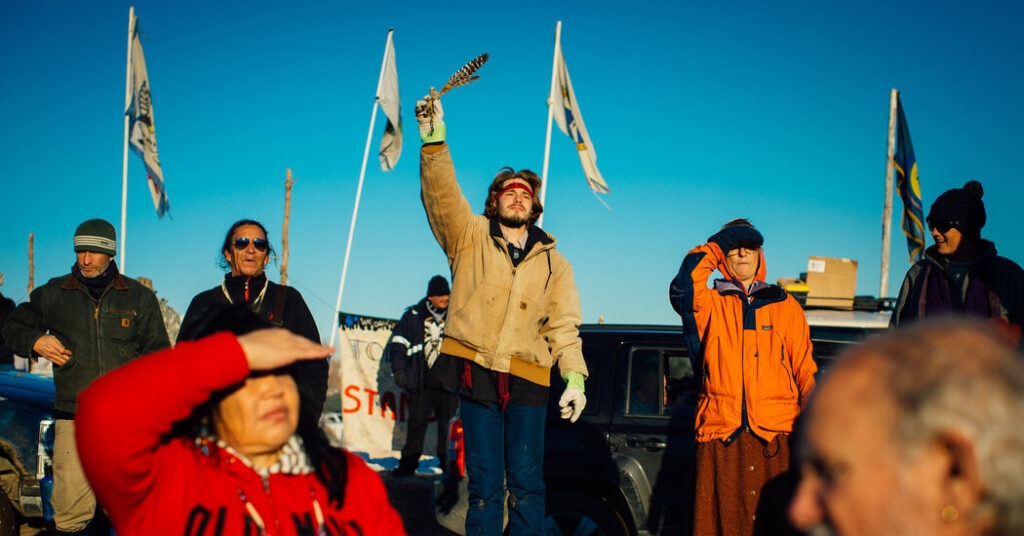
Greenpeace International, which is based in Amsterdam, was one of three Greenpeace entities sued by Energy Transfer in North Dakota in the aftermath of raucous protests against the company’s Dakota Access Pipeline a decade ago. The other two Greenpeace entities are based in the United States.
Energy Transfer first sued for racketeering in United States federal court. That suit was dismissed. The company then sued in North Dakota state court, and last year it won a huge verdict after a three-week trial that now amounts to $345 million.
Greenpeace International says that its only involvement in the protests was signing a letter to financiers about the project. It was found liable for about $64 million for conspiracy, defamation and tortious interference. (The two other Greenpeace groups said they had played a supporting role in peaceful protests. The jury found them liable for a larger portion of claims involving physical actions at the protests.)
Before that case went to trial in North Dakota, though, Greenpeace International said it was filing a countersuit in the Netherlands based on Dutch laws that prohibit what are known as SLAPP cases, or Strategic Lawsuits Against Public Participation. Such laws are intended to protect the news media and activists from powerful opponents who aim to stifle opposition with costly legal battles. Many American states also have laws meant to limit SLAPP cases, but not North Dakota.
Energy Transfer had argued that the Dutch court should toss the suit because it did not have jurisdiction over the matter. The three-judge panel disagreed in Wednesday’s ruling.
The company also asked the Dutch judges to pause the proceedings until the appeals process has fully played out in North Dakota. However, the judges said that would result in an unreasonable delay.
Energy Transfer must file a new defense brief in the case by mid-July.
The company has also sought, with limited success, to have the North Dakota court issue an international injunction to stop the Dutch case. Energy Transfer had taken that request to the North Dakota Supreme Court. Last month, the state Supreme Court ordered that such an injunction be issued by a lower court, although it said the injunction should be “narrowly tailored” to prohibit Greenpeace International from arguing that the trial in North Dakota had lacked legal foundation or was “manifestly unfounded.”
In other words, it didn’t say the Dutch case should be halted.
Greenpeace International said it would rework its lawsuit to comply with that edict. It noted that the order would allow it to bring claims arguing that the two legal cases and out-of-court comments by Energy Transfer were abusive.
All three Greenpeace defendants have also asked the North Dakota trial judge for a new trial. If that is denied, they have said they will appeal the verdict.
Daniel Simons, senior legal counsel for strategic defense for Greenpeace International, said: “For a third time, Energy Transfer has failed to halt our case. After unsuccessfully petitioning two levels of North Dakota courts and the Amsterdam District Court, Energy Transfer will have to face accountability for its conduct, including repeated abusive lawsuits and defamatory statements.”
Energy Transfer did not immediately respond to a request for comment.
Karen Zraick covers legal affairs for the Climate desk and the courtroom clashes playing out over climate and environmental policy.
The post Unusual Greenpeace Lawsuit May Proceed, Dutch Court Says appeared first on New York Times.