Last spring, newly admitted students to San Jose State University received an unusual video message from the institution’s president, Cynthia Teniente-Matson. Her caramel curls were tucked behind her shoulders, her hands clasped neatly at her torso. Dressed down in a royal blue hoodie, she appeared composed and approachable. “Congratulations on your admission,” she said. “At S.J.S.U., you’ll have opportunities to dive into the technologies shaping the world today, and redefine what’s possible for tomorrow.”
This was not, in fact, Teniente-Matson addressing the new class, but her brand-new custom A.I. avatar. “I’m thrilled to share this special moment with you,” the avatar said. “It’s only fitting, isn’t it? After all, technology is a cornerstone of what makes San Jose State University such an incredible place to learn, innovate and grow.”
The avatar is one feature of S.J.S.U.’s A.I. Everywhere strategy, which was formally announced in the fall of 2025 and aims to integrate the technology across campus life. Teniente-Matson devised A.I. Everywhere as part of the California State University system’s broader A.I. Initiative, introduced in February 2025. Anchored by a $16.9 million deal with OpenAI, the initiative provides a total of 500,000 licenses of ChatGPT.edu to be issued to all students, faculty and administrators. At the time, this was the largest single-institution deployment of ChatGPT in the world, billed as an attempt to turn C.S.U. — the biggest four-year public higher education system in the United States, comprising 22 distinct campuses and educating 1 out of every 10 workers in the state — into “the nation’s first and largest A.I.-powered public university system.” (The terms of the deal stipulate that OpenAI may not train its model on data from the C.S.U.)
At San Jose State — the oldest public university in the California State University system — evidence of the shift toward A.I. is evident across campus. The university now has an A.I. librarian, and its main library features a new A.I. Center for Civic and Social Good. The business school runs an A.I. boot camp for high school students; the campus career hub is sponsored by Adobe; A.I. literacy training is an orientation requirement and, last year, an A.I. agent helped coordinate commencement logistics.
Teniente-Matson, who arrived at San Jose in 2023 after eight years at the helm of Texas A&M University-San Antonio, is leading the school’s A.I. charge. In person, she is affable and eccentric, and often power-dresses in bright primary colors. When we met, she was wearing green rhinestone-studded high heels in honor of St. Patrick’s Day. She frequently refers to herself as the “C.E.O.” of the university and compares herself to tech leaders in Silicon Valley: “We’re all trying to do the same thing,” she told me, “which is to mobilize our entire work force in this rapidly changing environment to adapt, create, innovate and be more productive.”
In addition to the welcome message for incoming students, she has used her A.I. avatar to communicate with parents and alumni in languages she does not speak. She said she was working on creating a kind of hologram of herself that could do the same. “We are pioneering new ways to integrate technology into learning, research and student success,” her avatar says in a video posted to the university website. “From A.I. coursework to industry partnership, S.J.S.U. is helping to shape the future of artificial intelligence.”
Because the world’s largest tech firms are headquartered in California, the state has generally become a petri dish for A.I. experiments in education. In early August, Gov. Gavin Newsom signed education agreements with Nvidia, Adobe, Google, IBM and Microsoft; each company agreed to provide free A.I. resources to California schools. The goal is to create the “A.I. work force of the future” by training high school, community college and C.S.U. students to use the technology.
In this spirit, C.S.U.’s A.I. Initiative has been marketed as simple progress — a way to ensure that the state’s working-class students are buoyed by the A.I. economy rather than left behind. After all, many students in the C.S.U. system are first-generation immigrants or the first in their families to go to college; roughly half identify as Hispanic, and many commute to campus and work alongside their studies. With A.I.’s looming reorganization of the job market, many of these students might graduate into jobs that will no longer exist in five years. Already, recent reports estimate that roughly 40 percent of recent college graduates nationwide are underemployed.
C.S.U. is promising that the A.I. Initiative will prepare its students to be workers of the future. The only issue is that, at this moment of technological acceleration and flux, we don’t yet know what the workplace of the future will look like. A year into this experiment, no one can tell how it will end. Will these graduates be ahead of the curve in the new A.I. economy, or robbed of a chance to hone their critical thinking skills? If adopting A.I. eases their entry into the work force, might it also hinder their intellectual development in unforeseen ways?
On campuses across the university system, the initiative has stoked backlash. The C.S.U. faculty union has organized against the contract with OpenAI, which is set to expire in June. Against the backdrop of a systemwide financial crisis that has driven California’s public universities to the breaking point, many professors find the initiative incoherent and unsettling. Though they’ve been encouraged to use the technology to support their research and teaching, there is no clear sense of what exactly that means. They look around and see the infrastructure that once supported public education in California crumbling, while next door, the world’s richest companies are reaping record returns.
Students, meanwhile, are caught in the middle as everyone around them struggles to figure out what becoming “the first A.I.-powered university” actually means. “Faculty are feeling anxious,” Nik Janos, a sociology professor at Chico State, told me. “Students don’t know how to behave. What are we doing here?”
The oldest structure on the San Jose State University campus is an imposing stucco, brick and terra-cotta building known as Tower Hall. It was originally built to house California’s first public institution of higher learning, which the State Legislature established in 1862 to educate future primary school teachers. Tower Hall became the foundation of the California State University, which to this day is the largest producer of K-12 teachers in the state.
C.S.U. eventually broadened its goals beyond creating teachers to supplying workers for a range of jobs deemed useful to California’s economy. In 1960, the economist Clark Kerr, chancellor of the University of California, implemented the California Master Plan for higher education. It established the tripartite state system that still exists today, with research universities like Berkeley and U.C.L.A. at the top, the C.S.U. system of “mass education” in the middle and community colleges at the bottom.
Each level of the system had a distinct purpose. The universities received the most state funding and produced new knowledge; the state colleges educated skilled workers; and the community colleges, built within reasonable driving distance of almost every Californian, offered a critical pathway to social mobility. The California system, which was then tuition-free, served an essential purpose, educating workers who would go on to staff its national laboratories, build out its nuclear programs, develop the state’s industrial agriculture and lay the groundwork for its emerging technology sector. It equipped students with skills to succeed in the new technological economy and also gave them a critical, humanistic training that primed them to protest their own instrumentalization. Eventually, the student protest movements of the 1960s and ’70s pushed universities to pioneer new disciplines in the liberal arts, like ethnic studies.
Today, economic pressures have prompted C.S.U. to redefine what it means to train useful workers. In December 2024, Newsom’s office encouraged the C.S.U. system to create the A.I. Workforce Acceleration Board, which would “guide the equitable development of a highly skilled, diverse work force that can drive California’s A.I.-powered economy.” In January, C.S.U. signed the contract with OpenAI, and C.S.U.’s chancellor, Mildred García, announced both developments as flagship elements of the A.I. Initiative at a news conference shortly afterward. In April, Newsom released a new Master Plan for Career Education, a revision of Kerr’s model that responds to “rapidly changing work force needs, particularly with the advent of artificial intelligence.” The statewide push to incorporate A.I. into every level of education is an integral part of this plan.
A.I. tools were rolled out across the C.S.U. system late last spring, right as students and faculty were preparing for finals. “We didn’t know it was coming,” says Andrew Taylor Scott, a machine-learning researcher and lecturer at San Francisco State University. The university didn’t explicitly mandate that teachers use A.I. in the classroom, but the message was clear: Refusing to integrate A.I. into their courses was to swim against the current.
To make matters worse, the A.I. Initiative coincided with a $2.3 billion deficit that resulted in mass layoffs of tenured faculty, the shuttering of entire academic departments and a 6 percent tuition increase. In that context, many professors felt pressure to adopt for fear of losing their jobs. Classroom by classroom, they were left to figure out how to adapt. Some embraced the chancellor’s guidance; some refused on principle to incorporate A.I. into their teaching at all.
Some were ahead of the curve. In the years after the Covid-19 pandemic, Janos noticed that his students, most of whom are remote learners, seemed even more reticent to speak up in class, let alone request office-hours appointments. “What is historical materialism?” he says. “No one is knocking on my door to ask me that.” When ChatGPT was introduced in 2022, he found himself wondering if this could be one way to help them ask questions and engage with philosophy more directly. So he started tinkering with it, eventually using ChatGPT to create chatbots that imitate three major thinkers in his field: Karl Marx, Max Weber and Émile Durkheim. If Max Weber, the person, once wrote that universities existed to produce “convivial capitalists,” Janos hoped that Max Weber, the bot, might have something like the opposite effect.
When Janos realized that he needed to adapt all of his courses to include A.I., he called on those chatbots as a teaching tool. He also reduced the number of writing assignments longer than a paragraph and developed ones that required students to hand in their A.I. chat logs instead. One summer afternoon, he let me observe how one of the bots, MarxGPT, works in practice. I watched as he pulled the chat window up on his screen and typed in a simple prompt: “Tell me about your theory of exploitation under capitalism.” The chatbot responded almost instantaneously, in conspicuously crisp prose. “Ah, welcome, comrade,” it responded. “In my critique of capitalism, the theory of exploitation is central. … The worker, who has no property of their own, must sell their labor power — their capacity to work — in order to survive.”
After I pointed out to Janos that Marx himself would have had a field day with MarxGPT, he laughed. “Yes — this is historical materialism in action.” Each time he engaged with the machine, he further embedded himself in a complicated thicket of labor relations: The A.I. was meant to augment his job, but it also threatened to replace it; by interacting with ChatGPT, he and his students solidified its role in the public education ecosystem; and their ability to do so was the result of the transfer of almost $17 million of worker-generated public funds to a private, for-profit company whose main product, in turn, could eliminate many of those very same taxpayers’ jobs. Janos understood that the technology could not be wished away, and was cleareyed about its limitations and dangers. “At what point are we making ourselves obsolete? What is it that we need to hold on to?”
These are questions that employees across the C.S.U. system have been asking themselves over the past year as A.I. has penetrated university life. “Would we go out of business if we didn’t adopt these technologies?” Ed Clark, the system’s chief information officer, wonders. “Sitting out this conversation and then criticizing the outcome,” he continued, “would be like refusing to vote and then complaining about the election.”
Faculty members I spoke with opted for different metaphors to describe the effect of A.I. on higher education, and their varied analogies captured the range of sentiments on campus. John Sullins, a computer ethics professor, likened it to handing every student a machine gun, while Niel Shahrasbi, an information systems professor, compared it to giving them a magic wand. Robert Ovetz, a lecturer in political science at S.J.S.U., told me he views A.I. as “an ‘intelligent’ steam shovel” that students are being trained to use. Jeremy Murray, a historian at Cal State San Bernardino, described the integration of A.I. as a “smash and grab situation” akin to a bank robbery.
Some of the most vocal, full-throated opposition to the A.I. Initiative has come from one particular C.S.U. campus: San Francisco State University. S.F.S.U., a cluster of California modernist buildings, sits just above Lake Merced in San Francisco’s southwestern corner. The university is among the most liberal C.S.U.s, with a venerable tradition of protest and radicalism — in 1968, it was where the Third World Liberation Front movement first emerged.
The week I visited, a handful of students lazed on the grass, played volleyball and wandered around the student center, but the campus still felt relatively empty. “This is more or less what it’s like these days,” said Martha Lincoln, a professor of anthropology, as we passed the main library. Demographic decline and the rise of remote learning has meant that there are fewer students physically on campus than ever before. It is impossible to traverse S.F.S.U.’s lush walkways and pass through its mazelike halls without realizing that it was built to serve thousands of students more than it currently hosts.
For Lincoln’s colleague Martha Kenney, a professor at S.F.S.U.’s women and gender studies department, A.I. is intensifying an existing crisis. Falling enrollment and an 8 percent state budget cut led S.F.S.U. to declare a fiscal emergency last year, fire many faculty members and make plans to shutter multiple departments. “We see A.I. entering an ecosystem of education that is already weakened by austerity measures,” she said. “To use the Silicon Valley parlance, it’s a force multiplier.” Over the past year, Lincoln and Kenney have publicly criticized the OpenAI deal and rallied fellow faculty members to their cause. Their union colleagues have begun referring to them simply as “the Marthas.” (“You don’t need to be named Martha to be a Martha,” Kenney told me. “We take all comers.”) “We feel like a guinea pig for what A.I. is going to do to higher education,” Kenney said. The embrace of generative A.I., she went on, is “a step down the path of creating a really different kind of future citizen and worker.” This kind of student would be intellectually passive, less likely to see themselves as agents of their own lives.
This winter, the Marthas circulated a petition asking the chancellor’s office to invest in protecting faculty jobs and academic programs rather than renew the OpenAI contract. So far, almost 4,000 people, including nearly 1,000 faculty members, have signed. One historian did so because she believed that the A.I. Initiative had “damaged our students and our ability to teach them.” A marine biologist wrote that it “works against the teaching and learning of science.” A professor of civil engineering signed because she had polled her students on their feelings about the technology; most did not want it. “We’re kind of in a doom loop,” Kenney said. “The soul of higher education is at stake, and the classroom has become a site of struggle.”
Inside the classroom, the uneven deployment of ChatGPT has left students scrambling to make sense of what the A.I. Initiative portends for their own educations and job prospects. Some have chosen to link their fate to the technology, dedicating themselves to learning prompt engineering, while others are staging a revolt against it. A vast majority, however, are just trying to find their place in the new economy.
When I visited a political theory class on anarchy at S.F.S.U. in March (a classroom where A.I. is strictly banned), students from a wide array of concentrations — economics, merchandising, art history and communications — shared vastly different experiences with A.I. in their courses. A fine arts major I met told me that one of her instructors encouraged students to use A.I. for the final project, which was to come up with an advertising concept and rollout plan. She chose not to do so because she is ethically opposed to A.I.’s environmental cost and found that the assignment took her five times longer than her peers. Her professor’s insistence that his students use the technology, she said, “conveyed contempt for people who did not want to use A.I.” A journalism major told me that the standards for acceptable work had changed over the past year. “Our professors were pretty anti-A.I., and then C.S.U. signed the contract with OpenAI and things changed,” he said.
Some students have embraced the initiative as an opportunity to turn themselves into early-career entrepreneurs, if only to ensure they don’t become part of the A.I. underclass. Keith Curry, a 33-year-old computer science and biology double major at S.F.S.U., is in many ways a archetypal C.S.U. student. He grew up in Ohio and dropped out of Kent State in 2015; he spent several years working as a UPS driver and lice-clinic worker in San Francisco before going back to school in 2023, when he realized that he could finally afford to complete his degree. In 2024, he went to an A.I. conference and began to understand how transformative the technology could be. “C.E.O.s were talking about how you never need to hire again,” he says. “I was like, I haven’t even been hired yet. That was the moment when I realized this was serious.”
Spurred by what he called a daunting sense of “negative motivation,” Curry applied to roughly 100 internships the following semester, mostly in the software industry. He started using A.I. to help him find jobs to apply to and to tailor his résumé for each position; when he was invited to join OpenAI’s “student A.I. lab,” a focus group meant to help the company learn about student engagement with ChatGPT, he seized the opportunity. At the same time, he saw his own professors struggling to integrate the newly available technology into their courses — some more successfully than others.
He was impressed by one programming professor who plainly told students that he “didn’t want to become an obstacle to a skill you may need in the future,” Curry recalls. If students chose to use A.I. on their homework for the class, they had to submit two versions of every assignment — one completed without A.I., even if it was unfinished, and one done with it, accompanied by a written explanation of how the chatbot was used. For Curry, this approach struck a reasonable middle ground. He has created his own company, a start-up specializing in 3-D-printed lab equipment.
At the same time, OpenAI itself has been working to foment enthusiasm on campus. Last fall, OpenAI started a ChatGPT Campus Ambassador program for C.S.U. undergraduates, inviting applications from students interested in telling their peers about “how ChatGPT is making a difference in your classes.” The program was designed to encourage student adoption of the technology by, in effect, using their own peers as marketing agents. (Adobe and Anthropic have similar programs.) Aniruddha Dhir, an international student from India majoring in computer science, is one of S.F.S.U.’s ambassadors. He told me that he has spent every summer interning for an A.I. firm; a silver OpenAI pin flashed from his backpack as we spoke. He tries to hold two ChatGPT events per semester. At past meetings, he has taught other students how to use it to jazz up their LinkedIn profiles and to prepare for exams.
For Curry and Dhir, the A.I. Initiative is a potentially lucrative ticket to a job in the tech industry and the class mobility it brings. But many of their peers instead perceived it as a threat not only to their education, but also to the kinds of jobs they had arrived at S.F.S.U. hoping to pursue. Vi Lee, a political science and Asian American studies double major, helped organize a student union protest demanding that the contract with OpenAI not be renewed “until students and faculty have control over A.I. policies and funding on campus.” The students also want assurances that no course will require the use of A.I. In April, 11 campuses signed on for a systemwide day of action. For now, roughly half of the university system’s ChatGPT licenses have been activated, suggesting that at the very least C.S.U. paid for tens of thousands of logins that have gone entirely unused. “It’s ridiculous that that’s what you would spend your money on when you have allegedly have no money,” Lee says.
CSU’s A.I. Initiative has set off an institutional identity crisis: The debate about A.I. on campus is also a debate about exactly what public education in California is for. What does it mean to train the next generation of Californian workers and citizens when neither students nor faculty nor administrators have a solid grasp on what that requires, or what the “A.I. economy” will be in even four years? “No one knows what it’s going to look like,” Brian Johnsrud, a leader on Adobe’s education team, told me in a small library at the company’s headquarters. “And if they say they do, they are highly overconfident.” Even Teniente-Matson admitted that despite all the fanfare, the university’s A.I. Everywhere approach should not be taken literally. “I don’t know that ChatGPT or Claude or Perplexity, or any of these are tools that should be teaching a 17-year-old to write,” she said. A.I. might be used to help students learn how to outline and edit their thoughts, she suggested, but only with faculty guidance and supervision.
The one thing proponents and detractors of the A.I. Initiative agree on is that it has prompted a near-universal reckoning over labor relations on campus. The omnipresence of ChatGPT has forced a conversation about the value of academic work, the role of public universities and the perils of partnerships with private industry. Even among the most fervent members of C.S.U.’s pro-A.I. crowd, OpenAI’s entanglement with the university has raised eyebrows.
For OpenAI, after all, C.S.U. is an important element of its global expansion, a model for the company’s countrywide programs in, among other places, Greece, Estonia and the United Arab Emirates. In the United States, Arizona State University, the University of South Carolina and the University of Colorado have all signed similar deals with the company, though none as large as the C.S.U. partnership. Shahrasbi, who is currently working on developing a new A.I.-for-business minor, told me that he hoped the administration would exercise more caution before renewing the partnership. “I wish and I hope that they had done more research about it,” he says. “All of these companies need to show revenue, and where is better for that than public school systems?”
But despite the confusion and uncertainty, some students have found that A.I. has shaped their educations in surprising ways. Roxanna Medina, 38, who was a student in Janos’s classical social theory course, never intended to seek out a job at OpenAI or Nvidia or Adobe. After spending several years at home caring for her young son, she returned to school hoping to earn her degree so that she could one day re-enter the work force. “I come from immigrant parents, from the hustle-bustle kind of life,” she said. She told me that interacting with Janos’s chatbots had fundamentally altered how she thinks about her life and work.
When she started having conversations with the bot, she said, she felt as if she had unlocked another layer of understanding. For one assignment, Medina asked the bot if it thought Marxist theory had anything to say about the acceleration of technology, if it was still a relevant framework for the present day. In response, MarxGPT said that the workers of the world were still struggling, and that “capitalism has found a new way of hiding things,” she recalls. The exchange led her to think more critically about the value of her own labor. Medina graduated this spring; her son is now 6 years old, and she plans to spend some time caring for him before she decides on her next steps. But her interactions with MarxGPT continue to influence how she speaks to him about his own value and the balance of work and life. “It’s helped me with my son,” she said. “You’re worth this, remember that.”
In mid-May, all C.S.U. faculty received a message announcing that the university system would continue its partnership with OpenAI. The new, $13 million agreement will provide more licenses for the next three years, and is subject to annual renewal. As part of the deal, new graduates will be able to retain access to ChatGPT.edu for one year after earning their degrees, to help with their entry into the work force. The chancellor’s office also said it would expand its A.I. offerings so that students had more ready access to platforms other than ChatGPT and maintain some degree of freedom in how they interacted with the technology. For many students and faculty members, the ability to choose which A.I. platform they engage with, and on what terms, is a meaningful step. Yet what it means to use these tools ethically and responsibly in the classroom — and what their long-term effects on student learning will be — remains an open question.
Not long before the OpenAI deal was first announced, John Sullins, a tenured professor of philosophy at Sonoma State, was told that his department was closing down and that much of the humanities faculty had been let go. After more than 25 years of teaching, he suddenly found himself out of a job. He spent a few weeks coming to terms with his newfound unemployment.
But then he got a call informing him that he had been rehired into the computer science department, where he now teaches courses on A.I. ethics and the philosophy of technology. “With the decimation will always come the return,” Sullins says. C.S.U. prides itself on its history of rebuilding in the aftermath of disaster — Tower Hall, at S.J.S.U., was built from the rubble after earthquakes and fires destroyed the school’s original structures. “The question is,” Sullins says, “how far does the decimation go?”
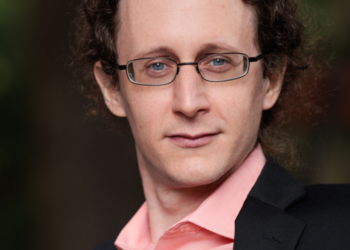
Linda Kinstler is a Junior Fellow at the Harvard Society of Fellows and a contributing writer for the magazine.
The post What It’s Like to Be a Student at the First A.I.-Powered University appeared first on New York Times.