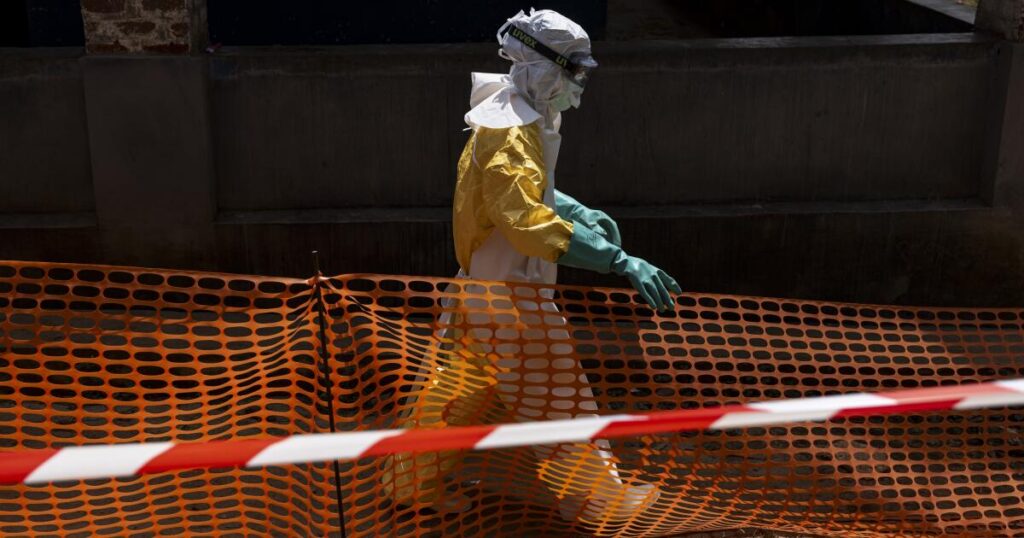
Ebola is a diabolical disease. The virus, which can cause severe hemorrhaging, spreads through blood and other bodily fluids. Patients, as they grow sicker, become a ticking bomb, endangering anyone compassionate enough to provide hands-on care. I saw it firsthand while responding to the two largest Ebola outbreaks in history with the U.S. Centers for Disease Control and Prevention. In 2014, I visited rural communities in Liberia, where local health workers — many working without pay for extended periods and without adequate protective equipment — risked everything to keep fellow citizens out of harm’s way.
Now, as another outbreak rages across the Democratic Republic of the Congo (which has already become the third largest Ebola outbreak), the United States has embraced a radical new policy: closing the U.S. border to anyone potentially exposed to the virus, including American aid workers fighting the outbreak overseas. This decision, intended to keep Ebola out of the United States, is more likely to undermine efforts to stop the outbreak.
This public health emergency is already challenging, centered in a remote region where health infrastructure is weak, hundreds of thousands of people are displaced, violence is rampant, and trust is limited. There is also no vaccine for this rare Ebola species, meaning any response will require old-fashioned containment measures: rigorous case identification and isolation, robust contact tracing, meticulous infection control in healthcare facilities, safe burials and community engagement. It will be a capital-, training- and labor-intensive process.
Those things are all in short supply.
In the aftermath of the 2014 outbreak, which killed more than 11,000 people across West Africa, the United States invested heavily in prevention, preparedness and response — but those efforts have since been hollowed out. Initiatives supported by USAID to conserve rainforests, which can help prevent spillovers of viruses from animals to humans, have stalled as funding has disappeared. U.S.-backed community clinics, which doubled as an early-warning system, have shuttered. Federal workers responsible for protecting public health have been laid off en masse. Experts at the CDC last year were even ordered to cut communications with the World Health Organization.
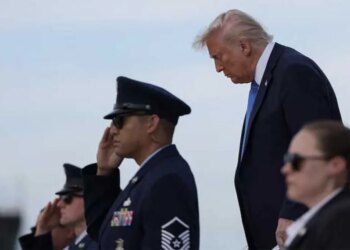
The situation is further complicated by new border policies imposed by the Trump administration. Any foreign citizens who have recently spent time in Ebola-affected countries will not be permitted entry into the United States. Meanwhile, all individuals with exposure to the virus will be barred from entering the country — including Americans who had been working on the front lines. These citizens will be quarantined — and, if symptomatic, treated — at a hastily assembled field clinic in Kenya, rather than at state-of-the-art biocontainment facilities in the United States designed for these exact scenarios. (Despite a Kenyan court order to halt the establishment of this facility, the Kenyan government plans to proceed with it.)
This is a catastrophic error.
Unforgiving policies encourage secrecy when we should be incentivizing transparency. Individual travelers, fearful of being stranded abroad, may be less forthright about their possible exposures. Likewise, when governments fear that reporting even a small number of cases will trigger economic isolation and travel restrictions, they are less likely to report in a timely fashion — both now and during future outbreaks of infectious diseases. South Africa, for example, suffered these consequences when it reported a new COVID-19 variant in late 2021, even though by then it was already too late for containment and a travel ban at that point was ineffective.
These border policies will also discourage American physicians, infection-control experts and epidemiologists from joining the effort overseas. We need all hands on deck to stop the spread — but few health workers will volunteer for a dangerous assignment if they expect to be abandoned by their country. Some, however, won’t have a choice. Members of the United States Public Health Service are among the nation’s most committed public servants and will be staffing the clinic in Kenya. They are uniformed officers of the government, serving on official orders, deploying around the world to protect everyone back home. We should not leave them behind.
The new protectionist measures are cruel and counterproductive. They are also unnecessary. The United States knows how to safely manage travel risk — because we have done it before.
In 2014, during the West African Ebola epidemic, there was immense political pressure to shut the border to anyone who had traveled to affected countries. The Obama administration considered it, but cooler heads prevailed. Instead, the federal government implemented an active monitoring program.
I led the effort in New York City, the largest in the nation. Travelers from affected countries were funneled through five designated airports. They underwent screening upon entry into the country followed by daily monitoring through local health departments that maintained contact using special-issue burner phones. Individuals at elevated risk of infection underwent higher levels of monitoring, including quarantine, if needed. That approach worked: It allowed the U.S. to manage risk while still being able to support a large global, humanitarian response.
In moments like these, fear can make it easy to write off as collateral damage any health workers who go to the hot zone. It’s much harder to see them punished for their sacrifice — as I have. I will always remember, in Liberia, talking with a local healthcare worker who caught Ebola in the line of duty. As his illness progressed and his demise became increasingly inevitable, he begged me to evacuate him to the United States for treatment. I could not grant his request, and he died waiting for a miracle that would never come.
For decades, the United States has been a trusted partner in Ebola response. This was not only the right thing to do, but also the smart thing: It’s better to stop outbreaks at their source. The current travel policy does exactly the opposite — and, as this outbreak grows, I fear that our absence in the Congo only increases the probability of cases in the United States.
Neil Vora, a physician, is the executive director of the Preventing Pandemics at the Source coalition.
The post U.S. should help contain Ebola outbreak, not aggravate the crisis appeared first on Los Angeles Times.