As he started his second term, President Donald Trump told Americans that he would measure his success by “the wars we never get into.”
A year and a half later, his administration is embedded in a war with Iran, has failed to end the fighting in Ukraine and is effectively running Venezuela.
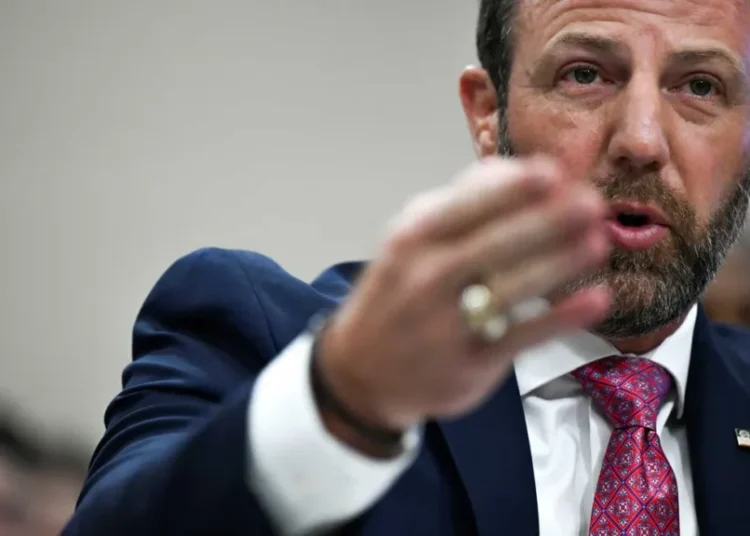
“I’m surprised,” said Mark Cancian, a military expert with the Center for Strategic and International Studies, a bipartisan, nonprofit policy research organization. “It’s been very interventionist, really the opposite of what he said he’d do.”
The administration’s foreign affairs are heating up this week. Trump announced a vague deal to develop and buy Venezuelan oil, and fighting has resumed in Iran. The U.S. also has invited a top Russian official to the country.
“We’re all over the place on foreign policy,” said Fiona Hill, who was Trump’s top Russia adviser in his first term and is now at the Brookings Institution. “And the U.S. has been kind of ineffective.”
Here’s what to know about three major foreign policy issues the Trump administration is focused on.
Get The 5-Minute Fix in your inbox
Fighting in Iran has started back up again
Facing dwindling weapon supplies, stalled negotiations and an entrenched Iranian regime, the U.S. recently signaled a switch to economic warfare. But last month and several times this week — including today — the U.S. struck targets in the country.
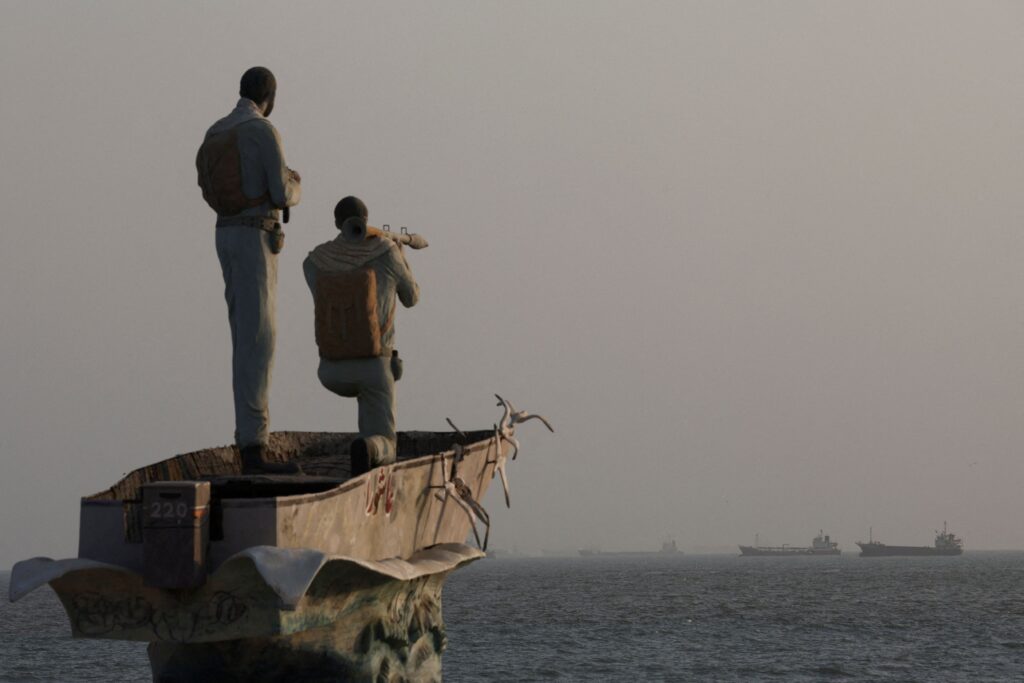
Both sides are trying to blockade the all-important Strait of Hormuz, which Iran has effectively controlled for the past six months, contributing to a spike in gas prices in the U.S.
There is no resolution in sight. There are ten of thousands of U.S. troops in the Middle East, and the military has ordered thousands of soldiers to stay in the region into 2027. But more attacks on Iran may be unsustainable, military leaders warned Defense Secretary Pete Hegseth, saying that the U.S. could be unprepared if a conflict breaks out with a superpower such as China.
“They are in a tough spot,” Cancian said of the U.S. government’s options in Iran, “and looking at a long-term blockade. They could launch a military operation to open the strait, but that’s a big step, and the administration is clearly not willing to do that.”
The U.S. is taking a major stake in Venezuelan oil
When the U.S. military captured Venezuela’s president in a surprise attack this year and effectively took over the country, Trump pointed out that Venezuela is a country flush with oil.
Not much happened on that front until now. Last week the Trump administration announced it is taking a large stake in Venezuelan oil, with a plan to produce it and buy it.
Trump promised the deal would “substantially lower Gas Prices for all Americans.” Those have risen sharply due to the war in Iran and are a top concern among voters.
The deal is unlikely to lower prices, many in the oil industry warn. Details are vague, and any development could come at a significant expense to U.S. taxpayers.
“Everyone cheering the Venezuela deal thinks a flood of cheap oil is about to hit and pull gas prices down. It isn’t,” Tracy Shuchart, senior economist at futures-trading platform NinjaTrader, posted on social media. “The barrels that could actually move a U.S. pump price are 5 to 15 years out.”
Meanwhile, some Republicans are pointing out that Venezuela still hasn’t had an election for a new president since the Trump administration got involved in governing the country.
“There needs to be democratic, free elections in Venezuela,” Sen. Ted Cruz (R-Texas) said as the oil deal was announced. “… And they need to proceed rapidly.”
The U.S. has largely sidestepped trying to end the Ukraine war
Ukraine could be headed for a long, hungry and dark winter, as Russia continues its years-long effort to take over the democratic country. The fighting has been slow and difficult for Russia, military experts say, and Russian rockets recently have begun targeting shopping centers and food-distribution warehouses across Ukraine.
At the same time, Russia’s finance minister is in North Carolina this week, invited by the Trump administration to attend a global finance meeting. His appearance shocked Europeans. Previous Western officials have walked out of similar meetings rather than attend alongside Russia.
“We’re going to see what happens, but we like getting along with everybody,” Trump told reporters Monday. “One of the reasons that I’m so successful, I get along with everybody.”
Russian President Vladimir Putin can reasonably take the minister’s invite as a sign that the Trump administration is not particularly interested in stopping Russia’s offensive, Hill said. While Trump came into his second term promising to quickly end the fighting in Ukraine, the United States has slowed its military help to the country — over the objections of some prominent Republicans in Congress — and Russia may see the U.S. as weakened by the Iran war.
“That’s a signal to Putin that he’s got his way of getting back in with the United States, and that there’s not any kind of concerted effort to press back against him,” Hill said. “The United States has basically said, ‘Look, we’re not fully involved in this anymore.’”
Amber Phillips writes The 5-Minute Fix newsletter, a quick analysis of the day’s biggest political news. Send her an email here, or ask a question that could be featured in an upcoming newsletter.
The post The U.S.’s many foreign entanglements under Trump appeared first on Washington Post.