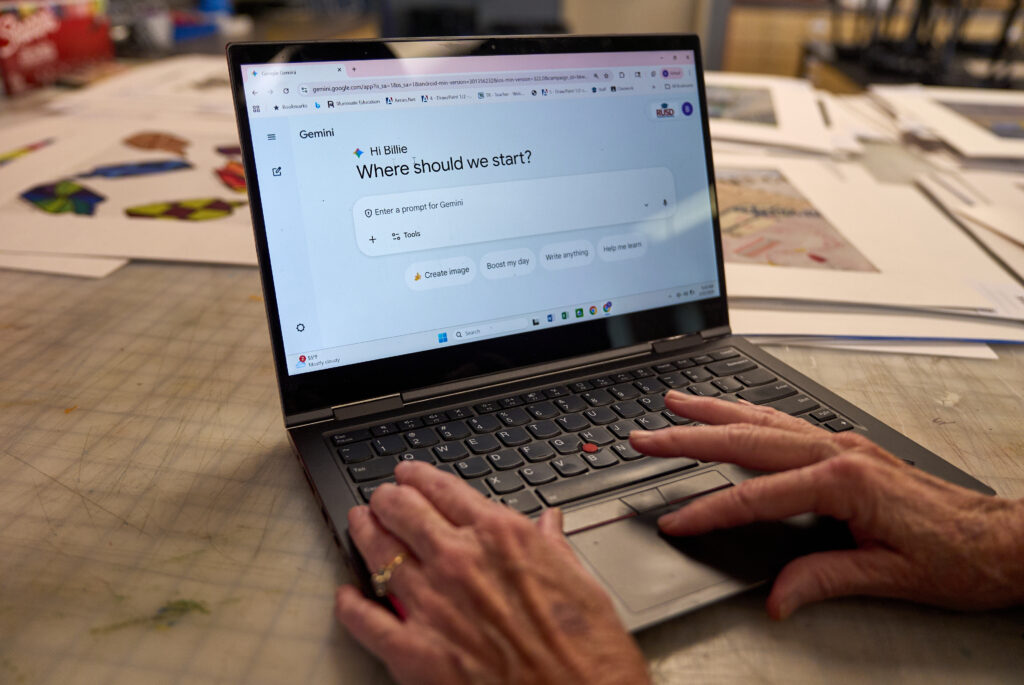
Most teachers use artificial intelligence, but relatively few — just 18 percent — have received any formal guidance on how to use it, according to a new poll from the Walton Family Foundation and Gallup.
AI tools have become commonplace in American classrooms. Teachers who responded to the poll said they use the technology to craft assessments and worksheets, plan lessons, grade assignments, provide tutoring and more.
Roughly half — 48 percent — of teachers have received only informal guidance, such as verbal conversations, around AI use, according to the poll. About one-third have not been given any guidance. Written policies and official rules remain rare.
Some education advocates have been pushing for stricter oversight of AI use in schools, citing concerns about tech companies’ access to student data. Parents and educators also worry that AI may be hampering students’ ability to think critically and work through problems on their own.
Their concerns are part of a broader conversation about all types of emerging technology and its place in American classrooms.
“We are at a crossroads that will define the future of work and society,” American Federation of Teachers President Randi Weingarten said about technology during a public address this week. “Without proper oversight and strong guardrails, there will be dangers to our society and privacy, to the climate and to the very fabric of our society.”
The federation, a 1.8 million-member union, is calling for a ban on screens for children through second grade, an end to student-facing AI in elementary school and a ban on chatbots that behave like humans for students under 16.
Those calls reflect a shift across American education. Last school year, most public schools in the country said they had given every child a device, such as a laptop or iPad, designed to help them learn. This year, more than a dozen states and school districts have attempted to restrict the amount of timechildren spend on any screen.
The Trump administration also issued a surgeon general’s warning on the harms of excessive screen use, encouraging schools to use more textbooks and prioritize pen and paper.
The Walton and Gallup poll, released this week, found modest differences between how wealthier and poorer schools were handling AI guidance. Teachers in higher-income schools were slightly more likely to receive some type of guidance on AI usage, usually informally.
In the wealthiest schools, 52 percent received informal guidance on using AI to prepare for teaching and plan lessons. Ten percent were formally trained.
In the poorest schools, 40 percent of teachers were given informal guidelines, and 11 percent received official policies. The rest may use AI but have to figure it out on their own.
“Schools and districts willing to invest in clear AI guidance could both reduce ambiguity for teachers and promote more confident, effective adoption,” researchers said. “For now, most are not providing that direction — leaving most teachers to navigate the AI landscape on their own or with patchwork support.”
The post Most teachers use AI but often receive no formal guidance, poll shows appeared first on Washington Post.