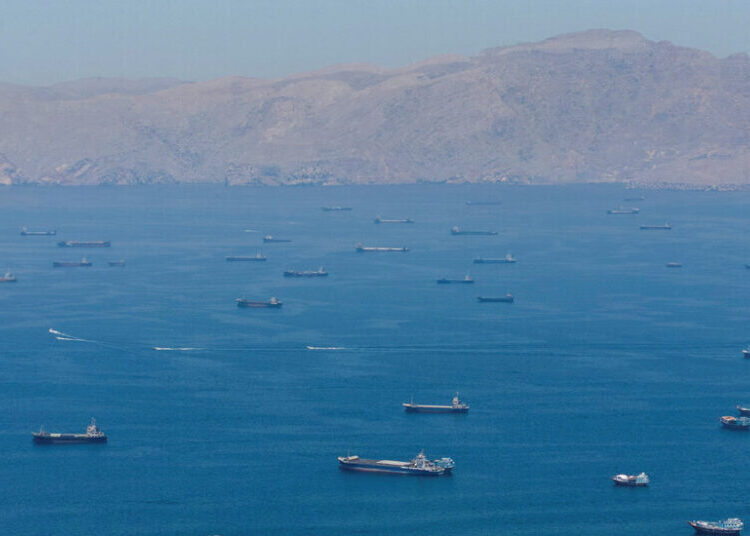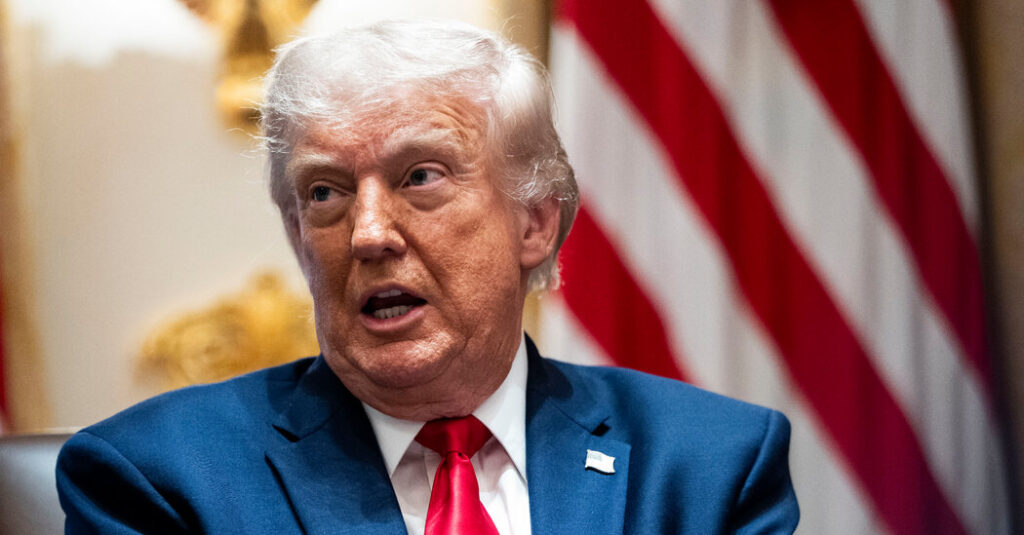
Wednesday’s cabinet meeting at the White House began, as it always does, with a long monologue from President Trump about the state of his presidency. About eight minutes in, while talking about the negotiations with Iran, he said one of those things he sometimes says that would be difficult to imagine another president blurting out.
“They thought they were going to outwait me, you know,” he said of the Iranians. “‘We’ll outwait him. He’s got the midterms.’ I don’t care about the midterms.”
Mr. Trump’s professed indifference had echoes of his remark earlier in the month when, pressed about the domestic economic impact of the war, he said: “I don’t think about Americans’ financial situation.”
Both were said in the same spirit: His mission to prevent Iran from getting a nuclear weapon is so important for humanity, he argues, that it must outweigh any ephemeral concerns on the home front — political, economic or otherwise.
“People understand it,” he said at the Wednesday cabinet meeting. “They know that, very simple, Iran cannot have a nuclear weapon. I’m doing that for the world. I’m not doing it just for us.”
It is unlikely that the president does not actually “care” about the midterms, the results of which will determine much of the success of the back half of his final term. But Mr. Trump has increasingly adopted a posture of nonchalance in the face of mounting fallout on multiple fronts: an unpopular war that has dragged on longer than he said it would, the creation of a government fund that could benefit his allies, and his fixation on remaking Washington into his vision of a gilded city.
Given the political stakes, some Republicans are beginning to wonder if there wasn’t a ring of truth to what the president said on Wednesday. How would a president who did care about the midterms behave? Would he fixate daily on pricey pet projects like a bunker-ballroom, or the construction of a cage on the South Lawn of the White House for a fight he’s hosting on his 80th birthday? Would he enrage Republicans on Capitol Hill by proposing a $1.8 billion fund that could end up paying out supporters of his who rioted at the Capitol? Might a president who cared about the midterms be a bit more concerned that his poll numbers and the price of gas have trended in opposite directions?
“I think there’s a reason to believe that the president really may not care all that much about the fate of Republicans that might be in these districts that are vulnerable,” said Christopher Borick, a Pennsylvania pollster.
During focus groups with voters and in his recent talks with G.O.P. officials and operatives across the state, Mr. Borick said that “it doesn’t take long in private conversations” for Republicans to express their fears that the leader of their party might not care all that much about what’s coming after the summer.
And then on Wednesday, Mr. Trump just came right out and said it.
Others considered the president’s comment about the midterms to be much ado about nothing.
“I think he’s projecting to Iran when he says that,” said Albert Eisenberg, a Republican strategist who specializes in reaching Hispanic, working-class voters.
“He obviously cares about the midterms,” Mr. Eisenberg added. “He’s very engaged in primary endorsement.” As for Iran, he said, Mr. Trump was considering his place in the history books, and that “if we can wrap it up and show that it was not a forever war by the midterms, I don’t think anything’s baked in the cake right now.”
Still, Mr. Eisenberg allowed that legitimate concerns are fueling some Republican anxieties about the president’s attitude.
“I think there’s a sense that people in D.C., the Republican establishment and the administration, are not making regular working people their primary focus, and that was what doomed the Biden administration,” he said. “They overstepped their mandate, they ran up costs for people, and they did wacky stuff. And that’s what’s making people nervous about Republicans in 2026.”
On Thursday, Treasury Secretary Scott Bessent was asked at a White House press briefing what he made of the president saying he was not taking the midterms into consideration when it came to Iran.
“So, you’re calling President Trump a statesman,” Mr. Bessent replied. “You’re saying that he is taking a statesmanlike position, that he has a core belief, and he believes that the most important thing is for Iran never to have a nuclear weapon. So, I believe both things can be true, that we can do well in the midterms, that we perhaps have the makings of a deal here.”
Matt Tuerk, the Democratic mayor of Allentown, a midsize city in a particularly swingy part of Pennsylvania, said that a lot of these issues are starting to congeal out in the country.
“I think that the president’s disregard for how Americans are feeling about prices, or how his fellow party members are feeling about the midterms, is kind of like the mirror image, or opposite image, of how people on the ground feel,” he said. “People on the ground are not necessarily thinking about the war in Iran, but they’re absolutely feeling terrible about what the war in Iran means for their pocketbooks.”
“You hear conversations across the aisle in the supermarket,” he added. “If you’re in the cereal aisle, you can hear people complaining about the price of peanut butter or coffee in the next aisle over. That’s just what the buzz is.”
Shawn McCreesh is a White House reporter for The Times covering the Trump administration.
The post Iran, Gas Prices, the Ballroom: Trump Professes Indifference Over Fallout appeared first on New York Times.