
Caleb Vazquez, one of two teens responsible for the mass shooting at the Islamic Center of San Diego, was on the autism spectrum and influenced by hateful rhetoric online, his family described in a heartfelt apology.
“Over the last several days, our family has been trying to process the horrific actions carried out by our son against the Islamic Center San Diego Community,” the 18-year-old’s family said in a statement released by attorney Colin Rudolph.


“We want to begin by acknowledging that nothing we say or do could ever repair the damage his actions have caused. We are completely heartbroken and devastated by what has happened. We condemn these hateful and violent actions entirely,” they continued.
The family mentioned the three victims, Amin Abdullah, Mansour Kaziha, and Nadir Awad, and thanked them for their bravery in preventing more deaths during Monday’s attack.
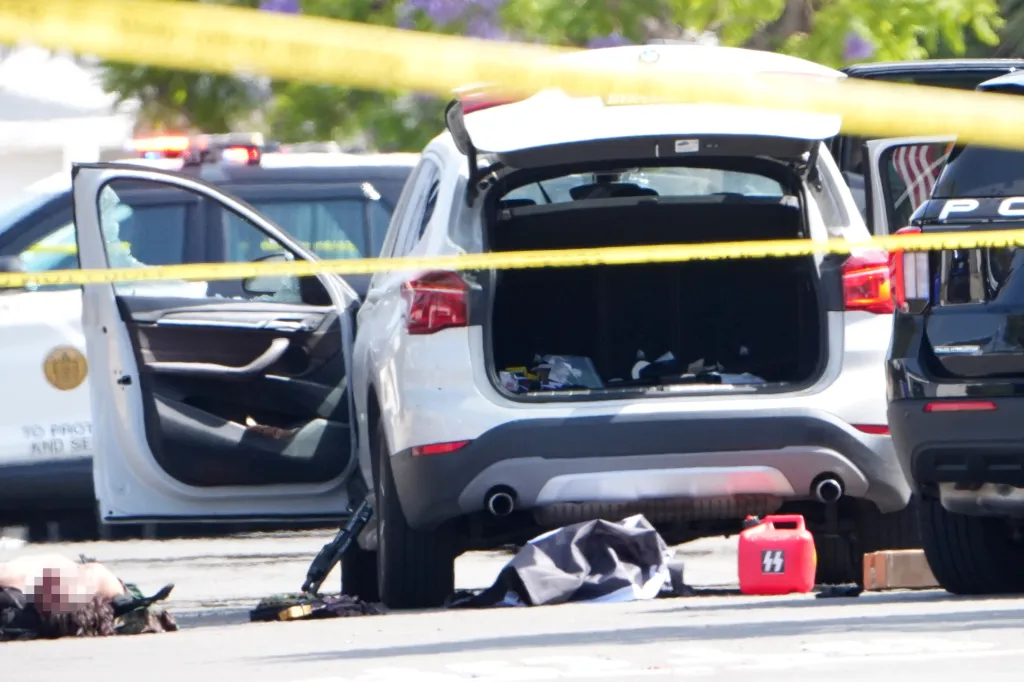
Vazquez and 17-year-old Cain Clark stormed the mosque, opening fire and killing three Monday before fleeing the scene in a white BMW. The teen terrorists livestreamed their entire attack.
At the encouragement of Vazquez, Clark, sitting in the driver’s seat of the vehicle, shot Vazquez in the head twice with a pistol, killing him. Clark then turned the weapon on himself.
The family recognized the attack caused devastating and irreversible pain for the victims, their loved ones and the broader Muslim community, adding that no apology could ever make up for the loss and trauma inflicted by Vazquez.
“We reject hatred, extremism, bigotry, and violence in every form. We stand firmly against the ideology and actions that led to this tragedy. These actions do not reflect the values we raised our family with or the beliefs we hold in our hearts,” Vazquez’s family said.

The Vazquez family added their son’s beliefs and actions are completely at odds with the values they raised him with, emphasizing their family’s diverse background and longstanding belief in acceptance, compassion and respect for people of all cultures and religions.
“Our son was on the autism spectrum, and it is painfully clear to us now that he struggled not only with accepting parts of his own identity but also grew to resent them,” they said.
Vazquez and Clark released a manifesto, obtained by The California Post, before the shooting where they shared hateful imagery and messages — campaigning for a race war. The weapons they used in the attack were covered in racist messages, including “Race War Now.”

They also wore a Black Sun symbol, which is associated with Nazi Germany, square on his chest. Nazi SS commander Heinrich Himmler had the symbol inlaid into the floor of the Wewelsburg castle.
“We believe this, combined with exposure to hateful rhetoric, extremist content, and propaganda spread across parts of the internet, social media, and other online platforms, contributed to his descent into radicalized ideologies and violent beliefs. While there is no excuse for his actions, we have come to recognize how dangerous online spaces are that normalize hatred,” the statement continued.
The family said they tried many times to help Vazquez through his “mental instability,” though they admitted, “We will forever live with the burden of wondering whether there was more we could have done to help prevent this senseless tragedy.”

“As parents, we are grieving in ways we never imagined possible. But our pain does not compare to the suffering of the victims and their families. This moment is not about us. It is about the innocent people whose lives were taken, the survivors whose lives have been forever changed, and a grieving community trying to heal from unimaginable trauma,” they added.
“We can only pray that his actions and words do not inspire or incite further hatred or violence toward any community. They were the actions of an immensely lost, troubled, and misguided soul, and we hope no other family or community ever has to endure this kind of tragedy again,” the statement concluded.
The post San Diego shooter’s family breaks silence on terror attack, say autistic son was brainwashed online appeared first on New York Post.