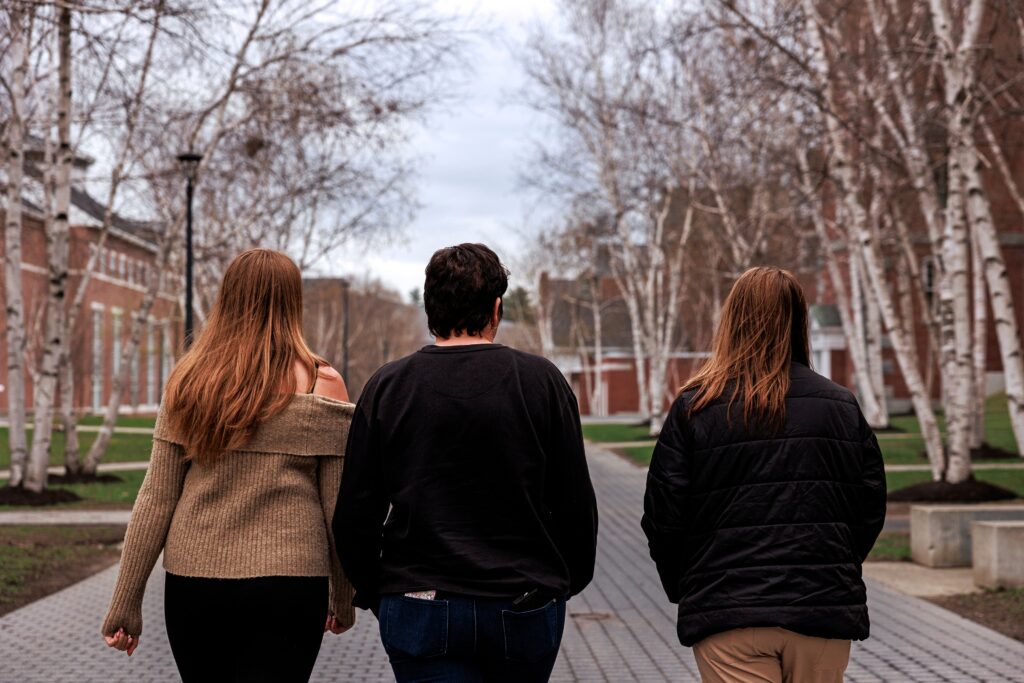
LEWISTON, Maine — On a recent weekday afternoon, a 41-year-old single mother from South Africa who had arrived in the United States this spring as a refugee pulled into a coffee shop in central Maine.
Her life in America was off to a quick start. That day, she had bought a car, a 2014 Nissan, from fellow newly arrived South Africans. She was about to begin a cleaning job that paid better than the one she initially had at Dunkin’. Her two daughters were settling into the local public schools; one had joined the softball team.
Adri, who spoke on the condition that only her first name be used out of concern that she would be targeted for sharing her story, had tried to leave South Africa for years, exploring ways to immigrate to Canada or Europe, without success. Then she learned that the United States would accept Afrikaners like her as refugees. She saw it as her last chance to go.
“I was walking in faith every day,” said Adri, a tall woman with dark, spiky hair. “And God’s not doing anything small.”
Adri is one of 6,069 people who have been admitted to the United States as refugees since October, according to State Department figures. All but three were from South Africa.
Her journey reflects the wholesale transformation of the refugee program under the Trump administration, which early last year froze refugee admissions save for one specific group — people like Adri. Now nearly all those arriving under the program are White South Africans, many of them Afrikaner, an ethnic minority who speak Afrikaans and trace their roots to early Dutch settlers. These newest arrivals have settled in almost every state, with the largest numbers going to California, Florida, Michigan and Texas.
For the refugee resettlement professionals responsible for getting the South Africans started in the United States, it is a head-spinning turnaround. They say the current arrivals are unlike any population they’ve encountered before: They’re fluent in English, highly mobile, sometimes come with financial resources and, in a few cases, have worked in the United States previously.
President Donald Trump has touted his reshaping of the refugee program, framing it as a response to racial persecution and repeating false claims that “a genocide” is occurring in South Africa. Trump’s billionaire backer Elon Musk, who was raised in South Africa, has also made similar claims.
“There’s a very horrible thing going on,” Trump told the audience at a conservative political conference on April 17. “They kill people if they’re White.”
Although South Africa has a high rate of violent crime, the victims are of all races. Trump often says that White farmers are being targeted and killed because of their race, but independent inquiries and analyses by experts have found no evidence of any such campaign. More than three decades after the end of apartheid, White South Africans own the majority of the country’s privately held agricultural land despite being less than a 10th of the population.
Larry Bartlett ran U.S. refugee admissions for 15 years before retiring in 2024. He said that although it’s conceivable that a handful of Afrikaners might qualify as refugees, the current process is “not a refugee program.”
“They’re not looking across the world for people who are truly in need,” Bartlett said. “They’re looking at one specific country that the Trump White House has decided to focus on for political purposes.” He called it a “travesty” and an “abdication of moral responsibility.”
Anna Kelly, a White House spokeswoman, said in a statement that it is “shameful” to “diminish the horrific treatment experienced by Afrikaners,” who she said are “no less deserving of help than the thousands of refugees admitted under the Biden administration.”
The Trump administration is planning to expand its assistance to Afrikaners. On Monday, the State Department told Congress that it wants to more than double the number of refugee slots for Afrikaners during the current fiscal year, raising the limit to 17,500 from 7,500.
The change is the result of an “emergency refugee situation,” according to a copy of the report reviewed by The Washington Post, and would cost taxpayers an additional $100 million.
To understand the current state of the U.S. refugee program, The Post spoke with nearly a dozen refugee professionals across the country involved in resettling South Africans. Most of them spoke on the condition of anonymity because they were not authorized to talk with the media.
The Post also interviewed eight recently arrived White South Africans, all of whom spoke on the condition that they not be fully identified. They know that their journeys are a source of controversy, both here in the U.S. and in South Africa.
Back home, they said, they felt unsafe because of the high levels of crime and the rhetoric of a small opposition political party; they also spoke of facing potential employment discrimination in the postapartheid era. Other White South Africans, however, have reacted to such views with disbelief and derision.
When Adri heard early last year that Afrikaners could apply to come to the United States, she didn’t hesitate. Eight years ago, she says, her elder daughter, then 6, was assaulted in a swimming pool, suffering a cut to her eye while security personnel stood by.
In the weeks before her departure, she sold her old Volkswagen Golf and quit her job at a funeral home. This was the moment to get “my girls to a safer country with a future,” Adri said.
A population like no other
Entering the United States under the refugee program involves multiple layers of vetting and comes with work authorization and a path to citizenship. In the past, many refugees were identified for resettlement by the United Nations High Commissioner for Refugees. Since 2014, the largest numbers of refugees coming to the United States have been citizens of the Democratic Republic of Congo, Myanmar and Syria, all countries with a recent history of violent conflict.
A typical person admitted under the program might be someone with limited English skills who had fled war or persecution in their home country and spent years or even decades living in a refugee camp.
The South Africans are different, resettlement workers say. They’re English speakers, and many are well-educated. Some are arriving with savings, allowing them to buy vehicles and relocate from their initial destination to other parts of the country if they choose.
The questions they ask are also unusual. Resettlement professionals said a common query from new arrivals is whether their initial housing will allow pets (the topic of pets is so widespread that it is addressed on the U.S. Embassy’s official information page for the program).
They’ve also asked about how to transfer proceeds from the sale of assets such as land, real estate and businesses. Case managers described several South Africans who already had Social Security numbers, meaning they were authorized previously to work in the United States.
Most startling, a refugee agency employee said, were the two people who said they had multiple pathways to come to the United States but took the refugee route because it was the fastest. “There is no other refugee population that I have ever served that has had another pathway,” the staffer said.
Although the vast majority of the arrivals are White, a few mixed-race families have come to the United States under the program, staffers say (the Trump administration’s initial executive order mentioned only Afrikaners, but members of other racial minority groups in Black-majority South Africa are also eligible to apply).
Darren Ham, who was a manager at a refugee resettlement agency until last year, said those who work in the field are in a bind. The Trump administration “blew up everything you do and everything you care about,” Ham said. But resettlement agencies also depend on government funding to keep operating.
During the Biden administration, the annual limit for refugee admissions was set at 125,000, with dozens of nationalities represented. The current limit of 7,500 is the lowest in the program’s nearly five-decade history.
Ham said some of his former colleagues were holding out hope that the administration might reopen the door to “people in dire circumstances” who have fled places such as Democratic Republic of Congo or Afghanistan.
He added that the South Africans he encountered had a higher ability than the typical refugee in the past to navigate the U.S. bureaucracy. It “feels much more like a garden-variety immigration program than a refugee program,” he said.
Some of the recently arrived South Africans have been surprised to discover that refugee benefits are minimal. The one-time payment by the federal government per refugee is no higher than $2,450, which agencies use for housing, furniture, food and transportation.
Resettlement workers say some of the South Africans — like other refugees before them — have been distressed by the realities of low-income housing in U.S. cities. Some aren’t used to living in apartments, hearing noise from their neighbors or not having outdoor space.
Adri, for one, has little patience for the recent refugee arrivals who have complaints about their conditions. “Dude, really?” she said. “I came here open-minded. I knew I’d start at the bottom.”
Adri is deeply critical of her home country, which she described as a place where people were being “groomed to hate” by politicians. She appeared to embrace the false claim of genocide, saying such killings are being hidden. Of the postapartheid transition, she said, “They were given a functioning country, and they’re messing it up.”
‘Ask the president’
In early March, when Adri and her two daughters arrived at the airport in Portland, a 26-year-old case manager named Adam Adam was waiting for them at the bottom of a short escalator next to a taxidermic display of Maine wildlife.
Adam took them to a hotel, got them a case of bottled water and procured them a phone. The next morning, he took them to a local breakfast joint, something that has become a bit of a tradition for the South Africans whose cases Adam handles. He ordered them meals on DoorDash until they were able to make their own.
When Adam was an infant, he said, his family fled war in Sudan’s Darfur region. He spent most of his life in a refugee camp in Chad. In 2023, his family was resettled in the United States, a process that took seven years.
Now Adam is the lone refugee case manager at Maine Immigrant and Refugee Services. MEIRS used to be one of three organizations resettling refugees in the state, but the two others stepped back from the process last year, saying they could no longer continue with the program because of the Trump administration’s changes.
Since November, about 35 White South Africans have come to Maine through the refugee program, said Rilwan Osman, the executive director of MEIRS. When people ask Osman why he is resettling South African refugees — he gets this question a lot — he demurs.
“Don’t ask me,” he protests with a laugh. “Ask the president.”
Osman says that the current arrivals include more people coming on their own, not with families — and that some have professional qualifications. One man was a pilot who previously flew international flights. Osman is trying to figure out whether the man can do that as a refugee.
Adam says he appreciates the willingness of the South Africans to take any job that will pay the bills, regardless of their experience. He says he knows little about South Africa but can tell that the new arrivals are still adjusting to the relative lack of crime on the streets of Lewiston, a former mill town of 39,000 on the banks of the Androscoggin River.
When Adam told some of his clients that they could leave their bags in a locked car, he had to reassure them that no one would break the glass. They were aghast when Adam once kept his car running while taking them into an IHOP to get them settled at a table. He’s glad they can feel safe here.
Natalie, a bubbly 20-year-old Afrikaner from Johannesburg, arrived in Maine this spring with her fiancé, Calvin, who is also 20. They’re expecting a baby in June. Natalie’s mother, Petronella, and older brother Petrus came a month earlier. All spoke on the condition that they be identified by only their first names for fear of backlash for them and their relatives in South Africa.
When Natalie got a job at a day care center, Adam made sure she could get to and from work before she received her first paycheck. He has ferried them to and from Walmart, where they marveled at the dozens of types of rice for sale.
The family said they didn’t see a future in their country.
“Our White people are being —” Petronella began.
“Oppressed,” said Calvin, completing her sentence.
On a recent raw April afternoon, Petronella returned to the Portland airport with Adam to greet her eldest daughter, son-in-law and two granddaughters, who were arriving from South Africa after a night in D.C. She held two boxes of Smarties and two multicolored stuffed animals.
Suddenly her daughter’s family appeared at the top of the small escalator. “Hiiiiiiiii!” exclaimed Petronella’s eldest daughter. Petronella enfolded her ponytailed granddaughters, 4 and 5 — one wearing silver winter boots, the other in fluffy pink Crocs — in her arms. She didn’t let go of their hands until after their parents collected the family’s four suitcases at the baggage claim.
Out on the curb, Petronella’s older granddaughter turned to her and asked in Afrikaans, “Oma, where is the snow?” Petronella explained that it was a little too late in the year to see it. A flight crew stood nearby, unaware that the latest chapter in the history of the U.S. refugee program was unfolding right next to them.
The family has told their relatives about their experience. Petronella’s brother and sister-in-law considered applying for the refugee program, but their children are in college, so they decided to wait. Calvin’s parents and brother have applied. So, too, has Petronella’s younger sister.
“One by one,” Petronella said, “they might all be coming.”
The post 6,000 refugees entered the U.S. since October. All but 3 are South African. appeared first on Washington Post.