By most measures, John Grisham’s recent legal thriller, “The Widow,” was an unqualified hit. It sold more than 1.3 million copies since its release last fall and drew rave reviews on Goodreads, Amazon and Audible, where listeners praised both Grisham’s story and Michael Beck’s narration.
But on YouTube, a free audiobook version of “The Widow,” which has nearly 80,000 views, drew a barrage of complaints.
Listeners were appalled by the emotionally flat, robotic narration and confused by the discordant videos that played in the background. The scenes — showing a waterfall, a family picnicking on a tropical beach, people snorkeling around a coral reef and a man working in a rice paddy — had nothing to do with Grisham’s story of a small-town lawyer in rural Virginia who finds himself on trial for murder.
“The Ai voice makes it difficult to follow and boring,” one commenter fumed. “The story seems great. The narration makes it awful, though.”
“I had a similar reaction, but then I remembered it was free,” another listener countered.
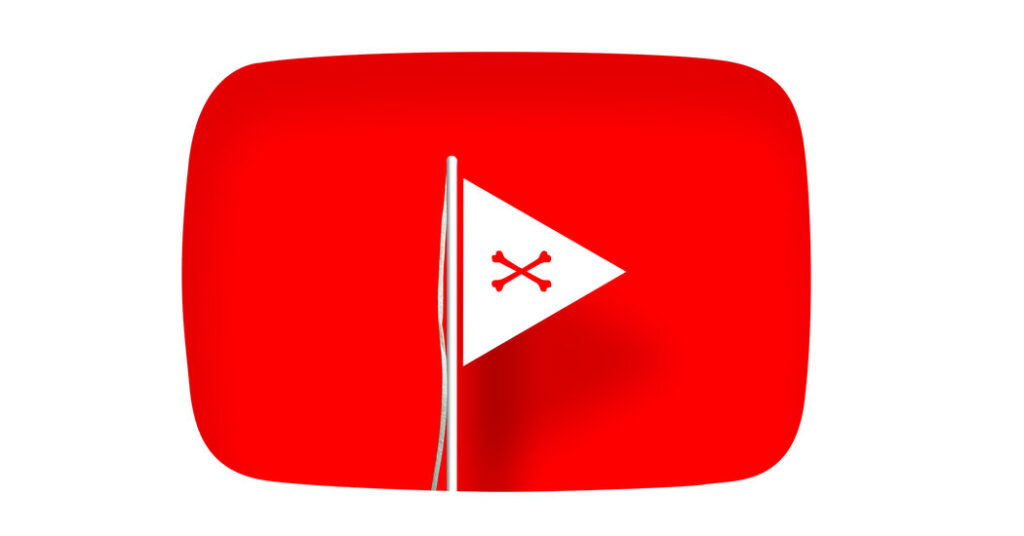
“The Widow” is one of countless pirated audiobooks popping up as videos on YouTube that reproduce everything from “Harry Potter” and “The Hunger Games” to breakout literary fiction and best-selling business books. The videos sometimes draw tens of thousands of listeners.
While piracy has long been an issue for the book business, the rapid rise of unauthorized audiobooks on YouTube, which publishers and authors believe are eroding sales for their books, poses a new challenge for the industry.
Audiobooks have soared in popularity in recent years, driven by widespread smartphone use and the consequent spike in audio streaming services, and they have become a critical revenue stream for publishers. Publishers and audiobook producers are investing heavily in them, recording splashy, full-cast productions, replete with sound effects and musical scores, in a push to redefine audiobooks as their own narrative art form rather than just another publishing format.
At the same time, artificial intelligence programs have given pirates new tools to rapidly reproduce audiobooks, and to illegally profit from them by running advertisements.
A.I. has made it easier to quickly create audiobooks using synthetic narration. Because most antipiracy technology is designed to catch identical files, not altered ones, many of them avoid detection by programs used to identify copyright infringement. A.I. versions of highly anticipated titles often appear on YouTube hours after they are released.
Grisham said YouTube should bear some responsibility for the spread of illegally copied audiobooks on its site.
“The thieves and pirates who steal my work and try to profit from it, in any format, should be punished civilly and criminally,” he wrote in an email to The Times. “And in this particular example, YouTube is complicit because it’s clear they know what is happening and refuse to stop it.”
A representative for YouTube said that the company is not in a position to vet all the videos posted on its platform for potential copyright infringement, and suggested that publishers were ultimately responsible for dealing with them.
“For more than two decades, we’ve built systems that help rights holders manage and control their copyrighted content — investing continuously to make sure those systems evolve as new threats emerge,” a spokesman for YouTube, Jack Malon, said in a statement. “A.I. is the latest frontier, and our approach remains the same.”
Illegally copied audiobooks have also turned up on other platforms, where pirates sometimes disguise them as podcasts by breaking them into chapters. But publishers say YouTube presents the biggest challenge, both because the platform is so massive and because YouTube has little incentive to fix the problem — unlike platforms like Apple Books and Spotify, which have financial arrangements with publishers to license or sell their content.
YouTube draws some 2 billion viewers every day. A 2025 survey of audiobook consumers commissioned by the Audio Publishers Association found that 35 percent of them had listened to an audiobook on the platform.
It’s hard to determine how many pirated audiobooks are available on YouTube. People uploading them often try to evade detection by changing the files, adding pauses or music or even slightly altering the text. Sometimes, pirates put unrelated content at the beginning to throw off detection. And when one channel featuring pirated content is taken down, another often takes its place.
Publishing and audiobook executives say they are ill-equipped to deal with the issue using YouTube’s take-down protocol, which requires publishers to upload each batch of removal requests manually.
“The current process is cumbersome, time-consuming and ultimately ineffective, as the bad actors often quickly repost under a different alias,” said Ana Maria Allessi, the president and publisher of Hachette Audio.
Audiobooks have become a critical source of growth for publishers. Revenues from digital audiobook sales last year hit $1.1 billion, an increase of more than 310 percent from 2016, according to the Association of American Publishers, a trade group. The share of publishers’ revenues that came from digital audio was more than 11 percent last year, compared to 3.5 percent in 2016.
“The combination of an additional form of audiobook piracy, combined with the growing readership of audiobooks, has made the piracy on YouTube a real problem,” said Mary Rasenberger, chief executive of the Authors Guild. “If you look up any best seller, you find a free audiobook on YouTube.”
Major publishers are hiring technology firms to help them identify and go after A.I.-generated audiobooks. The Association of American Publishers, which acts as a law and policy advocate for the book publishing industry, recently hired Vermillio, an A.I. licensing and protection platform that tracks and protects intellectual property. Vermillio is currently tracking tens of thousands of audiobooks on YouTube and other platforms in search of copyright infringement, including in files that have been manipulated with A.I.
In the month after a new best seller is published, the company finds, on average, more than 5,000 individual instances of pirated A.I. versions on various online platforms, a Vermillio spokesman said. Those pirated A.I. editions, the company found, can collectively draw more than 200,000 streams — meaning a substantial online audience is consuming the audiobooks for free.
“What we want in the publishing industry is for YouTube to be a partner and not passively let illegal content proliferate,” said Maria A. Pallante, president and chief executive of the Association of American Publishers. “This isn’t the dark web. We’re talking about a really popular American brand.”
Major publishers and Audible, the world’s largest audiobook producer and retailer, which is owned by Amazon, have stepped up their antipiracy efforts, which include scanning platforms for infringing content.
“We’re investing significantly in identifying and actively removing pirated audiobook content on sites and locations like YouTube and are working closely with our creative partners to tackle the challenge of confronting and ending piracy,” Rachel Ghiazza, Audible’s chief content officer, said.
Publishers and audiobook organizations say that YouTube, which is owned by Google, hasn’t done enough to address the problem, despite having developed sophisticated tools to deal with pirated music and movies. Through its Content ID program, YouTube can automatically scan video uploads for copyrighted content. Copyright holders are alerted when it finds a match, and can opt to block pirated content or monetize it.
But publishers say that Content ID, which was built for music and works by matching uploaded content to an exact audio “fingerprint” of a reference file, isn’t as effective for audiobooks as it is for songs. With audiobooks, even slight changes — like shifts in speed, pitch or voice, or added background noise or music — can prevent a match.
If there’s one silver lining to the rise of piracy on YouTube, it’s that the format has clearly found a growing audience on the world’s largest platform.
“People are going to a lot of trouble to pirate our books, which means there is a listening base and audience there,” said Amanda D’Acierno, president of Penguin Random House Audio Global. “We just need to find a legitimate way to get them the content.”
Alexandra Alter writes about books, publishing and the literary world for The Times.
The post YouTube Is Crawling with Pirated Audiobooks Made Using A.I. appeared first on New York Times.