Bing West is an author and a former assistant secretary of defense. His latest book is “Cat 5: The 2033 War.”
Pentagon officials with deep business acumen have embarked on one of the most dramatic changes in the nation’s suite of weapons since the ballistic missile era began in the 1940s. Their goal is to establish global dominance in the unmanned systems and drones that have changed war in the 21st century.
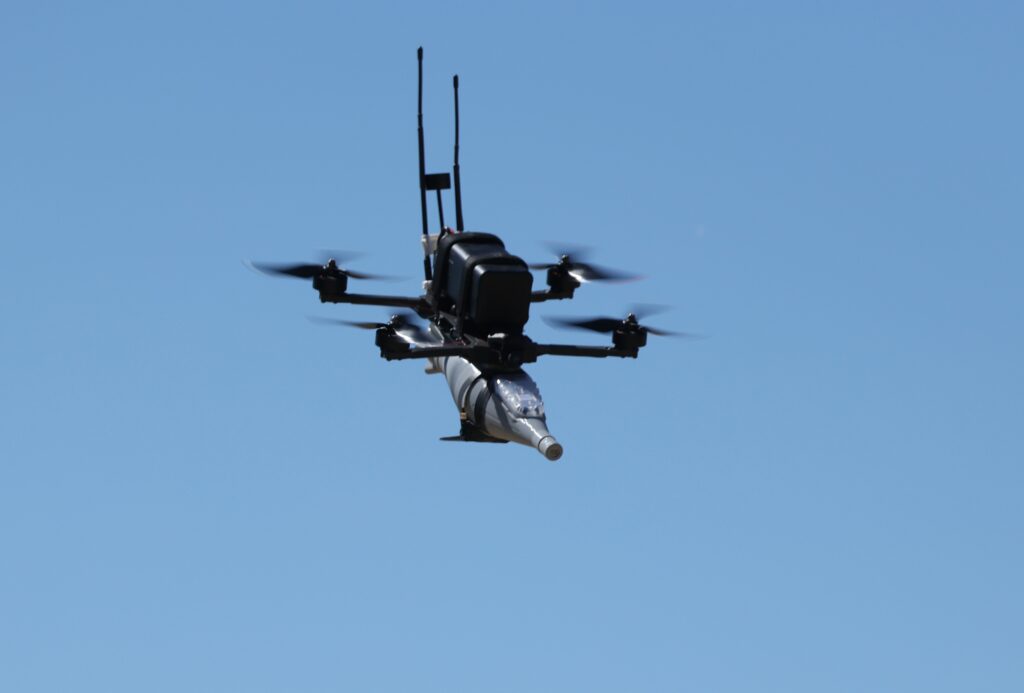
Defense Secretary Pete Hegseth testified in June 2025 that the Pentagon had purchased “multiple thousands of unmanned systems” with plans to acquire thousands more. Impoverished Ukraine has produced millions of cheap drones costing as little as $300 each to destroy Russian armor and warships. One self-detonating drone the Pentagon had been pursuing is estimated to cost more than $100,000 per unit.
The Defense Department’s entrenched procurement system has proved incapable of adapting and lowering costs. The MQ-9 Reaper drone, for example, cost $14 million in 2008 but has increased to $32 million. To fix that, Deputy Defense Secretary Stephen Feinberg — who co-founded a private equity firm managing $65 billion in assets — is overseeing the Defense Autonomous Warfare Group (DAWG) to quickly mass-produce drones and other unmanned systems. Emil Michael, a former chief operating officer at Uber, is the Pentagon’s new chief technology officer and will play an essential role in drone development. DAWG has requested roughly $54 billion for this effort, up from nearly $226 million it received in the current fiscal year.
The Pentagon has launched what it calls the Drone Dominance Program — a $1.1 billion initiative structured not as traditional defense contracting, but as a competition. Companies applied to participate; 25 drone vendors were selected and invited to Fort Benning, Georgia, where military operators flew and scored their systems under battlefield conditions in February.
Winning firms will receive purchase orders for 30,000 one-way attack drones at $5,000 each. The program’s goal is to produce more than 340,000 drones, with later phases expected to push prices to less than $2,000 per unit.
Military leadership has applauded this program. Gen. Dan Caine, chairman of the Joint Chiefs of Staff, said autonomous weapons will be an integral part of warfare. “We have to really normalize this and become early adopters,” Caine said.
The Ukraine war proved drones had changed battle on land. This important shift applies at sea as well. During President Donald Trump’s recent visit to Beijing, Chinese leader Xi Jinping pointedly warned about potential conflicts with Taiwan. The looming threat is that China could use a conflict as a pretext to block the Taiwan Strait, which carries $2.5 trillion in goods and commodities, more than the Strait of Hormuz.
Both sides will seek to limit any fight to sea and avoid strikes on the homeland. The problem is that China can launch thousands of low-cost missiles, forcing the U.S. surface fleet to fire interceptors costing millions of dollars each against weapons that can cost under $100,000, a ruinous cost-exchange ratio. A much worse consequence is the loss of life. The Center for Strategic and International Studies conducted 24 war games involving a Chinese amphibious invasion of Taiwan. The scenarios project that the United States and its allies would suffer tens of thousands of casualties in responding to the assault. After Vietnam, Iraq and Afghanistan, the American public is opposed to operations fraught with high casualties.
However, the power equation shifts dramatically against China if the U.S. funds unmanned vessels loaded with thousands of drones enhanced by artificial intelligence. China’s warships can be targeted by swarms of drones, while the U.S. surface fleet avoids deaths by lurking beyond the engagement zone, poised for follow-on strikes. America’s superior attack submarines and dozens of unmanned vessels would add massive offensive firepower with minimal exposure to sailors. By radically altering its naval fleet, the U.S. can continue to control the seas.
Rather than relying on old ways of doing business, the Pentagon is focused on the huge U.S. lead in civilian artificial intelligence and start-up ingenuity to gain drone dominance. The $54 billion request from DAWG amounts to a modest 5 percent of a $1 trillion defense budget. The issue is not the level of funding for autonomous warfare; it is whether a majority in Congress will vote for this generational investment in the nation’s defense.
The post A $54 billion investment could boost unmanned warfare appeared first on Washington Post.