A decade ago, Marie-Hélène Brice, an unemployed mother of two young children, landed a job interview with Christian Nègre, then a senior civil servant in eastern France.
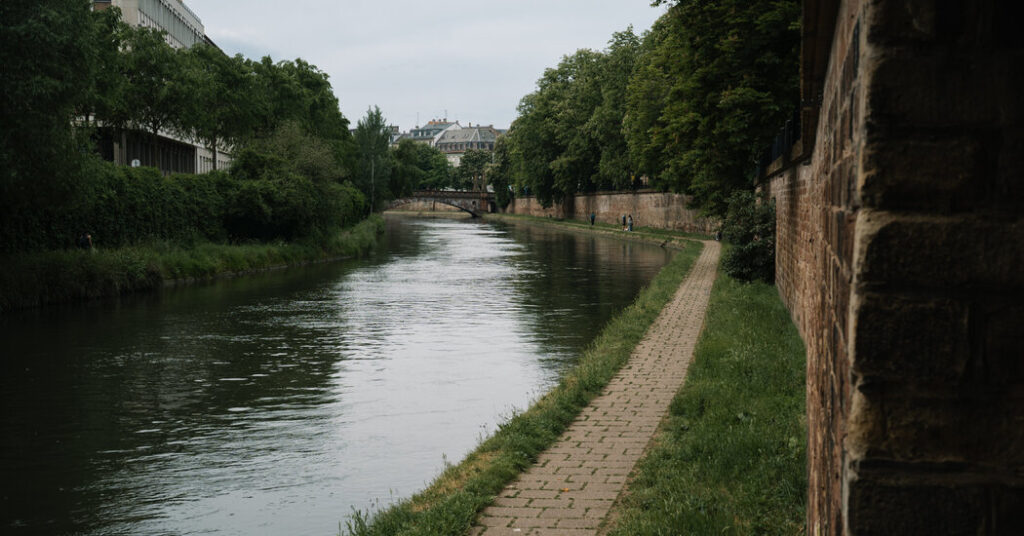
Mr. Nègre suggested conducting the conversation outside, Ms. Brice said. As they talked, walking along a nearby riverbank, Ms. Brice felt an urge to urinate “so sudden, so searing, so terrible” that she could not hold it back, she said. The pain, she recalled, felt like labor.
“Even after literally soaking my dress, I still had bladder pain and needed to urinate,” said Ms. Brice, now 39. She urinated again, taking shelter against a low wall, mystified by what had happened.
Two years later, the police told her they were investigating accusations that Mr. Nègre, a human resources director, had slipped diuretics into drinks he had offered to more than 100 women he had met for job interviews between 2009 and 2018. Such chemicals are generally prescribed for high blood pressure and, as a side effect, increase the production of urine.
The resulting legal cases, which have yet to go trial, have attracted renewed attention in a country still reeling from the devastating story of Gisèle Pelicot, now 73, who was drugged and raped by her then husband, Dominique Pelicot, and by dozens of men he invited to abuse her with him.
The slow-paced legal process has spurred concern from campaigners that France harbors a societal disregard for addressing the abuse of women. It has also rekindled longstanding concerns that the French justice system is ill equipped to deal with such abuse, particularly on a large scale.
In addition to a broader criminal investigation involving hundreds of women, at least 10 of them have sued the French state on the grounds that it long failed to detect systematic abuse of power by a senior official. In some of those cases, the courts have yet to reach a verdict; in others they have absolved the state of responsibility while ruling that the women were entitled to compensation.
“There are problems at every level” in the case of Mr. Nègre, said Sandrine Josso, a French lawmaker who turned the fight against “chemical submission” — the act of drugging someone against their will — into a national cause after she was drugged by a fellow member of Parliament.
“We are still so deeply entrenched in a culture of rape,” Ms. Josso said.
Mr. Nègre admitted in an interview in 2019 with a French national newspaper that he had drugged “10 or 20” women in Paris, but he did not specify which women he meant and has not spoken publicly since. Through his lawyer, Vanessa Stein, Mr. Nègre declined to comment for this article because, Ms. Stein said, the police investigation is ongoing.
A career civil servant, Mr. Nègre joined the French Culture Ministry in 2010. He worked first as human resources director at its headquarters in Paris, before taking on another senior position in 2016 at the ministry’s branch in eastern France.
Mr. Nègre was first reported to the authorities after being accused of taking pictures of a woman’s legs under a table during a meeting in 2018. He was so notorious for taking such pictures that colleagues nicknamed him “the photographer,” according to testimony from his colleagues shared in court during one lawsuit against the French state.
According to prosecutors, the police then investigated Mr. Nègre’s electronics and found something even more startling: a spreadsheet listing 181 women whom Mr. Nègre appeared to have interviewed and drugged.
The spreadsheet, labeled “Experiments P,” contained details about each encounter and how the women reacted to the drug, according to women listed in the spreadsheet who said that the police had read them parts of its contents.
Seven women described to me their meetings with him, as did two of their lawyers. Three women spoke on the condition of anonymity in order to speak more freely about a traumatic experience.
Some of the women said they were already Mr. Nègre’s colleagues when he approached them. Some said they were outsiders who had applied for a job.
Others said they agreed to meet him after he invited them out of the blue, sometimes on LinkedIn, to interview for vacancies that in some cases did not exist. In at least one case, a woman said she was invited to interview for a real vacancy for which, in retrospect, she concluded she was not truly being considered.
Mr. Nègre typically offered applicants tea and coffee mixed with diuretics, according to prosecutors and to the women, before suggesting that they speak outside, the women said. Then he brought them on an hourslong stroll, they said, far from any accessible bathroom.
Anaïs de Vos, who met Mr. Nègre in 2011 in Paris after applying for a job as secretary, said she had tried to hold on as long as she could. By the time Ms. de Vos, then 28, finally reached a cafe bathroom, she had wet herself. “I have never felt as bad as I did that day, actually,” she said in a phone interview.
Most of the women said they felt sick for hours or days after the interviews. Some said they suffered serious consequences in their physical health, including long-term problems with urination.
The consequences were psychological, too. Sylvie Delezenne, who was 35 when she met Mr. Nègre in 2015, was never able to find another job. “I was traumatized,” she said in an interview. “I really thought that I was useless, that I was incompetent.”
Aurore Jeunot, who was 24 when she met Mr. Nègre in 2013, said she fainted at the train station on her way home after the interview, and thought that was her body reacting to the shame she felt.
“I had dedicated my whole life to a career at the Ministry of Culture or a major national museum; all my studies had been geared toward that,” she said. “Well, I gave up on it.”
In October 2018, Mr. Nègre was fired from his job. Several months later, prosecutors formally accused him of administering harmful substances, violence by a public servant, invasion of privacy and sexual assault, for acts it listed as committed between 2009 and 2018.
Called for comment by the French newspaper Libération in 2019, he made a partial admission, acknowledging he had taken some pictures and administered drugs to “10 or 20” women. “I wish someone had stopped me sooner,” he said. “It was compulsive, but I had no intention of poisoning these women.”
By then, some women whose names did not appear in the spreadsheet had found out about the case in the media.
They reached out to the Foundation of Women, a nonprofit that offered its pool of lawyers to help the women pursue legal proceedings.
But for years, little happened. At least 10 women filed lawsuits against the Ministry of Culture.
An administrative court said seven women should receive financial compensation, but said the ministry was not guilty of failing to protect them, according to court documents and a lawyer involved in the case. A court in Paris will in June assess the cases of at least three other women.
In the separate criminal case, the prosecutors have yet to finish their investigation and a court has yet to decide if Mr. Nègre should stand trial.
Last July, the Foundation of Women criticized in a statement the “unbearable slowness” of the justice system, which it said was “incapable of handling a case of this magnitude.”
Laure Beccuau, the prosecutor leading the investigation, did not respond to requests for comment. In a public statement in February, her office said it was working with multiple law-enforcement agencies to try to close the case by the end of the year. To date, 248 potential victims have been identified by investigators and 180 have officially become party to the case.
The accusers’ frustrations were amplified when, in October, a French newspaper revealed that Mr. Nègre had continued to work under a different identity, teaching human resources in universities and working as a consultant in another part of France.
Though the criminal case has yet to reach court, it has begun to win more traction in public discourse. In 2019, a French newspaper called the case “a story to piss yourself over.” By last year, it finally seemed to be taken more seriously.
Ms. Josso, the lawmaker, invited about 40 of the women involved in the case to tell their story in October at the French Parliament. It was the first time any of them had been heard in an institutional setting, Ms. Josso said.
Then some plaintiffs began to give interviews to prominent news outlets and to post on social media. Several said they felt emboldened by the Pelicot case and the stereotypes it dispelled about sexual violence and chemical submission.
“Thanks to Gisèle Pelicot,” Ms. Jeunot said in a widely shared social media video, “I am not ashamed anymore.”
The post The French Civil Servant Accused of Drugging More Than 100 Women appeared first on New York Times.