In the summer of 2014, the new mayor of New York City had a problem. Bill de Blasio had campaigned against aggressive policing, particularly the city’s controversial policy of briefly detaining people and patting them down for weapons. Stop-and-frisk, which a federal court had ruled was discriminatory as practiced, had been touted as a form of crime prevention. Some New Yorkers feared that the progressive mayor, by dismissing the tactics of local police, would invite a rise in violence and disorder in the city. As if on cue, the warm months brought a surge in shootings in the city’s public-housing developments.
As the mayor’s criminal-justice adviser, I met with de Blasio and the police commissioner in the mayor’s corner office in city hall every week. We needed a plan to address the spate of shootings that didn’t rely on brute force. We also wanted a strategy for discouraging problems such as vandalism, dirty streets, and conspicuous drug use—low-level disorder that, if left unchecked, can create the conditions for more serious crime. And we wanted all of this without clogging the courts and jails.
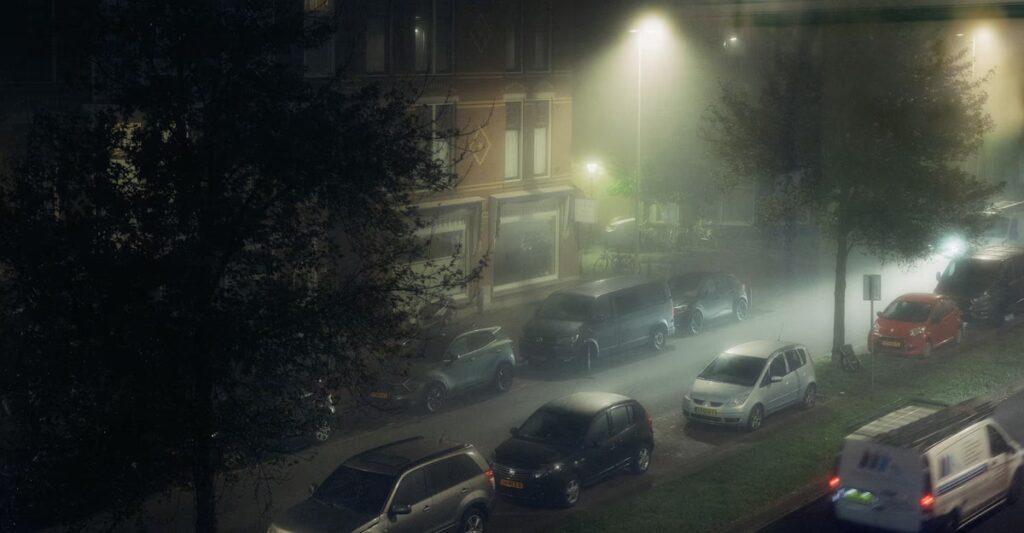
What about better lighting in the dark areas where crime tended to concentrate? This idea had a certain appeal. The city’s Depression-era Mayor Fiorello La Guardia once insisted that “there is no Republican or Democratic way to pick up the garbage.” Good street lighting also doesn’t take sides.
That summer, de Blasio launched a $210 million initiative that delivered brighter exterior lighting and more than 150 temporary light towers across 15 high-crime public-housing developments. This was part of an effort to tamp down violence through a range of civic services that included keeping community centers open late for the first time in 30 years. The police continued to play an important role, but instead of making broadscale arrests for low-level crimes, they started an approach that they later dubbed “precision policing,” which involved targeting the few people who were driving violence instead of their scores of hangers-on. Officers were also encouraged to attend community meetings to help address local concerns about safety.
[Henry Grabar: The great crime decline is happening all across the country]
The city studied the effect of the lights on crime and neighborhood life. Aaron Chalfin, a criminology professor at the University of Pennsylvania, ran a randomized controlled trial across 80 of the city’s 335 housing developments, half of which were outfitted with temporary lighting towers. He found that serious nighttime outdoor crime dropped by 35 percent without a rise in arrests. The crime didn’t move elsewhere; it simply disappeared. A follow-upthree years later found that this drop in crime had persisted.
In the field of crime and justice, most policy making relies on the science of “everyone knows”: Everyone knows that kids with nothing to do get in trouble. Everyone knows that you get knifed in a dark alley. Sometimes this common sense aligns with reality. Sometimes it doesn’t. Over the past 15 years, researchers have made a big push to test these hunches in a systematic way, and the data on lighting proved significant. Darkness is indeed a good cover for crime, so better lighting can make streets safer, not just by deterring misdeeds but also by encouraging others to fill the streets with activity.
The lights that de Blasio began rolling out more than a decade ago weren’t ideal, to be sure. The temporary lamps—which have since been upgraded—were noisy and smelly because they ran on gas generators; their intensity evoked the no-man’s-land of the Berlin Wall rather than the warm glow of brownstone living rooms. But their effectiveness was plain. Within a few years, Chalfin studied a plan in Philadelphia to upgrade about 34,000 streetlights citywide with brighter LED bulbs, which he found correlated with a 15 percent drop in outdoor nighttime street crimes and a 21 percent drop in outdoor nighttime gun violence. Local residents told interviewers that the lights made them feel more comfortable inhabiting public spaces because their neighborhoods felt safer.
These lighting studies are all in keeping with one of the most consequential and least discussed social-policy findings of the past quarter century: Urban design helps shape behavior. A growing body of research has found that the greening of vacant lots in Philadelphia was associated with a reduction in gun violence by 29 percent and overall crime by 9 percent, and the fixing of derelict buildings there coincided with a drop in gun violence by 39 percent. A six-city study that included Baltimore and Washington, D.C., found that the planting of trees was associated with a fall in gun violence by 9 percent. The redesigning of public places aligned with a drop in robberies by anywhere from 30 percent to 84 percent, depending on the study, not because these places were put under lock and key, but because creating more hospitable public design raised the cost of anti-social behavior by encouraging more people to be out on the streets.
Decades of meticulous research, the most prominent by the Harvard sociologist Robert Sampson in Chicago, shows how the rhythms of city life and a web of loose connections—a familiar face on the bus, a neighbor at the laundromat—can spur a sense of mutual obligation and enforce social constraint. Knowing that you might see someone again and again might temper an impulse to shoplift, blast music, or even pull a gun.
These studies provide rigor to Jane Jacobs’s observation in 1961 that “eyes on the street” and the spontaneity of the city’s “sidewalk ballet” keep people safe as much as anything else. She ascribed this power to what she called an “intricate, almost unconscious, network of voluntary controls and standards among the people themselves, and enforced by the people themselves.”
The role of the physical environment in shaping social behavior was also at the heart of one of the most famous essays published in this magazine: “Broken Windows,” by the criminologists George L. Kelling and James Q. Wilson. In their telling in 1982, the broken window wasn’t merely a small, fixable problem but a cue that the block in question had no steward, that the neighborhood had no guardian, that ordinary obligations of civility were no longer in play.
“If a window in a building is broken and is left unrepaired, all the rest of the windows will soon be broken,” Kelling and Wilson wrote. “One unrepaired broken window is a signal that no one cares, and so breaking more windows costs nothing.” The destruction needn’t stop there. An unfixed broken window sent a message that the building could likely be stripped, that its apartments were probably squattable, that drug dealing and related violence might proceed with little consequence. This argument found a sympathetic audience when crime was rising across the country. Crime-weary New Yorkers certainly took note.
The problem was not the theory itself but how it came to be interpreted. Bill Bratton, who served as the chief of the New York City Transit Police and then as the city’s police commissioner during the crime peak in the 1990s, explicitly attributed his crackdown on petty crimes, such as graffiti and fare evasion, to Kelling and Wilson. Eventually, the concept of broken-windows policing evolved from an observation about physical disorder into a blundering strategy of stopping residents, sometimes on specious grounds (“furtive movements”), and arresting masses of people for relatively minor offenses, such as marijuana possession, on the assumption that these infractions create an atmosphere of disorder that invites more serious crimes. Misdemeanor arrests skyrocketed from about 56,000 annually in the late 1980s to a high of about 230,000 in 2010. By 2011, the New York City Police Department was stopping and frisking nearly 700,000 people a year, mostly in neighborhoods that were home to poor Black people and Latinos.
This approach was enormously costly and controversial. Instead of strengthening the invisible networks of controls and standards that encourage better behavior, these arrests undermined an already fragile sense of trust between poor neighborhoods and government. In 2013, a federal judge in New York found stop-and-frisks as practiced in New York City unconstitutional, in part because they were racially discriminatory, and put the city under a federal consent decree that’s still in place today. When Bratton was back as the city’s police commissioner under de Blasio from 2014 to 2016, he did not distance himself from what he called “quality-of-life policing,” but he struck a more conciliatory note: “Our challenge is how to respond to disorder in a way that our actions do no harm.”
[Charles Fain Lehman and Rafael Mangual: How to prevent random violence]
The irony was that had the policy of broken windows been implemented as written, with an emphasis on fixes to the city itself such as cleaning vacant lots and lighting dark places, New York might have tapped into a durable way to strengthen the organic connections that keep us safe. Instead, the city’s escalating campaign of stops and arrests triggered the cascade of cynicism and distrust that continues to bedevil New Yorkers’ connection to their government.
Although crime, both nationally and in New York City, has plummeted since the early 1990s and the country’s homicide rate is at an all-time low, this decline has been neither smooth nor uncomplicated. The pandemic years brought about a surge in violence and other crimes across the country, from which many cities have only recently recovered. New York City’s historically low crime rate from 2016 to 2019 gave way to an explosion in violence in 2020 and 2021. Although shootings and murders have now fallen to historic lows, overall major crime remained substantially higher in 2025 than it had been in 2019.
What’s plain is that the challenge of curbing crime to its lowest possible level and keeping it there demands all viable strategies, not just enforcement. The fiscal uncertainty of this moment for city managers—given fluctuations in the economy, the tax code, and federal funding—should also burnish the appeal of services that are already largely funded as part of a city’s budget, such as improvements to lighting and the planting of trees. The architect Jeanne Gang has observed that a city owns anywhere from 50 percent to 90 percent of a neighborhood, such as its streets, public-housing developments, libraries, and firehouses, and has many capital projects going at any one time. With just a bit more coordination, a project to add a new speed bump or median strip could also involve adding brighter streetlamps and some greenery, which can enhance the built environment and reinforce the informal connections and constraints that help keep people safe.
Police officers, of course, play an essential role in ensuring safety, not least because they have the power and training to do what other citizens can’t. But because reducing crime and disorder is about managing behavior and controlling risk, police are not the only—and are sometimes not the best—way to accomplish these goals in a durable way. The city’s investments in street lighting and civic services a decade ago helped lead to the lowest crime and incarceration rates in decades. As New York City becomes once again split over the best way to keep people safe, there is value in turning to the evidence, which shows that good urban design can have a lasting effect on public safety.
The post The Smart Way to Curb Crime appeared first on The Atlantic.