AN INCONVENIENT WIDOW: The Torment, Trial, and Triumph of Mary Todd Lincoln, by Lois Romano
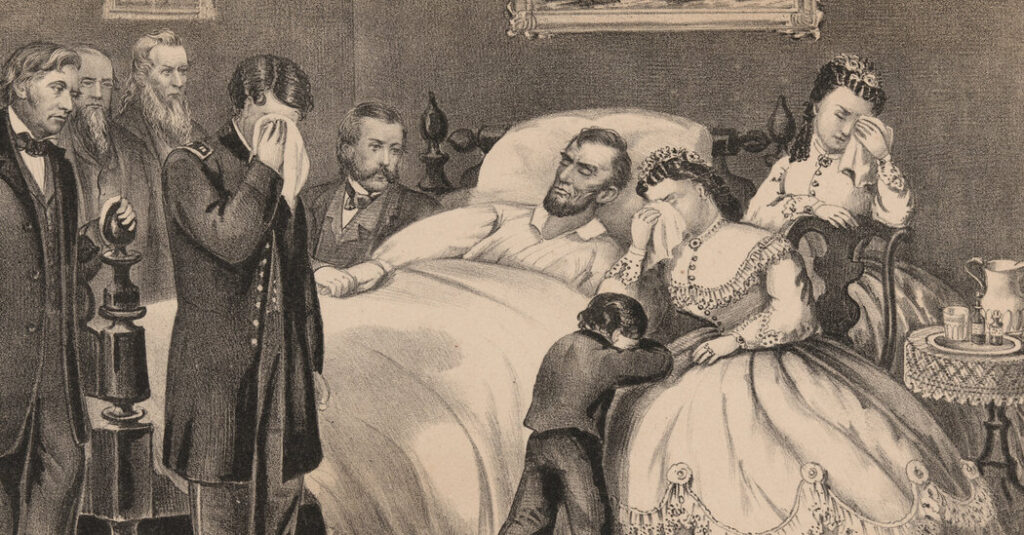
No first lady has been more demonized than Mary Todd Lincoln. Her life was marked by tragedies: her mother’s 1825 death when she was a child, the loss of three of her four sons, the carnage in Ford’s Theater. Yet her critics — led by President Lincoln’s law partner William Herndon — savaged her reputation in the decades following Abraham’s 1865 assassination.
In her admirable biography, “An Inconvenient Widow,” the former Washington Post reporter Lois Romano sets out to rehabilitate “the most misunderstood and tragic first lady in American history.” It’s an ambitious project.
Romano’s method includes elevating Mary Lincoln’s accomplishments. She praises her French, her visits to military hospitals and her encouragement of her husband’s political rise.
All true, but none remarkable. French instruction was a normal part of the education of elite women, and many first ladies spoke the language. By the second year of the Civil War, elite women visiting hospitals were so common that not doing so would have raised attention. And wives pushing their husbands to succeed is hardly a historical anomaly; James Polk joked that Sarah Childress refused to marry him until he promised to run for office.
Lincoln’s one genuinely notable innovation as first lady — her 1861 tour of Union encampments — might have mattered more had it not devolved into a shopping spree.
The truth is that Mary Lincoln was, by any reasonable measure, astonishingly ill suited to preside over the White House. She had a mental illness that manifested in erratic and self-destructive behavior. Her financial excesses would have been criticized in peacetime; during a civil war they were practically obscene. She bought compulsively — clothes, jewelry, accessories — and then attempted to hide her debts by manipulating the White House budget.
In other words, there is a kernel of reality in the chaotic, narcissistic and otherwise fanciful Mrs. Lincoln of Cole Escola’s hit Broadway play “Oh, Mary!” The actual first lady was rude to guests, to her husband’s colleagues and to any woman she suspected might outshine her. Vain and lacking discernment, she trusted flattering opportunists who used her for access. She was indiscreet, thin-skinned and had no sense of political optics. In a less fraught period, these failings would have mattered less than they did.
But Romano’s strongest argument — and it is convincing — is that Mary’s demonization after Abraham’s death, and in the generations since, was wildly disproportionate to her flaws. The sheer passion with which his friends and later historians condemned her should give any reader pause.
Herndon, in particular, humiliated and apparently libeled Mary, claiming that Abraham never loved her and that she made his life miserable. Romano is at her best when she dismantles the stories that have calcified into “fact.” One oft-repeated tale — Mary supposedly attacking her husband in a rage because he brought home the wrong cut of meat — turns out to rest on an interview with a neighbor who had died years before the interview supposedly took place. Her detractors, Romano notes, were generally motivated by jealousy, resentment of Mary’s many grudges and slights, or sexism.
Romano also attempts to diagnose Mary’s behavior sympathetically, through modern psychology. Mary’s spending becomes compulsive buying disorder; her erratic widowhood is attributed to social isolation, which, “contemporary studies show, can exacerbate mood disorders, faulty decision-making and depression.” Abraham’s assassination triggered post-traumatic stress. She may have had bipolar disorder. Her hallucinations were likely caused by laudanum and chloral hydrate, both used for sleep.
It is hard to argue with Romano’s conclusion that “few among us could survive such profound losses without the help of psychiatric professionals or contemporary anxiety and mood medication.” And, as she notes, “Mary had neither.” Still, the accumulation of diagnoses sometimes distracts more than it illuminates.
Romano’s portrait of Lincoln is not always convincing. She parades Lincoln’s antislavery convictions but downplays her anti-immigrant and racial prejudices. Romano also places too much trust in a romanticized biography written by a family member nearly half a century after Mary Lincoln’s death. Perhaps this is fair play, given the continued scholarly use of Herndon’s scurrilous attacks, but it somewhat undermines the volume’s claims to objectivity.
Where Romano is most compelling is in her treatment of Lincoln’s widowhood, which occupies a full third of the book. It was, as she writes, a “17-year odyssey of rejection and self-isolation,” saddled with debt, instability and the ultimate betrayal: her only surviving son, Robert, having her committed to a psychiatric institution in 1875 — in part, Romano argues, because he disliked the negative publicity she generated.
Romano’s grief for her subject becomes so personal that she slips into the first person: “There can be just so much loss in one’s life before we become incapable of tapping our reserves to push on.”
In the end, the subtitle’s invocation of “triumph” feels misplaced. Mary Lincoln’s life was not triumphant; it was tragic. But Romano is right that the cruelty with which she has been remembered tells us more about her accusers than about Lincoln herself. Whatever her faults — and they were many — she deserved better, and Romano deserves praise for granting her, at long last, a measure of grace.
AN INCONVENIENT WIDOW: The Torment, Trial, and Triumph of Mary Todd Lincoln | By Lois Romano | Simon & Schuster | 463 pp. | $31
The post Mary Todd Lincoln Was Bad. But Not as Bad as the People Who Hated Her. appeared first on New York Times.