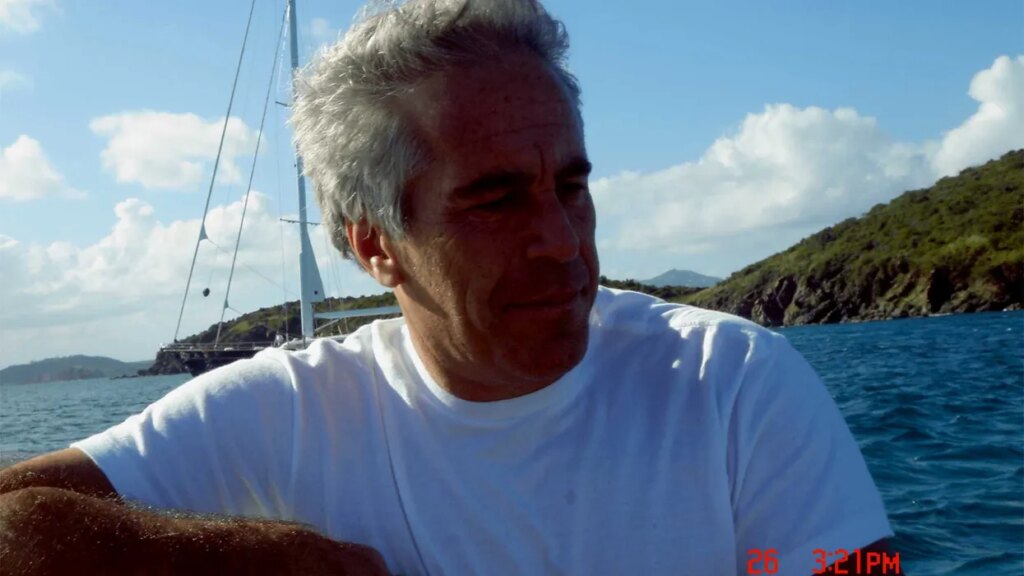
After combing through the Justice Department’s publicly available files on Jeffrey Epstein for months, veteran journalist Alisa Valdes-Rodriguez came to a striking conclusion on Tuesday that the disgraced financier’s communications infrastructure suggests ties to U.S. intelligence.
“Epstein was CIA,” Valdes-Rodriguez bluntly claimed in the headline of her latest report published Tuesday, citing the advanced communications network at his New Mexico compound as proof.
There is no public confirmation from the CIA, the Justice Department, or any official source that Epstein worked for or was an asset of U.S. intelligence.
Valdes-Rodriguez had previously uncovered that Epstein’s New Mexico compound, formerly known as Zorro Ranch, was outfitted with a “private microwave communications link,” a military-grade communications channel that appears to still be maintained by the property’s new owner, former GOP candidate and billionaire businessman Don Huffines, a strong ally of President Donald Trump.
Valdes-Rodriguez has uncovered that Zorro Ranch was likely built by Bradbury Stamm, a major U.S. government-linked contractor that “does not build individual homes,” and she has also exposed high-ranking officials for their previously undisclosed ties with the wealthy financier.
Those revelations, combined with reporting from journalist Kait Justice suggesting Epstein may have been recruited as a CIA asset as a teenager — with the help of Donald Barr, father of Trump’s former attorney general William Barr — led Valdes-Rodriguez to conclude that Epstein’s operations were at least in part facilitated by U.S. intelligence.
“The files were always public. The documents were always there. The story was always visible to anyone who looked,” Valdes-Rodriguez wrote.
Valdes-Rodriguez also highlighted a telling email exchange Epstein had just over three years before his death in jail while awaiting trial on sex-trafficking charges. The NYC medical examiner ruled it a suicide.
In March of 2016, Epstein communicated with an individual named “William” – who Valdes-Rodriguez identified as being Bill Patterson, a New Mexico businessman and owner of Patterson Ranch Airport in Santa Fe – about setting up an internet connection for Zorro Ranch.
Of the options available, Epstein chose the most “difficult” option, one that Patterson said would require “incredibly expensive industrial/military grade equipment.”
The silver lining of choosing the most difficult option, Valdes-Rodriguez explained, was that it would make “interception” of communications “effectively impossible.”
“The documents recording that choice – and everything that followed – are sitting in the DOJ’s publicly available Epstein file archive. They have been there since the files were released. Almost no one has read them,” Valdes-Rodriguez wrote.
“What they reveal is not merely a connectivity decision. It is the operational signature of an intelligence asset building covert communications infrastructure, surrounded by the men who built him, protected by the institutions that owned him, and connected – literally, through a satellite uplink with direct-to-orbit authorization – to wherever his handlers needed the data to go.”
The post Little-known detail at Epstein’s Zorro Ranch may point to CIA ties: veteran reporter appeared first on Raw Story.