Over the past year, companies have scaled back or eliminated their commitment to diversity, equity, and inclusion (DEI) partly under pressure from President Donald Trump—yet experts say the organizations that stay the course are the ones that will come out on top.
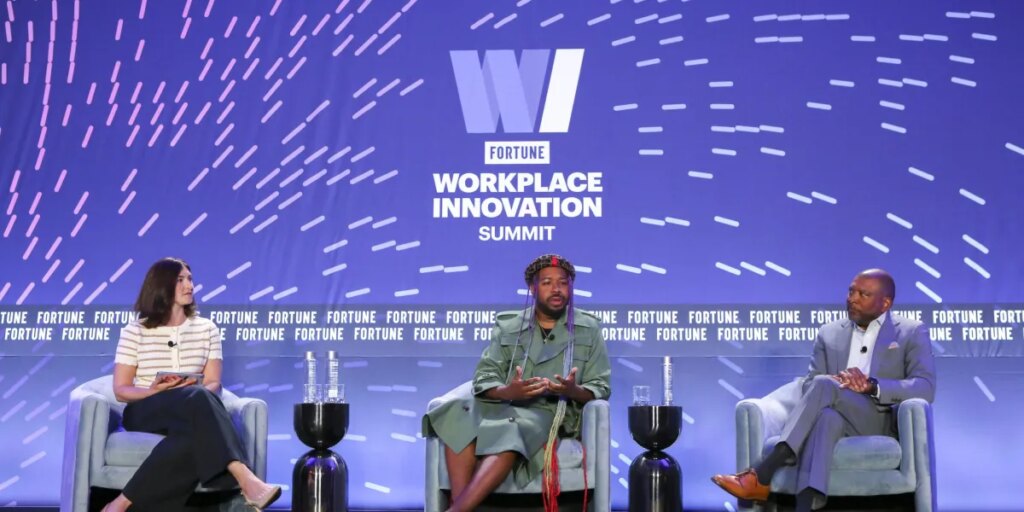
Speaking at the Fortune Workplace Innovation Summit in Atlanta, Georgia, on Tuesday, two former chief diversity officers weighed in on why DEI remains important despite criticism from the current administration.
Diversity, equity, and inclusion (DEI) refers to a set of organizational practices aimed at building workforces that reflect a range of backgrounds, ensuring fair access to opportunity, and fostering workplace cultures where employees from different demographics can contribute fully. In practice, this can take the form of inclusive recruiting and hiring processes, mentorship and sponsorship programs, pay equity audits, employee resource groups, supplier diversity initiatives, and management training designed to reduce bias in performance reviews and promotions.
Ray Dempsey, a former chief diversity officer at BP and Barclays and now the founder of Dempsey Inclusion Group, said corporate America’s pivot toward stigmatizing the acronym “DEI” has been led by people who don’t understand it. While DEI’s standing has floundered, the work behind it has nothing to do with a label, he added. Instead, the efforts behind DEI are really meant “to create value for the business.”
The companies that have continued to emphasize DEI understand that, he said.
“They understand that it actually is not just a good thing to do or the right thing to do, it’s not just a social imperative, it’s a genuine business imperative,” Dempsey said.
That’s not to say the landscape in DEI hasn’t changed. Following the killing of George Floyd in 2020, corporate leaders rushed to implement DEI policies and hire staff to oversee them. Between 2019 and 2022, the percentage of chief diversity officers increased by 169%, according to a LinkedIn study.
That growth, though, has now tapered off. Between 2021 and 2022, the percentage of chief diversity officers hired fell by about 4%, according to the LinkedIn study. Dempsey said he has experienced the retreat from DEI in real time.
After he retired as chief diversity officer at Barclays in 2024, he said he had struggled to find as many opportunities to serve on corporate boards as he expected.
“The chief diversity officer title is not nearly as valuable for corporate board nominees as it was just a few years ago,” he said.
In the years following Floyd’s murder, companies tried to be “all things to all people” and the line blurred between activism and advocacy in organizations, which may have contributed to the retreat from DEI, said Jarvis Sam, the former chief diversity officer at Nike and now the CEO of DEI firm, The Rainbow Disruption.
The antagonism of the current administration has also contributed. In the first days of his second term, Trump signed a flurry of executive orders addressing DEI. He eliminated positions across the federal government involved in DEI efforts, eliminated DEI goals for agencies, and revoked a previous executive order requiring federal contractors to maintain affirmative action programs. The Equal Employment Opportunity Commission (EEOC) has also sued companies, including the New York Times and Nike, as the chair, Andrea Lucas pursues cases of “unlawful DEI-motivated race and sex discrimination.“
Despite this pressure, Dempsey noted that the same act that drove DEI efforts and created the EEOC, the Civil Rights Act of 1964, has not changed: “It will still guide the choices and the activities, and it’ll shape the way we manage and mitigate risk around talent,” he said.
The push around DEI may have shifted in the U.S., but not internationally, added Sam. In Europe, regulations related to affirmative action are still in place. For instance, Germany mandates gender diversity targets for corporate boards. Under the European Union’s Corporate Sustainability Reporting Directive, which started being implemented in 2024, select companies also need to report their policies addressing discrimination, diversity and inclusion, and human rights.
Pivoting completely on DEI, therefore, opens companies up to risk, said Sam.
While critics often frame DEI as a purely social or political project, a substantial body of research has linked diverse and inclusive workplaces to stronger business outcomes. McKinsey’s long-running “Diversity Matters” series has consistently found that companies in the top quartile for ethnic and gender diversity on executive teams are more likely to outperform their peers on profitability, with its most recent installment reporting a 39% greater likelihood of financial outperformance for the most diverse companies.
Other studies, including research from BCG and the Harvard Business Review, have associated diverse leadership teams with higher innovation revenue and better decision-making, while Gallup has tied inclusive cultures to measurable gains in employee engagement and retention—two metrics directly linked to productivity and bottom-line performance. Dempsey said he is optimistic about the future of DEI and believes it will continue to be a priority for many companies in the future. He said organizations that have demonstrated they are committed to attracting diverse workforces and adapting their strategies to an increasingly diverse America and world will ultimately win in the marketplace, although the same can’t be said for those that don’t take DEI seriously.
“Those who have sent the signals that that’s not important, that’s not a priority, they are going to lose,” he said.
The post DEI experts say the acronym may be radioactive, but the underlying business case is stronger than ever appeared first on Fortune.