The Justice Department on Tuesday expanded the agreement it reached this week with President Trump to resolve his extraordinary lawsuit against the Internal Revenue Service to include a provision that would bar the agency from pursuing tax claims against the president, his family or his businesses.
In a one-page document signed by acting Attorney General Todd Blanche and quietly posted on the department’s website, officials vowed not to pursue any matters, including those involving Mr. Trump’s tax returns, that are currently pending.
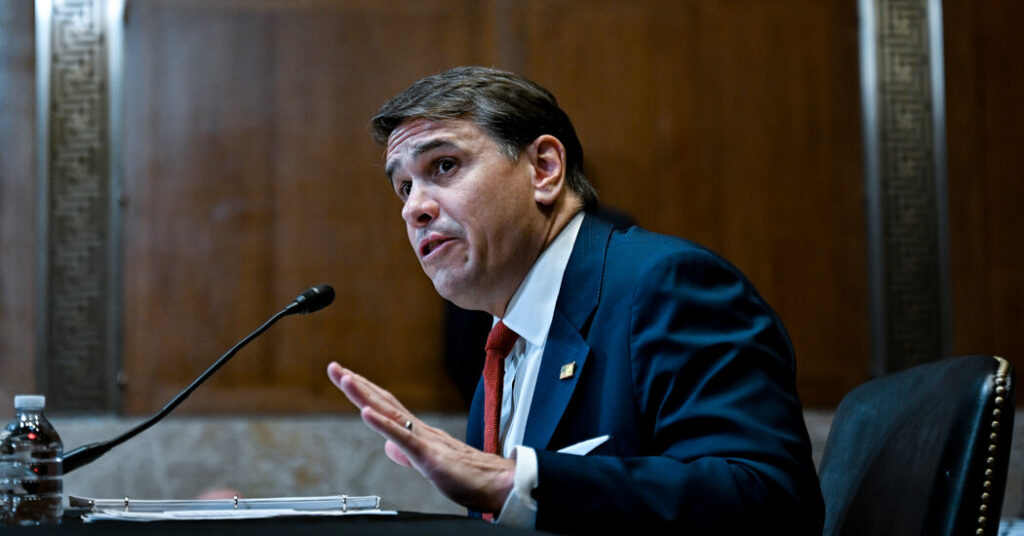
The new provision was released just one day after Mr. Trump agreed to drop his suit in exchange for the creation of a $1.8 billion compensation fund for people he believes were wronged by federal investigations or prosecutions. The fund drew repeated criticism from Democrats when Mr. Blanche appeared before a Senate Appropriations subcommittee for a hearing on Tuesday morning.
The New York Times reported last week that Mr. Trump’s talks with the Justice Department and the I.R.S. had included a measure calling on the I.R.S. to drop any audits of the president, his relatives or businesses. But that provision did not appear in the nine-page agreement laying out the terms to dismiss the lawsuit, which the department released Monday.
In January, Mr. Trump, along with two of his sons and the Trump family business, sued the Internal Revenue Service for at least $10 billion over the leak of their tax returns during the president’s first term. The Trumps argued that the I.R.S. should have done more to prevent a former contractor from disclosing tax information to The New York Times and ProPublica.
Neither the Justice Department nor the I.R.S. immediately responded to requests seeking comment. The top lawyer at the Treasury, Brian Morrissey, resigned on Monday after the Justice Department announced the settlement with Mr. Trump.
Justice Department officials have in part defended the creation of the “anti-weaponization” fund by pointing to the fact that Mr. Trump and his family members will not be paid by it.
But protection from audit could be quite remunerative for Mr. Trump. In 2024, The Times reported that a loss in an I.R.S. audit could cost Mr. Trump more than $100 million.
It is unclear if that examination has concluded or if Mr. Trump, his family members or affiliated entities are under other audits. I.R.S. procedures call for the mandatory audit of the president’s tax returns annually.
Federal law prohibits the president, vice president and other executive officers from instructing the I.R.S. to start or stop specific audits. But that broad prohibition does appear to include a carve out for the attorney general.
Alan Feuer covers extremism and political violence for The Times, focusing on the criminal cases involving the Jan. 6 attack on the Capitol and against former President Donald J. Trump.
The post Deal on Compensation Fund Blocks I.R.S. Audits of Trump and His Family appeared first on New York Times.