Once upon a time, the essential tools for a reporter or critic covering a premiere at the Cannes Film Festival were a notebook and a pen. These days, though, there’s a necessary but regrettable addition to the list: the stopwatch app on an iPhone.
It’s all because of those damn standing ovations.
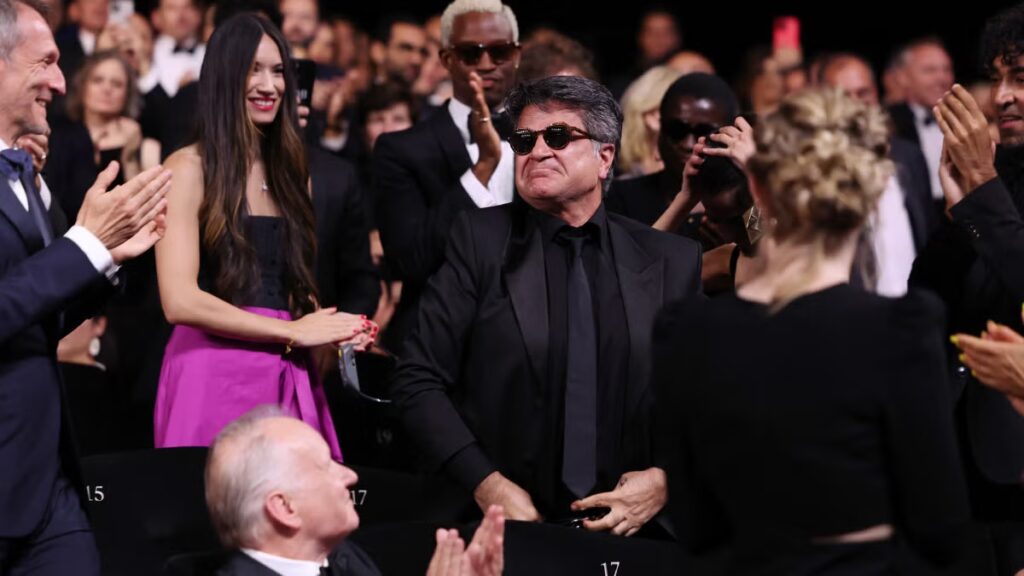
Now, there’s nothing wrong with a Cannes premiere audience lavishing applause on the directors, writers and casts of praiseworthy films. But marathon standing ovations have become de rigueur in the Grand Auditorium Lumière, turning into a ritual every bit as annoying as the red-carpet selfies that the festival tried to ban many years ago. It’s gotten to the point where a four-minute standing ovation is a sign of weakness; if members of the audience aren’t on their feet for at least five or six minutes, the knee-jerk conclusion is that they didn’t really love the movie they’d just seen.
For the most part, the media is at fault. It’s almost laughable, sitting in one of the press rows in Lumière and watching fellow reporters whip out their phones and start their timers as soon as a movie ends, gathering intel that’s of questionable significance beyond the inevitable stories: “Joaquin Phoenix Tears Up During 5-Minute Cannes Standing Ovation for MAGA Western ‘Eddington,’” “Richard Linklater’s ‘Nouvelle Vague’ Receives Electric 10-Minute Plus Cannes Standing Ovation,” “’Megalopolis’ Debuts at Cannes With 7-Minute Standing Ovation…”
It’s not news, it’s silly cinephile clickbait, but it creates an atmosphere in the theater that leaves accomplished filmmakers feeling awkward.
“The problem was, I was standing there saying thank you and all this bull—, and thinking, Why are we getting that response?” director Terry Gilliam once told me about the 15-minute-plus Cannes ovation that confounded him following the 2018 premiere of his long-in-the-works “The Man Who Killed Don Quixote.” “Was it because it’s a really good film, or was it about my endurance? I was only interested in: Did they like the film? That’s what I wanted to know. But I had to stand there and smile, and then wave, and then turn to the cast… I just made a fool of myself. It was absurd.”
It’s absurd on a number of levels. First, outlets never actually agree on how long an ovation lasts; one publication might say seven minutes, another says 10. In a way, that’s because it’s hard to figure out exactly when the ovations begin and when they end. Typically, applause starts when the credits roll, often tapering off as the credits continue before turning into a full-fledged standing ovation when the lights come on.
The reactions of the director and cast, who are all sitting in the same row in the orchestra, are shown on the big screen in the theater; this causes another surge in applause and often prompts the audience to see how long it can keep the ruckus going. Directors can control when they say a few words into the microphone that awaits them. If they want to milk the applause, they can, and if they want to stop it, they can generally encourage the audience to do that too.
The length of an ovation doesn’t indicate that a movie is going to be a box-office or critical success: Last year, “Sentimental Value” racked up the longest cheers (15 to 19 minutes, depending on whom you believe) but lost the Palme d’Or to “It Was Just an Accident” (8 to 10 minutes) and was dwarfed at the box office by “Mission: Impossible — The Final Reckoning” (6 to 7 minutes). In 2019, Todd Phillips’ “Joker” got an eight-minute ovation in Venice (which plays this game as zealously as Cannes), but its 2024 sequel, “Joker: Folie à Deux,” which nobody liked as much, got a 13-minute one.
Granted, genuine enthusiasm for great movies in packed theaters is never a bad thing. And it can be amusing to wonder if anything is ever going to beat the Cannes record that was apparently set two decades ago by 22 minutes of cheers for Guillermo del Toro’s “Pan’s Labyrinth.” But when the applause becomes a performative endurance test and fodder for lazy headlines, it’s just irritating. It’d be nice if Cannes audiences, and Cannes reporters, would learn when to stand up and when to stand down.
This story first ran in the Cannes issue of TheWrap’s awards magazine. Read more from the issue here.
The post Enough With Those Absurd Standing Ovations at Cannes appeared first on TheWrap.