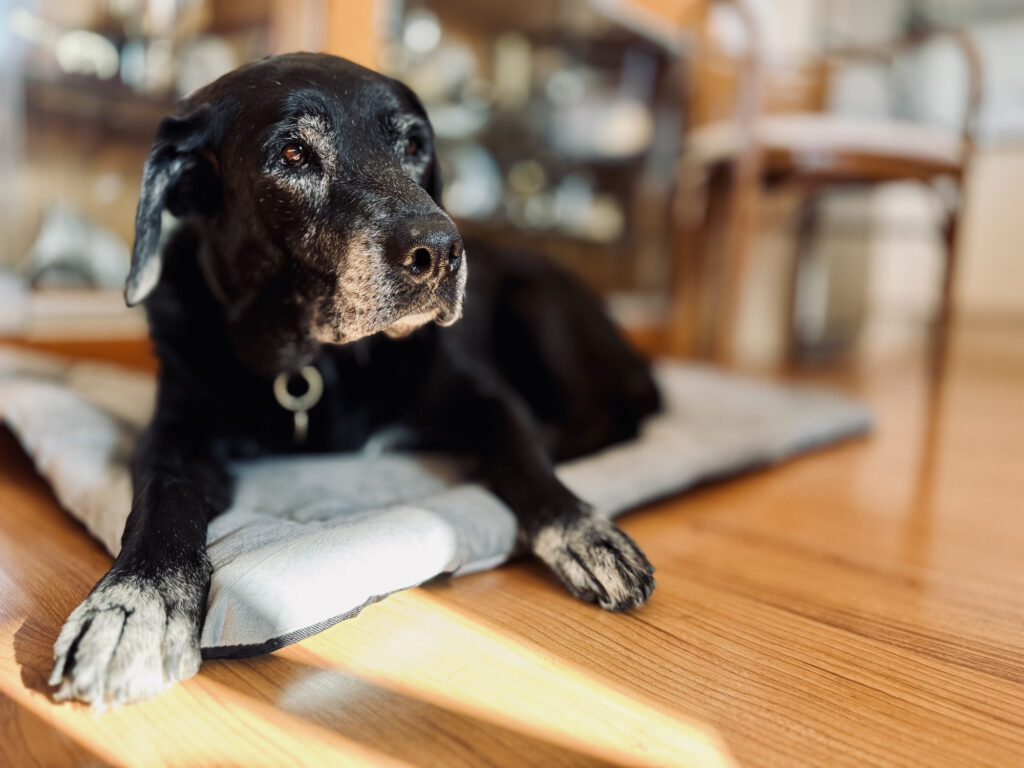
I recently listened to a podcast about antiaging drugs for people. Is there something similar for dogs?
The promise of antiaging — or “senolytic” — drugs for people is a hot topic, with a drug called rapamycin showing the greatest promise based on studies in mice. Could these drugs also extend the quality time we spend with our precious pets, and stave off aging conditions such as cancer, heart disease and cognitive decline?
In dogs, two national clinical trials of antiaging drugs are underway: One for rapamycin and one for LOY-002, a more mysterious drug. If studies show that these drugs lengthen a dog’s healthy lifespan, there would be additional support for their use in other animals and humans. On the flip side, these drugs could have side effects — and because pets can’t consent to participate in trials, ethical concerns surround their use in otherwise healthy animals.
Here’s what you need to know.
What is rapamycin?
Rapamycin (also known as sirolimus) is a natural compound produced by the bacteria Streptomyces hydroscopius, found in soil. Canadian researchers discovered rapamycin around 1970 in a soil sample from Chile’s Easter Island (the island’s Native name is Rapa Nui, hence the name rapamycin). Although originally developed as an antifungal drug, rapamycin was later found to suppress the immune system (not something that’s desirable for people with fungal infections). It’s now used to prevent transplant rejection, treat some types of cancer, and coat cardiovascular stents to prevent scarring.
Rapamycin’s discovery launched a billion-dollar drug industry for transplant and cancer patients. But it wasn’t until later that scientists learned that they might have stumbled on something of even greater significance: a liquor of longevity. In a landmark paper published in the journal Nature in 2009, scientists reported that feeding older mice rapamycin prolonged their lifespan by 14 percent for females and 9 percent for males. Since then, several other studies have demonstrated rapamycin’s beneficial effects on longevity in mice, even when given for a limited period.
What are the downsides?
Some people, including antiaging celebrities Peter Attia and Bryan Johnson, are already taking rapamycin off-label for longevity. Scientists remain worried, though, about side effects in people, especially immunosuppression.
Some studies suggest that while rapamycin is immunosuppressive at high doses, at low doses, it might even improve immune function. In mice, there’s some evidence that it can slow aging of the immune system and improve responses to vaccination. But more research is needed to fully understand the effects.
Does it work in dogs?
In short, it’s too soon to know. We need more studies to see if it slows aging in humans and other animals. Dogs are an ideal model. They age five to eight times as rapidly as us, they share our environment, and, just like humans, they develop cancer, cardiovascular disease and neurodegenerative disease as they age. They also tend to react to drugs like humans do (unlike cats, which have unique drug sensitivities).
Although dogs develop similar types of cancer to humans (and have been used to study some human anticancer drugs), they don’t develop the same types of cardiovascular and neurodegenerative diseases as we do. Nevertheless, there are similarities that can be used to study the effects of drugs. For example, dogs don’t get coronary artery disease and strokes like humans, but aging small dogs commonly develop a degenerative condition of the heart called myxomatous mitral valve disease (MMVD), the progression of which might be slowed by treatment with antiaging drugs.
Can I try antiaging drugs on my pet?
If you’re interested in trying antiaging drugs for your dog, two major clinical trials are available. The first is a trial of rapamycin known as TRIAD (which stands for Test of Rapamycin In Aging Dogs). To participate in TRIAD, your dog must first enroll in the Dog Aging Project (DAP), a nationwide study that gathers data on pet dogs as they age; there are already more than 50,000 dogs enrolled.
TRIAD is studying whether giving dogs rapamycin weekly for one year leads to better heart health, improved mobility, better cognitive function and a longer lifespan. To participate, dogs must be at least 7 years old, weigh between 44 and 120 pounds, be neutered, visit one of the study’s roughly 20 sites every six months for three years, and meet several other requirements. Dogs are treated either with rapamycin or a placebo — but if you choose to participate, you won’t know which treatment your dog is receiving.
The second option is a trial of LOY-002, a drug being developed by the San Francisco-based company Loyal. This trial, called the STAY study, is also placebo-controlled, but other than saying that LOY-002 targets metabolic dysfunction that occurs with aging, Loyal has kept the nature of the drug a proprietary secret, and there are no disclosed reports of its safety and efficacy in other animal species. To participate in STAY, dogs must be at least 10 years old and weigh at least 14 pounds. The medication is given daily as a chew; researchers are also developing two other drugs that interfere with the action of a hormone called insulin-like growth factor 1. Participants are expected to commit to a study that lasts up to four years and visit a study site multiple times a year.
Researchers are also evaluating the effect of rapamycin on feline hypertrophic cardiomyopathy, a common heart disease, but so far there aren’t any large studies like TRIAD looking at the effect of the drug on their aging.
Kate Creevy, a professor of small-animal medicine at Texas A&M University and one of the founders of the DAP, emphasized that there’s the potential for side effects, and we don’t know whether rapamycin will work in dogs.
“We’re not doing the study because we think rapamycin will make dogs live longer, we’re doing it to find out if it works or not,” she said. “Being part of the study is a gift to future generations of dogs, but not necessarily a gift to your dog.” She also noted that so far, no unexpected side effects have been observed.
Loyal’s drug LOY-002 has met safety and efficacy criteria required for conditional approval by the U.S. Food and Drug Administration. However, larger studies of more dogs that have a variety of age-related conditions will be needed before conclusions can be made about safety and efficacy. Even if the drugs turn out to be safe, the cost to pet owners might outweigh the benefit.
Until we know more, the best way to promote longevity is to feed your pet a balanced diet, ensure they are a healthy body weight and get regular exercise, take them for annual wellness checks by a veterinarian, and follow your vet’s advice on vaccination and other preventive measures. Perhaps by the time my puppy Lucille reaches middle age, there will be a longevity gummy for both of us.
Have questions about your pet’s behavior, health or other issues? Use this form to submit them to Dr. Sykes.
The post Ask a Vet: Is there a pill that can help my dog live longer? appeared first on Washington Post.