Taiwan’s Plastic Habit Collides With Shortages Caused by a Faraway War
Plastic producers in Taiwan have scrambled to secure new supplies since the war in Iran disrupted petrochemical flows and tightened availability. Some producers have turned to the United States to purchase liquefied petroleum gas, another petrochemical used to make plastic. Others have sourced plastic goods from China, where many Taiwanese manufacturers have longstanding relationships.
Taiwan’s main plastic manufacturer, Formosa Petrochemical, imports two-thirds of its naphtha, the petrochemical used to make plastic, most of it from the Middle East. But in early March, the tankers carrying those supplies from the Persian Gulf stopped arriving.
The shortage forced Formosa Petrochemical to shut one of its two production lines. The company’s production capacity has decreased about 42 percent from its normal level, its spokesman, Lin Keh-yen, said.
The disruption has been worse than the shocks that Russia’s invasion of Ukraine or the Covid-19 pandemic caused, he said.
In March, Formosa Petrochemical was still able to fill orders using stockpiled inventory. There was less to go around by April.
“Of course, we also looked for alternatives,” Mr. Lin said. “But it’s impossible to buy such a large quantity.”
Even if tankers carrying naphtha resumed normal passage through the Strait of Hormuz, it would take at least a month for Taiwan’s plastic supplies to return to normal, said Jerry Pai, former chairman of the Supply Chain Management Institute, Taiwan, an industry group.
But the supply crunch is already trickling down into everyday life in Taiwan.
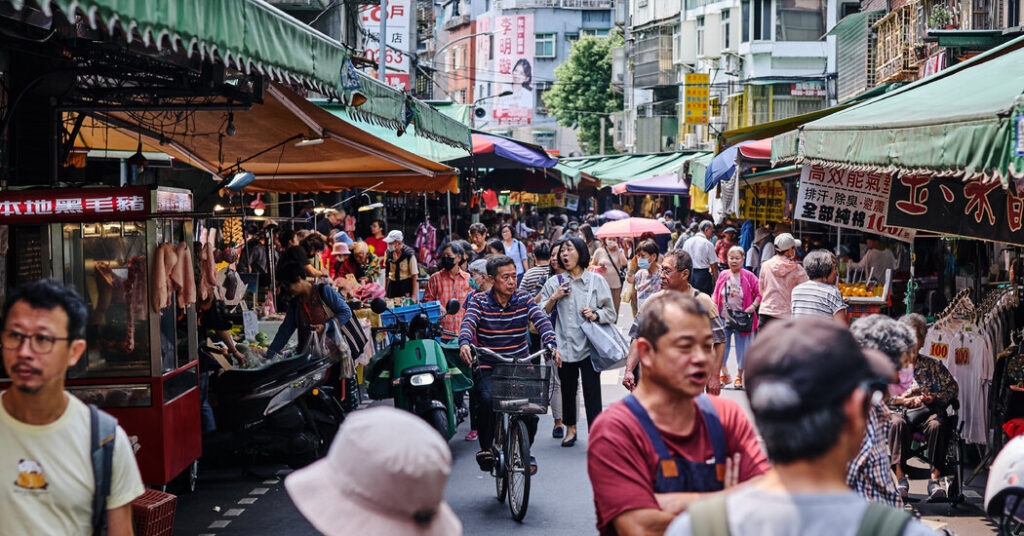
At the Xizhou Public Market, one of the oldest traditional food markets in the Taipei area, Hung Ming-he manages a web of relationships. He leads the organization that runs the market and owns a nearby stall famous for its pork dumplings.
Plastic touches nearly every stage of making those dumplings. At the butcher’s stall, Mr. Hung picked up freshly ground pork in a bulging plastic bag — at the vegetable stand, vibrant green scallions in another.
At a table in the heart of the market, sheltered from rain by overlapping awnings, Mr. Hung folded dumplings with two colleagues and described how the plastic shortage had weighed on his business. While he talked, he and his colleagues placed finished dumplings into clear plastic clamshell containers with individual indentations to keep each one separate.
The price of plastic bags and other plastic restaurant supplies had doubled from March to April, he said. It was not just his business feeling the squeeze. Other market vendors, already working on thin margins, were hurting, too. Yet most, like Mr. Hung, were reluctant to pass the costs on to consumers, many of them retirees with limited budgets.
Some retailers, he added, were charging three times what they did before the war for plastic bags. His restaurant would not be able to keep absorbing the increases for much longer, he said.
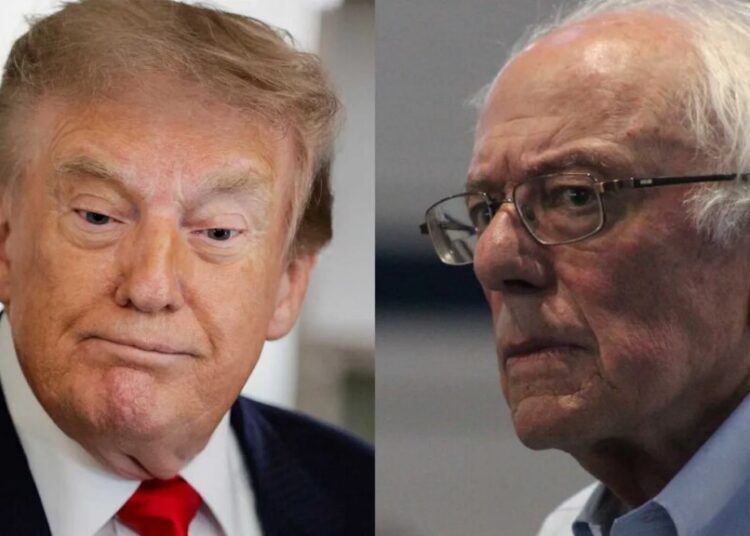
“If it goes any higher, we will have to start charging customers more,” he said. “Let’s see what Trump does.”
Taiwan’s plastic use remains among the highest in the world. Last year, government data showed the island used 229,008 metric tons of plastic bags, which works out to about 50 billion four-gram bags. Some of those plastic bags may have been exported later.
Taiwan needs to do more to curb plastic use, said Mr. Pai, the former chairman of the Supply Chain Management Institute. “It’s destroying the environment for future generations,” he said.
Part of the reason plastic products are so abundant is that Taiwan is home to the Formosa Plastics Group, one of the world’s largest plastic makers. The conglomerate is also a part-owner of Formosa Petrochemical, one of Asia’s largest oil refiners.
But researchers have found another reason plastic use is so entrenched. Taiwan’s recycling system is so pervasive that people don’t feel bad about throwing away a bag, bottle or utensil after a single use.
Wang Ming-yuan has run her pharmacy for 20 years. Like many pharmacists and traditional Chinese medicine shops in Taiwan, she orders custom plastic bags printed with her shop’s name and space to write customers’ prescriptions and dosages.
When Ms. Wang placed a new order in mid-March, her supplier warned that it did not know when the order could be filled. By April 12, she had run out. She has since switched to paper bags, though those contain plastic sleeves, and she worries they may disappear next.
“Who would have imagined how essential these things are to our everyday lives?” she said.
Ms. Wang, who is also a spokeswoman for a Taiwanese pharmacists association, said it was the worst supply shortage she had seen in all her years running the pharmacy.
The plastic shortage was forcing other businesses to make some tough choices.
At the start of April, Yeh Pi-chiu, who manages a rice vermicelli noodle shop near the Xizhou market, started charging customers one Taiwan dollar — roughly 3 cents — for every plastic bag their order required.
“Anything related to plastic has gone up in price,” Ms. Yeh said. The fee wasn’t about profit, she insisted, but was about encouraging customers to be more conscious of how much plastic they use.
Her noodle shop, which is festooned with cat pictures, was donating the proceeds to a local animal shelter.
A few blocks away, the supply crunch was hitting at the source.
Yu Chih-ta and his mother have spent decades running a shop that sells plastic bags and containers to small businesses, including food vendors.
Since the war began, they said, new shipments have stopped arriving, leaving them to sell only what they had in stock. To stretch supplies, they have steadily raised prices and rationed how many bags customers can buy.
The shelves are lined with signs that look decades old, except for the layers of fresh price stickers pasted over one another in recent weeks.
In the corner of Mr. Yu’s shop, a television on the wall showed President Trump discussing the war in Iran.
Xinyun Wu is a reporter and researcher covering technology and business in China and Taiwan and is based in Taipei, Taiwan.
The post Taiwan’s Plastic Habit Collides With Shortages Caused by a Faraway War appeared first on New York Times.