This is an edition of the Books Briefing, our editors’ weekly guide to the best in books. Sign up for it here.
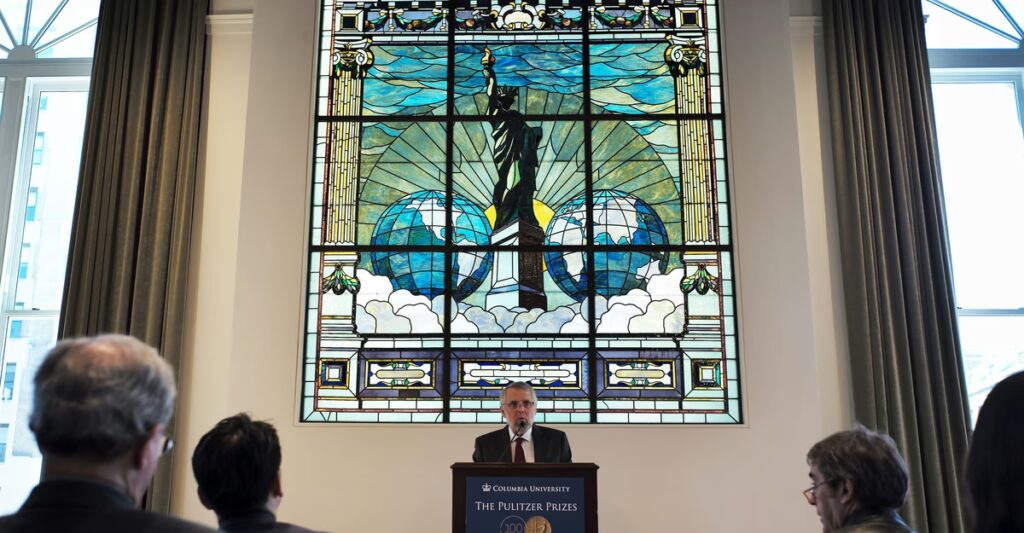
The Pulitzer Prizes, whose 2026 honorees were announced this week, reward excellent American journalism, music, drama, and books. Public conversation about the six categories of book awards tends to focus on the fiction prize, especially in years when the winner is unusually commercial, such as 2018’s Less, or obscure, like this year’s Angel Down, or not chosen at all, as in 2012. The medal for poetry gets little attention, and critics seldom scrutinize the four nonfiction selections. But if you do look closely at the history, biography, memoir, and general-nonfiction honors, a noticeable pattern emerges. The picks typically share a particular quality, according to my colleague Gal Beckerman, who often writes about nonfiction. The juries go for “books that cover social issues in human (almost novelistic) ways,” he told me. “These are about serious topics, but approached with literary flair.”
First, here are four new stories from The Atlantic’s Books section:
- The secret of Elizabeth Strout’s appeal
- For Ibram X. Kendi, it’s Nazis all the way down.
- How Everest has changed sinceInto Thin Air
- “Reflections in the Door of a School Bus and Other Doors,” a poem by Athena Nassar
This year’s honorees fit Beckerman’s mold. Jill Lepore, the winner in history for We the People: A History of the U.S. Constitution, grounds sweeping ideas about the evolution of democracy in earthy portraits of the people who fought over them. An excerpt published in The Atlantic begins, “Bushy-browed, pipe-smoking, piano-playing Antonin Scalia—Nino—the scourge of the left, knew how to work a crowd.” When the Atlantic staff writer Megan Garber described why Lepore’s earlier history These Truths was among the best books of 2018, she wrote: “Who else but Lepore would think to describe James K. Polk as having ‘eyes like caverns and hair like smoke’?” In a similar vein, the new winner in general nonfiction, Brian Goldstone’s There Is No Place for Us, was on our 2025Atlantic 10list because it brought to vivid life five families struggling to remain housed—people who, as we put it, “might otherwise remain out of sight.”
I was pleased to see two other Atlantic 10 picks show up on the Pulitzer’s list of finalists; both of them combine big ideas with a literary level of detail. In the history runner-up King of Kings, a granular revisiting of the Iranian Revolution and the grave American missteps that exacerbated it, Scott Anderson flits among the points of view of diplomats, Cabinet officials, and radicals to render the event with a sense of contingency—a feeling that anything could have happened. And no book that I read last year integrates its intellectual and human elements better, to my mind, than A Flower Traveled in My Blood, Haley Cohen Gilliland’s account of the relentless grandmothers of the young people kidnapped and disappeared by Argentina’s government during the 1970s. I’ve been telling people that you could easily make three different, equally excellent movies out of her book, which was a general-nonfiction finalist—and that none of them would capture its best parts.
This week, I also thought back to a Pulitzer finalist from a different time, Jon Krakauer’s Into Thin Air, which is being rereleased this month on the 30th anniversary of the deadly Mount Everest disaster it describes. I had regarded the book as almost purely an adventure tale—until I encountered Krakauer’s introduction to the new edition, which was adapted into an Atlantic article this week. It turns out that the Everest disaster had a lot to do with climate change, over-tourism, and national sovereignty—a set of intertwined social concerns that have grown only more salient over time. That’s why it belongs among these works—books by very different authors that all fit into the same broad canon, because they marry grand insights with stories that are irresistible.
What to Read
Come Back in September: A Literary Education on West Sixty-Seventh Street, Manhattan, by Darryl Pinckney
This was, hands down, my favorite book of 2022. Pinckney, a celebrated novelist and critic, animates not just his relationship with his teacher and longtime mentor, the legendary writer and editor Elizabeth Hardwick, but an entire milieu: the world, by turns rarefied and gritty, of literary New York in the 1970s. Pinckney introduces the reader to a number of men, and he invokes the devastations of the impending AIDS epidemic in a wholly original way as he suggests that they will be lost to the disease in the years to come. Both somber and hilarious, this memoir elevates gossip to high art, taking readers through Pinckney’s years trawling the East Village in the era when he wrote his earliest articles for The New York Review of Books. It may well send you back to read, or reread, some of the figures covered in its pages—Hardwick and Susan Sontag, Robert Lowell and Mary McCarthy. After that, you may yearn to read this volume all over again; I did precisely that. — Nicholas Boggs
From our list: Eight of the most fascinating biographies to read
Out Next Week
 The Collected Stories of Katherine Mansfield, by Katherine Mansfield
2084, by Elliot Ackerman and James Stavridis
Mighty Real: A History of LGBTQ Music, by Barry Walters
Your Weekend Read
The Attention-Span Panic
By Franklin Schneider
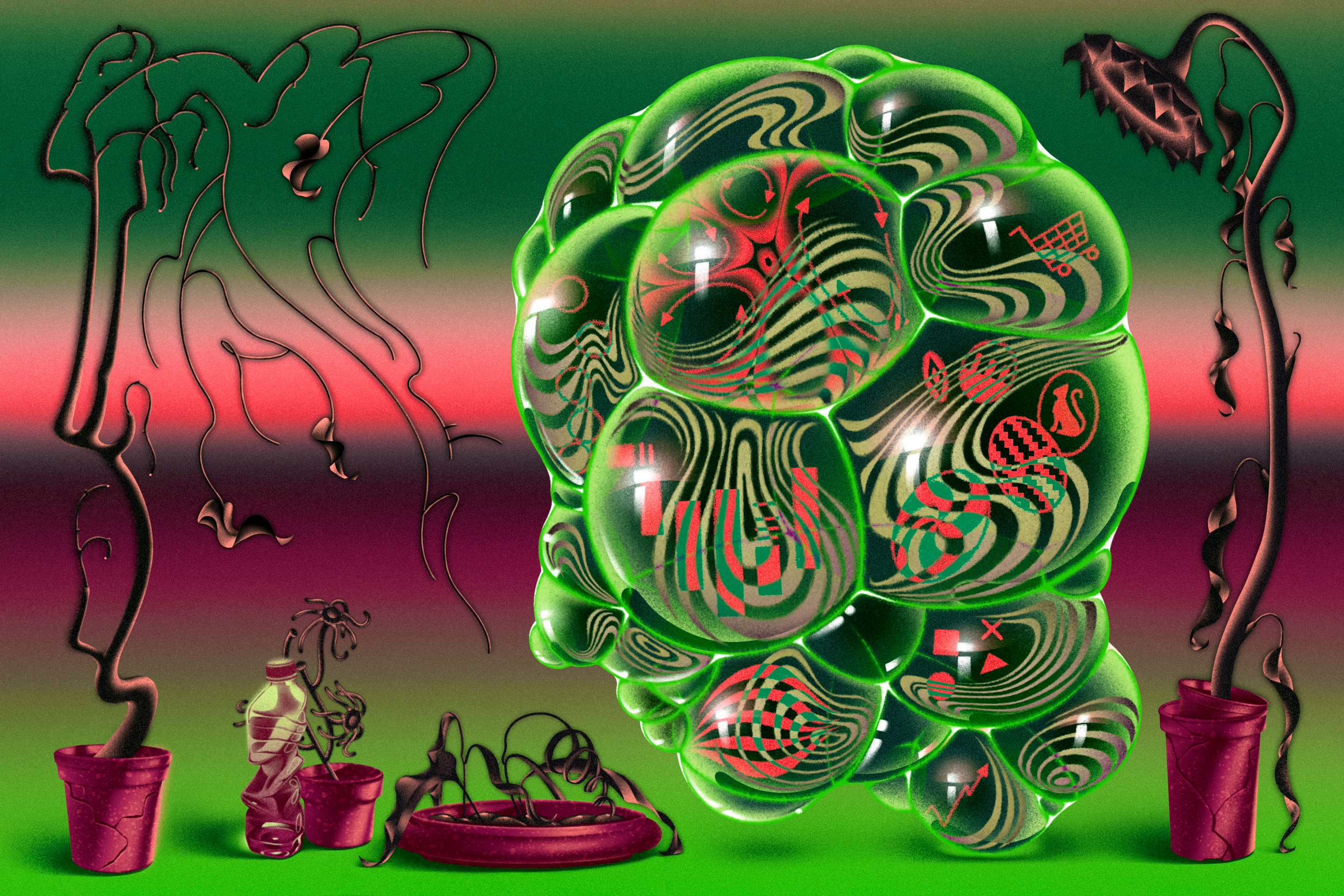
Attention, these days, is something that many Americans seem to regard as an inherent virtue whose purity they can try to protect or allow to be despoiled. A diminished attention span is a sign of personal weakness, or even intellectual debasement. On social media, people talk of having “German-shepherd attention spans” and liken their condition to “brain damage.” To reduce one’s attention span, so the logic implies, is to reduce one’s humanity.
But this might be an outdated way of thinking about attention—and one that blames the individual for dispensing something that, more accurately, is being extracted. Some of the most lucrative companies on the planet, after all, are those that harvest attention. Perhaps many people feel bad about their attention span not because it’s too short, but because they sense that they’re running themselves ragged by giving away a precious commodity for far less than it’s worth.
When you buy a book using a link in this newsletter, we receive a commission. Thank you for supporting The Atlantic.
Sign up for The Wonder Reader, a Saturday newsletter in which our editors recommend stories to spark your curiosity and fill you with delight.
Explore all of our newsletters.
The post The Kind of Nonfiction That Wins Pulitzers appeared first on The Atlantic.