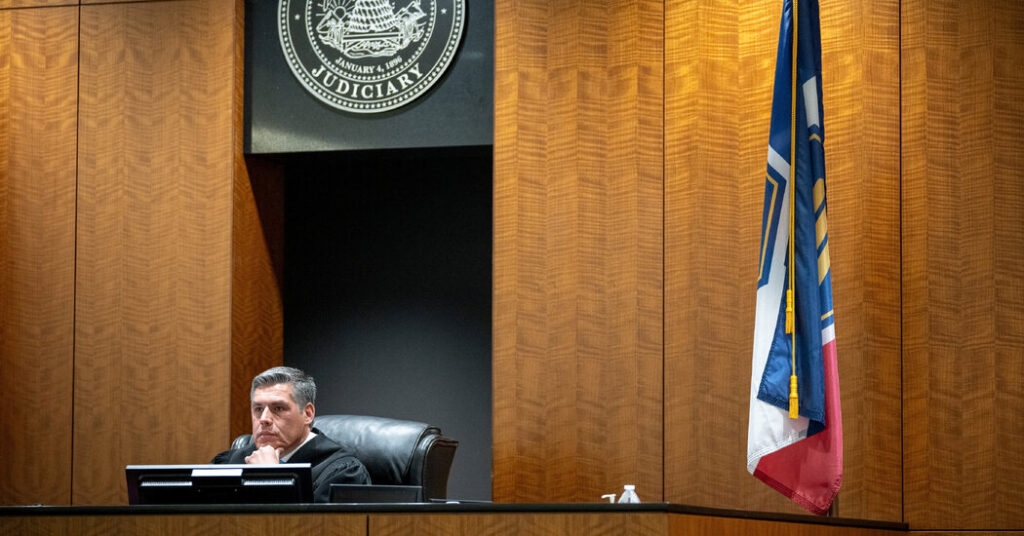
A Utah judge overseeing the trial of the man accused of assassinating the conservative activist Charlie Kirk rejected on Friday an effort by the defense to ban cameras from the courtroom.
Lawyers for the defendant, Tyler J. Robinson — who has been charged with first-degree murder in the shooting of Mr. Kirk during a university debate last September — had argued that the presence of video cameras, news photographers and audio microphones in the courtroom was primarily for entertainment and sensationalism, and threatened their client’s right to a fair trial.
But the district judge in the case, Tony Graf, ruled on Friday that the defense had failed to prove that Utah law would support a blanket ban on news cameras in the courtroom.
Courts in Utah generally allow news cameras, and more than a dozen news media organizations, including The New York Times, have argued that banning cameras would undercut a need for transparency and openness in what is perhaps the state’s most highly scrutinized murder trial. Prosecutors also opposed the request to ban cameras.
The ruling was the latest in a series of delays and pretrial fights between prosecutors and the defense.
Judge Graf on Friday also canceled a preliminary hearing that had been scheduled to begin later this month, during which prosecutors were set to lay out evidence to show they had probable cause against Mr. Robinson. Judge Graf delayed the hearing to July, citing the sheer volume of evidence in the case that the defense has to wade through.
More than seven months after Mr. Kirk, leader of the conservative group Turning Point USA, was killed during an appearance at Utah Valley University, Mr. Robinson has yet to enter a formal plea.
Prosecutors say they found DNA consistent with Mr. Robinson’s on the rifle believed to have been used in Mr. Kirk’s assassination. They have also released text messages between Mr. Robinson and his romantic partner in which Mr. Robinson said he had “had enough of his hatred,” referring to Mr. Kirk.
Judge Graf has already imposed several limitations on news coverage of the pretrial hearings. He has moved cameras to the back of the courtroom. He has also barred camera operators from showing images of Mr. Robinson in shackles or entering or leaving the courtroom, and has barred them from filming his family.
But Mr. Robinson’s lawyers said that video images of their client had undermined his right to a fair trial. One example they cited was a New York Post article that asked a lip-reader to parse video of Mr. Robinson speaking with his lawyers. The lip-reader claimed that he had said, “I think about the shooting daily,” according to the article.
Nicholas Bogel-Burroughs contributed reporting.
Jack Healy is based in Colorado and covers the west and southwest for The Times.
The post Judge Rejects Defense Plea to Ban Cameras in Charlie Kirk Trial appeared first on New York Times.