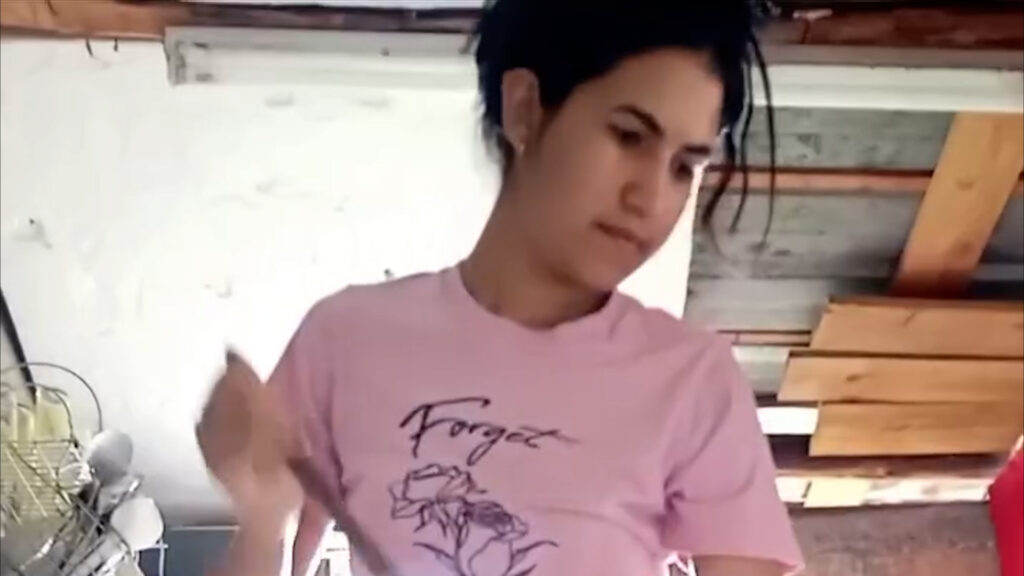
Another morning arrived without power, and without phone reception, but Ana still had about 15 percent of phone battery left from the night before. In her nightdress, with the curtains still closed, she got out of bed and began to record.
The young Cuban mother recorded video as she drank her coffee. She had brewed it the night before and kept it in a thermos so she wouldn’t need to fire up her coal- and wood-burning stove first thing in the morning. She recorded — in five-second clips, to conserve battery — as she swept the tile floor of her modest kitchen, in her small town.
“I live in Cuba, and this is how my morning began,” Ana said. “Without electricity, but with enthusiasm.” She would eventually edit the video and post it on her Instagram account once the power came back hours later. Ana spoke on the condition that her last name be withheld for fear of retaliation.
President Donald Trump’s effective embargo on fuel to Cuba has plunged the island into its worst crisis in decades. Cubans are suffering recurring power outages in a fuel shortage that has stilled transportation, suspended trash collection and required hospitals to ration care.
But under a Communist government that tightly controls international media’s access to the country, only a trickle of journalists have been able to show the realities of life on the ground. Restrictions on phone data and some social media platforms add to the challenges of posting online from the island of 10 million people.
Ana is part of a growing cohort of women on Instagram and TikTok who are breaking through all of that, using VPNs and help from contacts abroad to provide a rare, unmoderated window into daily life in Cuba. They avoid talking politics or placing blame for the blackouts. But by speaking — relatively — freely for thousands or tens of thousands of followers, they are showing the power of individual Cubans to reach the outside world from an island that was, until recent years, cut off from it.
A mother shows how she cooks potato stew over a coal stove on weekends when the electricity arrives for a total of only three hours and “the days are dark, with lots of smoke.” A hairdresser gives a balayage color treatment during a power cut, her salon chair on the street, washing and reusing tin foil because it’s so hard to find on the island. Mileydi Barrionuevo shows her followers how to use coal to clean and polish pots left “as black as the heart of your ex” after the last national electric grid collapse.
Many of these women became content creators only in the past few months, during the island’s energy crisis. Rachely Carmenates, a 24-year-old doctor, began in early March with a video showing how she got ready to work a 24-hour shift after 30 hours at home without power. The video has been viewed more than 2 million times; the new medical resident has more than 71,000 followers.
While it’s difficult to monetize social media accounts in Cuba, she’s received donations from followers, which she said she gives to the infants she cares for in her job. The appeal of her videos, Carmenates said, is how normal they are. Rather than selling brands and an aesthetically pleasing lifestyle, like other influencers, she’s showing the everyday challenges of the average Cuban woman. She once received criticism for applying MAC foundation in a video. A follower asked her how, if she was struggling financially, she could afford luxury makeup. The powder, Carmenates said, was clearly a knockoff, purchased in Cuba.
As her following grows, Carmenates said, she understands the need to be careful about what she says and how she says it. But Carmenates doesn’t want to sugarcoat her struggles.
“No one can penalize me for showing my day-to-day life,” she said. “To say that I went through 30 hours without power isn’t a lie; it’s the reality I’m living. To say I earn $20 a month, which isn’t enough for anything, isn’t a lie.”
Cuba is one of the world’s final frontiers for access to social media. After years in which internet access was mostly limited to the government elite and vetted professionals, Cuba in 2018 and 2019 began rolling out a 3G mobile telephone service. This access to social media played a key role, in 2021, in the spread of the largest anti-government protests in decades in Cuba.
In the years since those protests, regular Cubans have gone from becoming content consumers to creators, said Norges Rodríguez of YucaByte, a Miami-based website on Cuban affairs. Now, months into their worst crisis since the collapse of the Soviet Union deprived Havana of its most important patron, Cubans are dealing with “accumulated fatigue, the lack of possibilities to leave and the hope that something could happen” to the government.
The government this year arrested two young men who created a popular YouTube channel, El4tico — meaning “the little room” — on which they openly criticized the government.
The women posting reels about their daily lives don’t appear to have an overt political agenda.
“That may not matter that much,” said Ted Henken, a professor of sociology and anthropology at Baruch College in New York who follows Cuba closely. “If they are unfiltered and showing the reality, it can easily become political. All it takes is for them to go on camera asking who’s to blame.”
Ana grew up in the eastern village of Birán, the birthplace of Fidel and Raúl Castro, where her father was a vegetable farmer. She was a teenager when Cubans began getting better internet access on their phones. It wasn’t until about a year ago that she was able, with help from friends, to buy a Chinese Xiaomi Redmi phone to access social media accounts.
She studied nursing but didn’t think a career in the field made sense — the wages for medical professionals in Cuba are simply too low to make ends meet. After the birth of her son, she was looking for new ways she might make money. She came across La Flor Cubana, a Cuban influencer who said she had made $1 million in sales on TikTok.
Ana began posting videos on Instagram last year. She tried promoting a few products — supplements and purses — but it cost too much money for her to pay for the free products to be shipped to Cuba. She’s made a bit of money on Facebook, and recently used a VPN to create a TikTok, where she hopes she might earn more easily.
“It’s also a way to raise our voices and show our reality, because here, well, reality is a bit difficult, and you can’t always express things the way they are,” she said by phone during a brief window of connectivity. Posting videos, she said, allows her to vent alongside other problem-solving Cuban mothers who are often forced to find creative solutions to the daily challenges of life without power or fuel.
In one of her videos, Ana shows her followers how she took advantage of the moment when “the culprit, my friend, the current” returned to her home. The power was back on, and she couldn’t waste a minute.
“I washed, organized, did everything all at once,” she said. “Because here, you can’t wait for things to be perfect to get ahead.”
The post Cuba’s mom influencers share rare view of struggles under U.S. fuel embargo appeared first on Washington Post.