Americans have a long history of being hurried into war on false pretexts. The “yellow press” encouraged a war fever in 1898 by blaming the sinking of the USS Maine on the Spanish, even though the Navy’s own expert said it was caused by an accidental explosion. The George W. Bush administration justified the invasion of Iraq by claiming that Saddam Hussein had connections to the 9/11 attacks and was building weapons of mass destruction, neither of which turned out to be true.
But with the Iran war, as in so many other ways, Donald Trump has broken new ground. He is the first president to start a war without even bothering to lie to the public, because he simply didn’t care what the public thought. The American people weren’t consulted about attacking Iran—neither formally, through their elected representatives in Congress, nor informally, by allowing pundits, activists, and civil-society groups to have their say. As Trump told The New York Times in January, his power as commander in chief was constrained by nothing but “my own morality. My own mind. It’s the only thing that can stop me.”
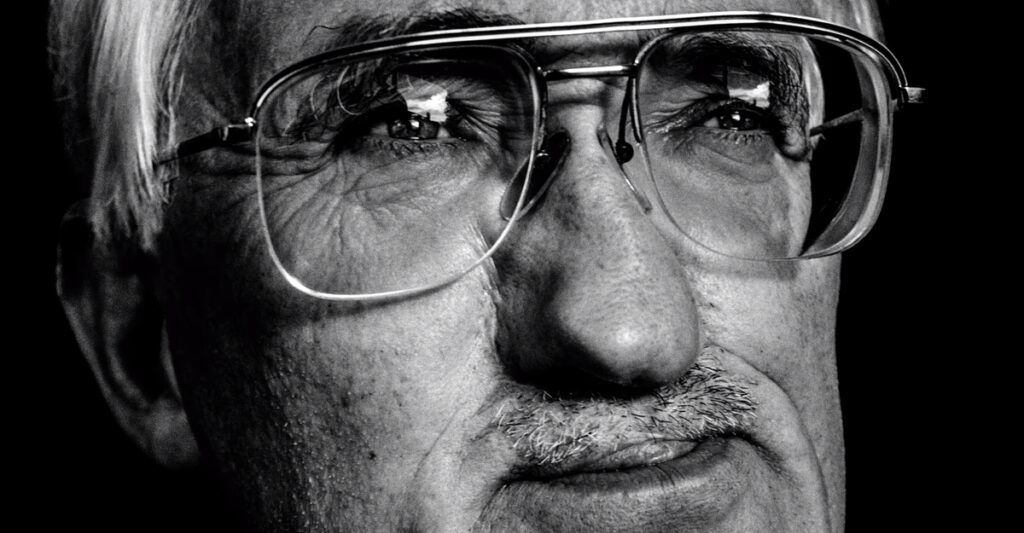
The German philosopher Jürgen Habermas, a prolific commentator on world events, didn’t live to comment on the Iran war. He died on March 14, at the age of 96, two weeks after American and Israeli air strikes began. But it bore out his worst fears about the fate of liberal democracy, which he spent a long lifetime analyzing and defending. For Habermas, the essence of democracy was discourse, back-and-forth argument about ideas and values. In his landmark works of political and social theory, he wrote about the “public sphere” where citizens come together to hammer out judgments, and about “communicative action,” which turns language into a force for cooperation. “All political power derives from the communicative power of citizens,” he wrote, and in an ideal democracy “all relevant questions, issues, and contributions are brought up and processed in discourses and negotiations.”
The end of a life as long and productive as Habermas’s can’t be called a tragedy. But there was a special pathos about the tributes published around the world after his death, which seemed to symbolize the tragic condition of democracy itself. In one of his last public appearances, in Munich in November, he gave a speech mourning “the now–barely reversible dismantling of the oldest liberal-democratic regime,” the United States, thanks to Trump’s “arbitrary-autocratic expansion” of executive power.
[From the May 2026 issue: History is running backwards]
America’s autocratic turn darkened the end of what Habermas described in the speech as a “politically rather favored life.” Perhaps it was favored in the sense that it began at such a low point, there was nowhere to go but up. Habermas was born in Germany in 1929 and grew up under Nazism; he was a member of the Hitler Youth, and his father served as an officer in the Wehrmacht during World War II. He lived long enough to see democracy take root in West Germany, and then to see a reunified Germany become the bulwark of free Europe.
This happy ending was by no means guaranteed, and Habermas’s work as a theorist and polemicist made an important contribution to it. He began his career in West Germany in the 1950s, when ex-Nazis still dominated the academic establishment. Turning against the influence of Martin Heidegger, then the idol of German philosophy despite his collaboration with the Nazi regime, the young Habermas found a mentor in Theodor Adorno, a radical social critic who spent the Nazi period in exile. Adorno was one of the founders of the Frankfurt School of critical theory, and Habermas took up his mantle as the leader of the school’s second generation, spending most of his career at the University of Frankfurt.
But whereas Adorno effectively lost hope for modern civilization after the Holocaust, Habermas devoted his career to finding resources for freedom in the Western intellectual tradition. That quest began with his first book, The Structural Transformation of the Public Sphere, published in 1962. It is still his most popular work, largely because it is more concrete and historical than his later, densely theoretical writing. Habermas traced the birth of the modern concept of “public opinion” to the coffeehouses, salons, and newspapers of 18th-century Europe, which gave ordinary people the opportunity to debate current events and pass judgment on the decisions of monarchs.
This milieu, which laid the groundwork for the French Revolution, served as Habermas’s political inspiration. The public sphere, he wrote, meant “the dissolution of domination,” so that ideas and policies “prevailed on no other ground than the compelling insight of a public opinion.” But Habermas recognized that this liberal-democratic ideal was never fully realized—not in the 18th century, when the public sphere was open only to men of property, and not in the 20th, when public opinion had become passive and inert, an object to be manipulated by propaganda. “The world fashioned by the mass media,” he lamented, “is a public sphere in appearance only.”
Habermas wasn’t alone in making such observations. But whereas leftist thinkers starting with Marx saw the liberal ideal as totally discredited, a mere camouflage for capitalist power, Habermas kept faith with the utopian potential of liberalism. It might be true that a genuine deliberative democracy had never existed, but he insisted that any good society must be based on its principles. “The legitimacy of law,” he wrote in his 1992 book, Between Facts and Norms, “ultimately depends on a communicative arrangement”: Citizens must be “participants in rational discourses,” able to speak their minds freely and to find mutually agreeable solutions to difficult problems.
His study of the dynamics of discourse took Habermas beyond the realm of political philosophy. His scholarship draws on sociology, linguistics, psychology, and cultural studies, engaging with a wide range of other thinkers, past and present. Indeed, Habermas sometimes gives the impression of having read everything about everything. His prose is equally forbidding—dense and abstract, in the long tradition of German philosophy. Yet his work can also be seen as an example of what he called “discourse ethics” in action—an earnest, back-and-forth engagement with other minds.
Ultimately, Habermas believed, language itself commits human beings to democratic argument. In The Theory of Communicative Action, his 1981 magnum opus, he rejected the scientific tendency to think about language in terms of propositions—statements about the world that can be either true or false. The most important thing, Habermas maintained, isn’t what a statement is about, but who it is addressed to. Any time we say something, we say it to another human being in an implicit attempt to win their assent. Different kinds of statements ask for different kinds of acceptance: A factual claim, like “Earth is the third planet from the sun,” wants to be accepted as true, while a moral claim, like “Murder is evil,” wants to be accepted as right.
But in every case, Habermas wrote, “the speech act of one person succeeds only if the other accepts the offer contained in it.” And the decision to accept or reject a speech act is always “based on potential grounds or reasons.” Whenever we say something, we are making a tacit promise that we have good reasons for saying it, and could produce them if called on to do so. Habermas concluded that persuasion isn’t just one way of using language among many others; it is the foundation of every use of language. “The inherent telos of human speech,” the purpose for which it is intended, is “reaching understanding” between human beings.
In real life, of course, we don’t use language only for rational persuasion. We also use it to give orders and make threats, demanding obedience instead of agreement. But when we agree with someone because of the potential “losses” or “rewards,” Habermas argued, we aren’t truly agreeing, just giving in. By the same principle, public discourse is authentic only when no participant is excluded, no opinion is forbidden, and no one is subjected to coercion. These conditions are seldom found in real politics, but we can always get closer to the ideal or further from it.
When Habermas wrote Structural Transformation, in the mid-20th century, he believed the main obstacles to public discourse were technological. Radio, television, and large-circulation newspapers made it possible to reach audiences that a coffeehouse pundit couldn’t dream of. But this communication is one-way: The mass media speak to the public but “deprive it of the opportunity to say something and to disagree.” And since the media agenda is set by the rich and powerful, it’s nearly impossible for dissenting voices to get a hearing.
By the end of Habermas’s life, ironically, the advance of technology had created exactly the opposite problem. Thanks to the internet and social media, the barrier to entering the marketplace of ideas has never been lower. A lone streamer can become an authority to millions, while once-mighty TV networks and newspapers struggle to stay afloat. This ought to be a boon for communication, and in the early days of the internet, many idealists thought it would be. So why has a glut of discourse turned out to be worse for democracy than scarcity was?
[From the November 2025 issue: I don’t want to stop believing in America’s decency]
In one of his last books—A New Structural Transformation of the Public Sphere and Deliberative Politics, published in 2023—Habermas briefly surveyed this development. “Just as printing made everyone a potential reader, today digitalization is turning everyone into a potential author,” he observed. The problem is that when it comes to discourse, quantity is often the enemy of quality. Rational public debate can take place only if participants accept certain conditions—above all, the obligation to be truthful and to listen to other points of view.
The internet, to put it mildly, is not known for encouraging these qualities. The problem isn’t just that people deliberately lie, spreading disinformation for personal or political gain. It’s that the public sphere has shattered into competing publics, each able to ignore the others. If you’re a vaccine denier, your social-media feed is full of other vaccine deniers, so your beliefs are always affirmed, never challenged. This makes democratic deliberation impossible. “The point of deliberative politics is, after all, that it enables us to improve our beliefs in political disputes and get closer to correct solutions to problems,” Habermas wrote, and that can’t happen if we are never challenged by counterarguments or kept honest by demands for explanation. (Or as he put it, using the technical language of his theory of communication, “communicative contents could no longer be exchanged in the currency of criticizable validity claims.”)
Habermas was in his 90s when he wrote about social media, and if anything, he underestimated the challenge it poses—not just to liberal democracy, but to his own thought and worldview. The most sinister effect of the internet on today’s politics isn’t just that it foments division. It’s that the weightlessness of online existence breeds a kind of gleeful nihilism. Instead of discourse, social media encourages trolling—the principle that it doesn’t matter what you say, as long as people pay attention to you.
Habermas was right to call Trump autocratic, but what makes him a strongman for the social-media age is his maddening frivolity—the way he doesn’t seem to know or care what he’s doing or what he will do next. Because he doesn’t take anything seriously, he makes it almost impossible to take him seriously, even as he inflicts entirely serious damage on people and institutions. This quality makes Trump an enigma to political theorists, but a star on social media—a medium where “all that is solid melts into air,” to borrow a famous phrase from Karl Marx. When cruelty and carelessness can be such a politically effective combination, it’s clear that the era of rational discourse—the era of Jürgen Habermas—is well and truly over.
The post The Era of Rational Discourse Is Over appeared first on The Atlantic.