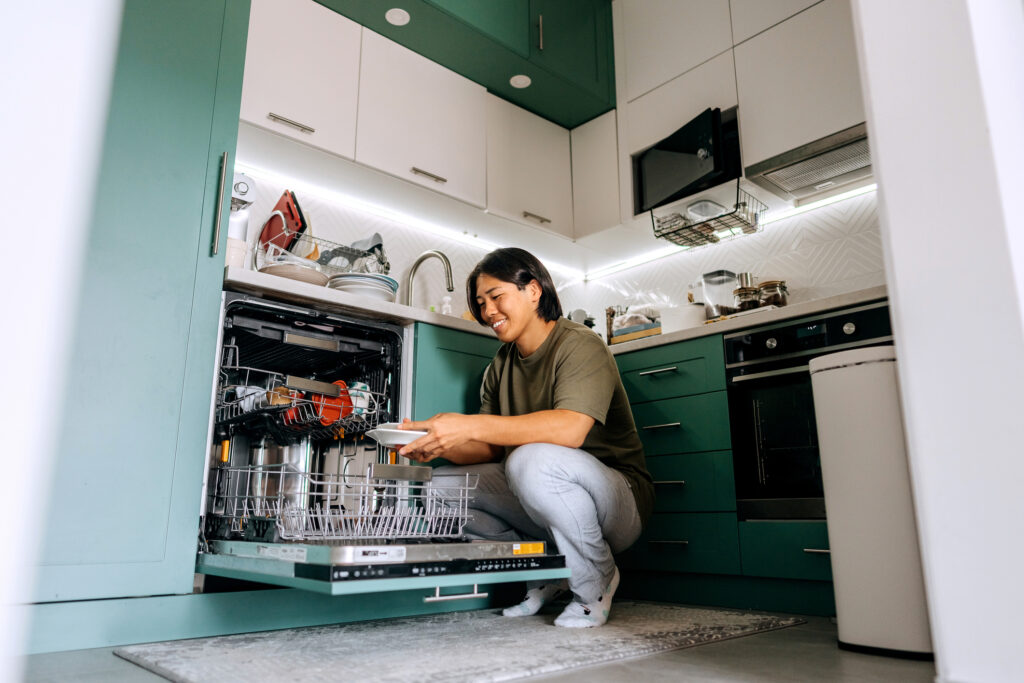
What if someone told you they had a secret that made household chores — unloading the dishwasher, folding and putting away the laundry, etc. — so fun that you looked forward to doing them? You would look at them askance, sure, but then you might also ask, “Okay, what’s this secret?”
The secret is called “gamification,” and it’s exactly what it sounds like: Making those (often dreaded) tasks of daily life into a game that comes close to resembling actual fun. Gamification techniques abound; we’ve rounded up some of the best for lending some excitement to everything, whether it’s taking out the trash or filling out insurance forms.
‘Admin Night’ parties
As writer Chris Colin describes it, an Admin Night party is “the lamest party ever.” It adds a dash of social fun to such tedious-but-unavoidable tasks as paying bills, filling out school forms, canceling subscriptions or filing expenses. After his friends began ditching plans to stay home to deal with insurance claims, Colin proposed a get-together in which beer and good company made all those responsibilities easier to bear. The idea took off immediately, and the first Admin Night party was such a success that, six years in, Colin has a waiting list.
‘The poop rule’
It’s juvenile — not to mention pretty gross — but people, especially those with ADHD, swear by “the poop rule” when deciding whether to keep something or to get rid of it. The idea is simple: When decluttering, ask yourself, “If this item was covered in poop, would I still keep it?” The aim is to simplify the decision-making process, turning organizing and decluttering efforts into a game. The poop rule helps to make process goals, such as reducing the amount of stuff you have, into outcome goals, such as having a home where you can always find your keys or that simply looks and feels calmer.
Quest cards
For people who struggle with task initiation — that’s a fancy term for “getting up off your butt” — quest cards can be a game changer, literally. Quest cards, which you can make yourself or buy from sites such as Etsy, gamify household chores and other mundane duties by mimicking board games. Users choose a chore card from a deck and assign jobs to themselves or others; these chore cards provide focused, actionable tasks and often feature a reward system such as points or badges when the “quests” are completed. Quest cards lend an element of focus by doling out assignments and boost motivation by turning chores into a cooperative (or competitive!) game.
Points systems
A points system — a more low-fi version of quest cards — assigns points to chores based on difficulty or on just how much you hate doing them. So making the bed might be one point, emptying the dishwasher might be three points, mopping the floors or scrubbing the grout might be 11 points — there’s a lot of flexibility and ways to customize a points system to suit your preferences and aversions. A points system works best when accompanied by a rewards system: gold stars, extra screen time, that 7-Eleven hoodie you’ve had your eye on … the options are as endless as our chores can often feel.
Timed challenges
The 10-minute tidy, a 30-day home glow-up, one-room-a-day challenges, even a Sunday night reset — these are all examples of challenges that set time constraints around chores, reducing executive dysfunction and motivational challenges by providing structure and confines. Timed challenges work by creating urgency and setting limits, reducing the decision fatigue that an endless to-do list can evoke.
The ‘just one song’ motivational method
Do you have a walk-up song? Entry music that accompanies your main-character energy wherever you may roam? A tune you listened to before exams, at the start of every road trip, or before competitions to get focused and/or hyped? (It’s “Playing in the Band” for me.) Great! The “just one song” method will be perfect for you. This subset of micro-organizing involves putting on a favorite song and banging out quick and/or low-effort chores such as doing the dishes, putting the laundry away or tidying up a chaotic entryway. The combination of minimal commitment and the mood-boosting power of music creates the momentum to get small but tedious jobs done and out of the way.
Apps that gamify chores
Finally, in this modern age there is, of course, an app for that. Gamifying apps including Habitica, Habit Hunter and Nipto help organize household chores, family tasks and personal goals in an easy-to-use app that lends structure, rewards and, yes, even fun to jobs that can feel like drudgery. Gamification apps can also help reduce family or roommate conflicts by turning data into a leaderboard that specifies who has, or has not, done their chores.
The post These techniques turn dreaded chores into a game appeared first on Washington Post.