After the Supreme Court recently invalidated a sweeping slate of global tariffs President Trump issued last year, the federal government began accepting refund claims for the roughly $166 billion in duties collected from American importers.
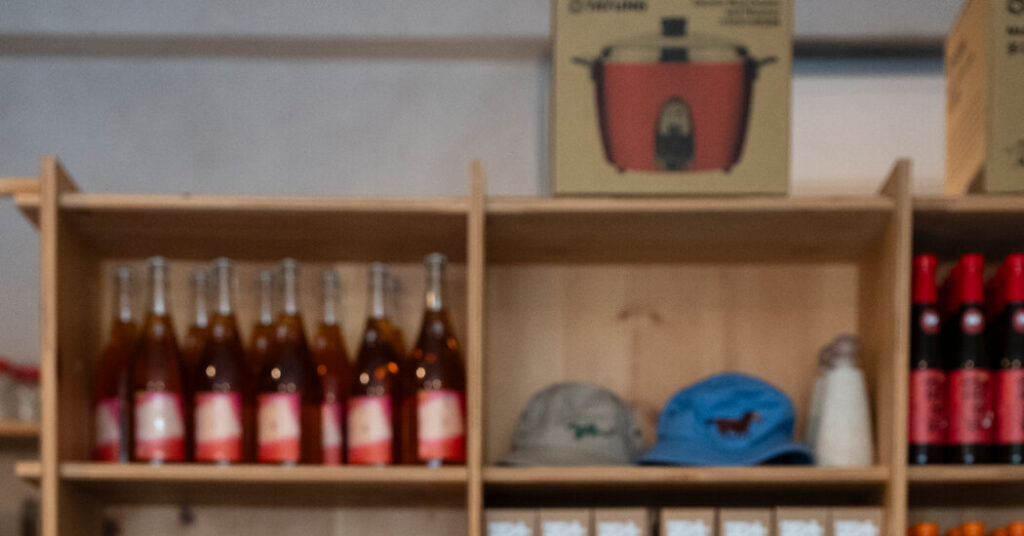
Forgive the owners of Yun Hai Shop, a Taiwanese general store in Brooklyn, for having complicated feelings about it.
Navigating each twist and turn of Mr. Trump’s trade war over the last 12 months had been too draining, too disorienting, for them to fully believe that the tumult might now arrive at some neat conclusion.
Their tariff figures paled in comparison to those of corporate giants like Walmart, Target and Nike, which could now recoup billions in duties. But for Yun Hai and other small companies across the country operating on thin margins, surviving invoice to invoice, the added costs were disproportionately destabilizing.
Many local businesses have been forced to cut staff, take out emergency loans or scrap plans to weather the onslaught of unexpected import duties. Some closed altogether.
A Feb. 1 analysis from the Manhattan Chamber of Commerce estimated that small businesses in New York City had absorbed $4.5 billion in tariff-related costs over the previous year. And the number of businesses in the city plunged by an estimated 5,000 last spring.
Exhausted by months of chaos, many are viewing the prospect of clawing some of that money back with a mixture of wariness and hope.
Yun Hai has “barely squeaked by,” even while enjoying one of its strongest periods of sales, according to Lisa Cheng Smith, who founded the company in 2018. Despite the prospect of a refund, a sour taste remains.
“You cannot reverse the damage,” Ms. Smith said. “And there was so much damage.”
It was a little more than a year ago that Mr. Trump, on what he called Liberation Day, announced an aggressive package of global tariffs under the International Emergency Economic Powers Act. Along with a sweeping 10 percent duty on international imports, he announced country-specific tariffs ranging between 11 and 50 percent. Despite his claims to the contrary, these costs would be largely absorbed by American businesses.
To Ms. Smith’s shock, the new tax on Taiwan was 32 percent — an existential crisis for Yun Hai, which exclusively stocks Taiwanese imports, like cold-pressed oils, naturally fermented soy sauces and rice cookers.
“How are we going to survive?” she recalled thinking.
That eye-popping rate, to her relief, was quickly reduced. But the tariff would still hover mercurially between 10 and 20 percent over the year, adding tens of thousands of dollars in unexpected costs — and incalculable anxiety.
Ms. Smith and her co-owner, Lillian Lin, have scrambled to make things work. Cutting any of their five employees was never an option in their minds. Nor could they simply seek out domestic suppliers; highlighting Taiwanese products was the company’s raison d’être.
So they did whatever else they could. Right away, they stopped paying for advertising and moved product photography and other production tasks in-house. Any new hires would have to wait. Reluctantly, they raised their prices by 10 to 15 percent. Packages of dried fruit — their most popular item, available in mulberry, wax apple, pearl guava and so on — increased from $10 to $11.
Ms. Smith said she used her own savings to cover one unexpectedly high tariff payment. If they could not pay the duties when their goods arrived, they would have to pay additional fees to store the goods until they could. After eight years of establishing a successful formula, keeping the business afloat now involved disconcertingly more guesswork.
“You’re almost ordering blindly, without knowing what the charges will be when the shipment arrives,” Ms. Lin said.
And still they felt lucky.
In its brief history, Yun Hai was fortunate to have built a loyal customer base, and the announcement of the tariffs seemed to galvanize customers. Online orders skyrocketed in a collective show of support. The store — in a hip area of East Williamsburg that Ms. Cheng jokingly refers to as the “Win Son Autonomous Zone,” in reference to the acclaimed Taiwanese restaurant nearby — was packed with customers that first month.
Now, suddenly, there arrived some potential for relief. The Supreme Court on Feb. 20 ruled that the president’s tariffs were illegal. In response, the Trump administration quickly invoked a different law to impose a new 10 percent global tariff.
Amid confusion over what would happen next, U.S. Customs and Border Protection opened its refund portal on April 20. It was a pleasant surprise for the Yun Hai staff. Yet it became clear that recovering funds would be no simple task.
The process felt byzantine. One of Ms. Smith’s friends — the owner of Le Puzz, a jigsaw-puzzle manufacturer in New York — texted her a screenshot of an acronym-laden block of text from the website alongside a similarly inscrutable passage from “Infinite Jest,” the notoriously dense postmodern tome.
Not feeling fully confident in the protocol, Ms. Lin nonetheless gathered the necessary documents and submitted an application a few days later.
“We’re not yet counting on getting our money back, but it would be foolish not to try,” she said.
Such ambivalence is not unique among local small businesses. Vlad Dragusin, the founder of Candylab Toys, which produces wooden cars and play sets, said his company had not yet engaged with the portal. The tariffs last year had caused major disruptions to his company’s holiday season inventory, and he is still dealing with the repercussions. He could use the refund. He simply does not have the bandwidth to figure it out.
“It’s not something that seems easy to pursue,” Mr. Dragusin said.
Many other companies are simply not eligible for relief.
Christopher Taylor, the owner of Li-Lac Chocolates, a New York candy brand founded in 1923, said his packaging costs soared because of the tariffs. The materials are imported, but because Li-Lac buys from domestic suppliers — who paid tariffs and raised their prices — it is not eligible for refunds.
And Mr. Taylor and others expressed doubt that any company receiving refunds would restore pre-tariff pricing.
“It’s not quite as simple as lowering prices again,” Ms. Smith said. “The whole ecosystem has changed.”
And so business owners have been left in a different sort of limbo. Refund applications could take up to 90 days to process. Meanwhile, businesses continue to pay Mr. Trump’s new 10 percent emergency tariffs, which are already facing challenges in court.
It is no surprise, then, that after an anxious year the no one at Yun Hai is celebrating yet.
“What if Trump suddenly decrees something else?” Ms. Lin said.
Andrew Keh covers New York City and the surrounding region for The Times.
The post Tariffs, Rebates, Chaos: Boutique Businesses Wonder What’s Next appeared first on New York Times.