In January 1980, President Jimmy Carter made a bold promise: If any foreign power tried to dominate the Persian Gulf or the region’s vast oil reserves, it would be met with American military force. By guaranteeing the free flow of oil through the Strait of Hormuz over the next 45 years, America signaled to the rest of the world that oil from the Middle East, even with all its volatility, was a secure bet.
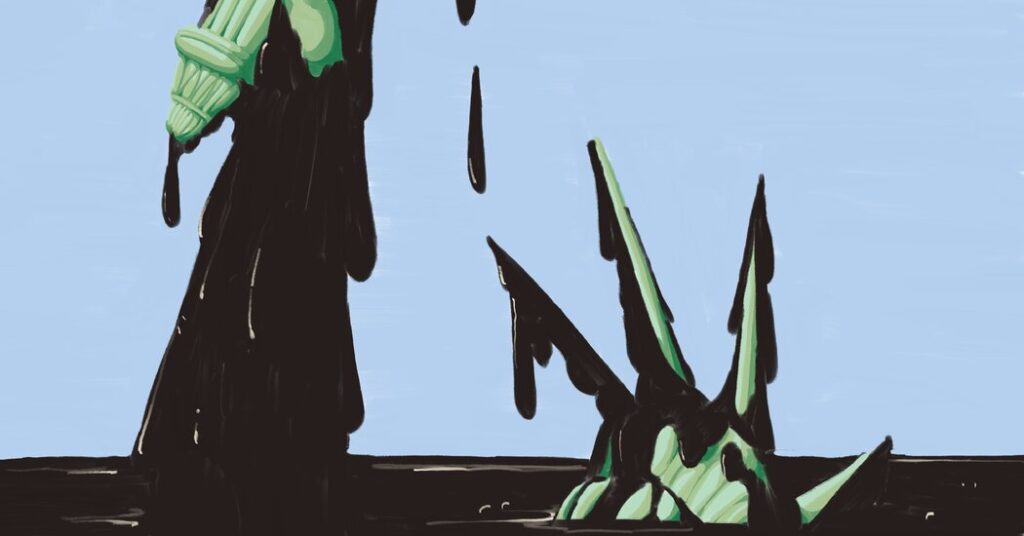
In just two months, the United States has transformed from a bulwark of the international energy system into its biggest source of insecurity. And while America may emerge relatively unscathed from the energy crisis it started by going to war with Iran, the long-term implications for its oil-based economy could be profoundly destabilizing.
The global oil economy is, in many ways, an American creation. In the early 20th century, major American companies discovered oil throughout Latin America and the Middle East and, for a time, dominated the oil industries in those regions. The United States was the world’s largest oil producer and consumer throughout the first half of the century.
After the oil shocks of the 1970s, the United States led efforts to create the International Energy Agency, through which major industrial economies coordinated their energy policies. Washington also helped push for the formation of a global system of strategic oil reserves and other measures meant to improve the resilience of the global energy economy. By the time of the so-called Carter Doctrine, it was clear to the United States that its national security hinged on access to Persian Gulf energy, which then supplied 25 percent of U.S. imports.
This imperative to defend access to Middle East oil has been weakening, however. Since 2010, a boom in U.S. oil and gas production has reduced the nation’s dependence on imports. By 2020, Gulf oil met less than 10 percent of America’s oil consumption, creating an understandable belief in some circles in Washington that the United States no longer needed to remain embroiled in Middle East affairs. Donald Trump took this idea further, introducing in his first administration the more dubious notion that the United States was now “energy independent,” and immune to oil shocks.
From this belief came a dangerous new confidence: Far from depending on the global oil market, the United States could now shape it in ways that served its geopolitical interests. It deployed sanctions aggressively against opponents — Russia, Iran and Venezuela — to limit their ability to sell oil. The United States has also threatened to place harsh tariffs on Canada, which is today the single largest source of its oil imports.
From sanctions and tariffs, the Trump administration has moved to seizing tankers in the Caribbean and Indian Ocean, arresting the president of Venezuela and launching an air campaign against Iran aimed in part to, in Mr. Trump’s words, “take the oil” by installing a more compliant regime.
The war against Iran has not proven as successful as the operation in Venezuela. And once the United States was apparently unwilling to keep protecting the passage of oil through the Strait of Hormuz, the global economy was thrown into turmoil.
For the United States, the short-term effects of the tightening of the world’s oil supply may be manageable. With so much oil of its own, America won’t face the same kinds of shortages and price spikes that affect other nations. But the idea that this country is immune is a mistaken one. The United States still imports roughly one-third of all the crude oil it consumes. The domestic price of oil products like gasoline is affected by changes in the global price, and the global market will be shaped for the rest of the year, if not longer, by the disruptive effects of this war.
More significantly, the collapse of the Carter Doctrine undermines the security of the global oil economy. Even if the Strait of Hormuz reopens, markets will remain on edge, waiting to see if Iran closes it once more. Oil coming out of the Gulf will be viewed as more risky — and likely more expensive as a result. Countries will almost certainly rethink their energy security plans and shift their economies away from dependence on imports, including of oil and natural gas.
This could prove to have the most profound consequences for the United States. Under President Trump, America has seemingly embraced its status as a petrostate, dropping incentives and programs to encourage the growth of renewable sources of energy like wind and solar. Right now, there’s a market for our oil and gas, and for the short term that won’t change, since uncertainty over the Gulf makes the United States a more attractive source of supply.
But in the medium to long term, this crisis will create greater uncertainty over the stability of these energy sources. More countries will pursue alternatives, including clean energy technologies where China has a decisive edge. The United States could see its export market diminish as demand for oil and gas slows, threatening a trillion-dollar domestic industry and the thousands of jobs it provides. American consumers could also be stuck with polluting fuels prone to price spikes while the rest of the world moves on.
The American preoccupation with producing, consuming and controlling oil may ultimately prove a misplaced priority: a scramble to control the energy resources of the 20th century, as the rest of the world embraces the cleaner technologies that will power the 21st century. And while the relevance of the Carter Doctrine may have declined, the stability it represented will be sorely missed.
Gregory Brew is a senior analyst at the Eurasia Group.
The Times is committed to publishing a diversity of letters to the editor. We’d like to hear what you think about this or any of our articles. Here are some tips. And here’s our email: [email protected].
Follow the New York Times Opinion section on Facebook, Instagram, TikTok, Bluesky, WhatsApp and Threads.
The post Trump and the New American Era of Petrolunacy appeared first on New York Times.