RightsCon, the world’s largest digital rights conference, was canceled this year due to pressure from the Chinese government, according to the nonprofit organization that organizes the annual event.
In a statement, Access Now says it was “told that diplomats from the People’s Republic of China (PRC) were putting pressure on the Government of Zambia because Taiwanese civil society participants were planning to join us in person.”
The Chinese Embassy in Washington, DC and the United States Taipei Economic and Cultural Representative Office did not immediately respond to requests for comment. When WIRED called the Zambian embassy in Washington, a member of the staff answered the phone and transferred the call to another staff member who then picked up for several seconds before hanging up. A follow-up call went unanswered.
Access Now says it was told “informally from multiple sources” that “in order for RightsCon to continue, we would have to moderate specific topics and exclude communities at risk, including our Taiwanese participants, from in-person and online participation.”
RightsCon 2026 was set to feature several panels on China’s international influence, including about how Beijing exports digital authoritarianism and spreads disinformation in regions like Africa, as well as discussions on Chinese cyberattacks and the global spread of its censorship and surveillance technologies.
Arzu Geybulla, the co-executive director of Access Now, tells WIRED that “multiple pieces of information we received indicated that foreign interference by the People’s Republic of China played a role in the abrupt disruption of RightsCon 2026.”
A week before the conference was scheduled to take place in Lusaka, Zambia, the Zambian government abruptly announced that it would be postponed to an unspecified date. In a statement on April 28, the country’s minister of technology and science, Felix Mutati, said that certain “speakers and participants remain subject to pending administrative and security clearances.” The following day, Thabo Kawana, Zambia’s minister for information and media added that the “postponement was necessitated by the need for comprehensive disclosure of critical information relating to key thematic issues proposed for discussion during the Summit.”
On April 27, two days before the Zambian government’s announcement, Access Now “became aware that the in-person participation of people from Taiwan had caught the attention of the Government of the People’s Republic of China. In turn, Chinese authorities were, apparently, trying to influence the Zambian government’s approach to Taiwanese participants’ movement across the border,” says Geybulla. “Soon after, the Zambian government publicly referred to ‘diplomatic protocols’ and ‘pending administrative and security clearances’ of participants as reasons for their disrupting RightsCon.”
Open Culture Foundation, a Taiwanese nonprofit organization that was scheduled to attend RightsCon this year, says that it was warned by Access Now that Taiwanese citizens may have problems entering Zambia due to possible concerns from the Chinese Embassy. They were told to pause their travel plans while the host coordinated with Zambian officials.
Nikki Gladstone, RightsCon director at Access Now, confirmed to WIRED that the organization had been in contact with Taiwanese participants about potential issues traveling to Zambia. “Given the potential access issues this would present to that community, many of whom were set to begin traveling imminently, we felt a duty to inform our registered Taiwanese participants of this development while we sought more details and information,” says Gladstone. “We said we would be hesitant to recommend travel until there was more clarity.”
An employee of another human rights organization, who asked not to be named for security reasons, tells WIRED that after RightsCon was officially postponed, they were told by one of their grant funders that the Chinese government had been pressuring the Zambian government for days over the presence of a Taiwanese delegation at the conference.
Political tensions appear to have potentially disrupted another adjacent human rights event slated to take place in Zambia this month. World Press Freedom Day, an annual conference hosted by the United Nations Educational, Scientific and Cultural Organization (UNESCO), was supposed to coincide with RightsCon in Lusaka. Most of the events have been moved to Paris or online, according to UNESCO’s website.
Since 2011, RightsCon has brought together thousands of people working to address issues like censorship, surveillance, and human rights on the internet. Access Now was anticipating about 2,600 people to attend this year from more than 750 organizations, according to the organization’s website. Some of the world’s largest tech companies such as Meta, Microsoft, and Alphabet have sponsored RightsCon or sent employees to participate in it.
Last year, Access Now hosted RightsCon in Taipei, Taiwan. But Geybulla says that this is the first time the conference organizers have faced blatant pressure from the Chinese government. “Wherever we host RightsCon, we undertake detailed and specific risk assessments appropriate to each context and to our community that include the threat of surveillance and reprisal. In the case of RightsCon 2025 hosted in Taipei, this included possible surveillance by the People’s Republic of China,” she says. “However, historically, we have not documented any significant or overt pressure on RightsCon from the People’s Republic of China.”
“The international landscape has shifted enough that they can go after a 2,000-person conference and nobody’s gonna say anything about it,” says Samuel Chu, a human rights activist from Hong Kong who was sanctioned by China in 2021 and was planning to attend RightsCon this year.
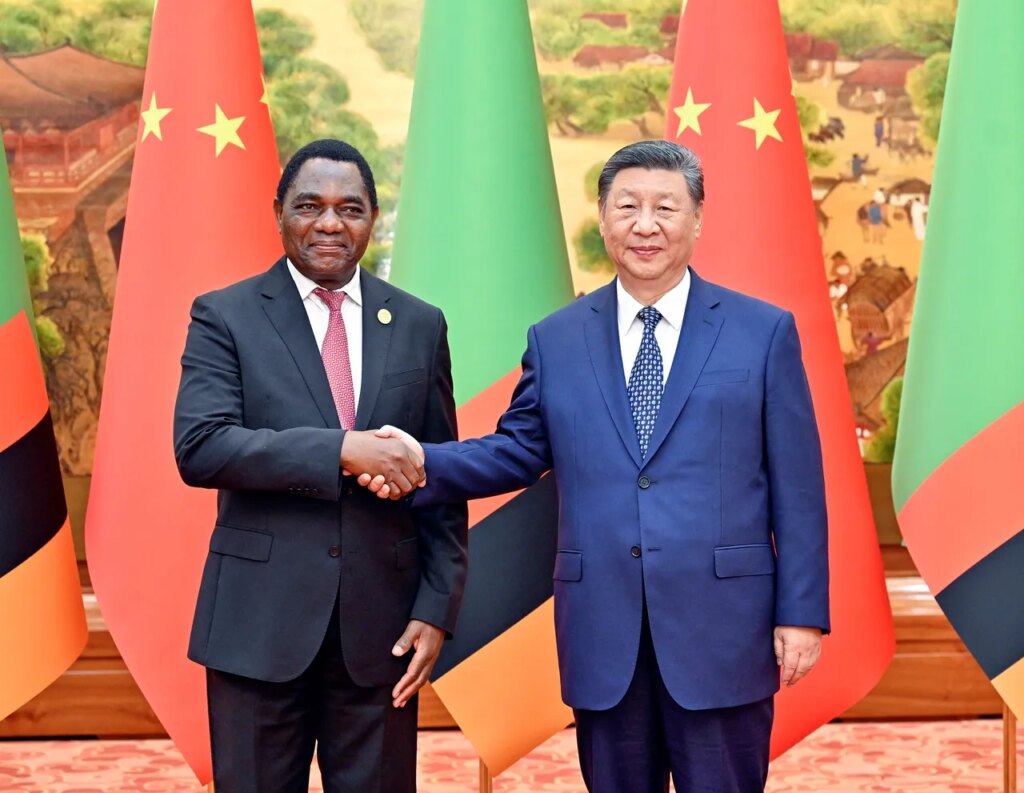
Zambia, unlike some of the countries where RightsCon was previously hosted, has deep political and economic ties to Beijing. China is Zambia’s largest creditor and Chinese firms have played a major role in local infrastructure projects. On April 23, less than a week before RightsCon was canceled, the Zambia Development Agency signed a $1.5 billion deal with a Chinese state-owned construction company to expand the country’s power capacity. The venue where RightsCon 2026 was supposed to take place, Mulungushi International Conference Center, underwent a major expansion in 2022 funded by a $30 million grant from the Chinese government.
Alejandro Mayoral Baños, co-executive director of Access Now, says canceling RightsCon is a “calculated attempt to silence the global movement and hand the keys of the future to authoritarians. But let them be warned: we are not retreating. We are transforming.”
The post The Chinese Government Just Got the World’s Largest Digital Rights Conference Canceled appeared first on Wired.