With the flow of energy through the Middle East still mostly blocked and oil prices rising, policymakers in Europe are confronting the immediate impact of higher costs and trying to decipher the potential economic damage of a prolonged conflict.
On Thursday, officials at the European Central Bank and Bank of England are expected to hold interest rates steady, but investors are betting that each central bank will raise rates at least twice later this year. Economists and lawmakers will be watching closely for signs about how the central banks will respond to jumps in inflation.
The effective closing of the Strait of Hormuz, a vital waterway for fuel and other commodities off Iran’s southern coast, has sharply increased energy prices. Brent crude, the international benchmark, has pushed well above $100 a barrel, while European natural gas prices are nearly 40 percent higher since the United States and Israel attacked Iran at the end of February.
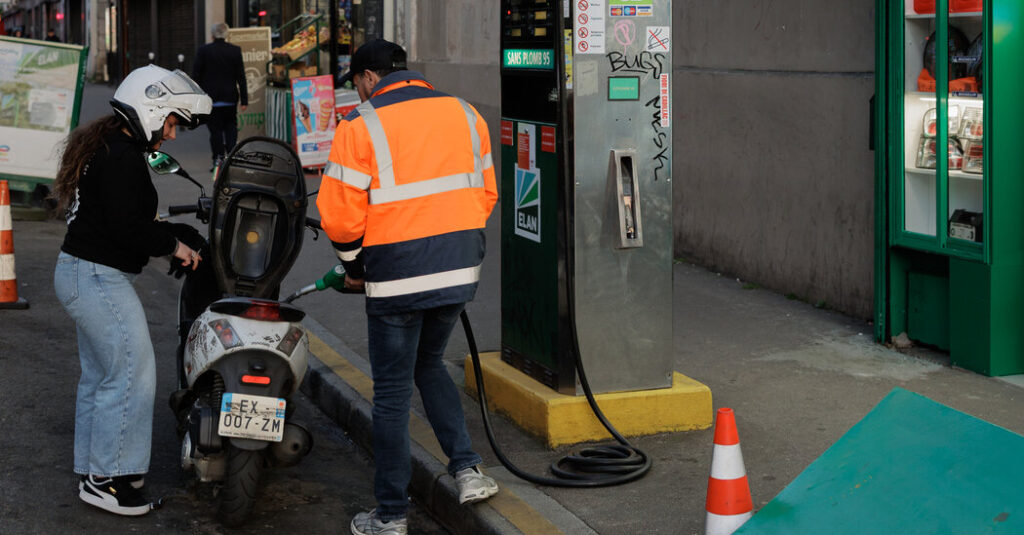
The war had an almost immediate impact on European inflation, increasing gasoline prices at the pump, airfares and other fuel-intensive activities. In Britain, the annual inflation rate climbed to 3.3 percent in March and is expected to stay around 3 percent through the second quarter, a percentage point above the central bank’s target. For the 21 countries that use the euro, inflation averaged 2.6 percent in March, up from 1.9 percent a month earlier.
But for the central banks, the question is whether higher prices will ripple through the economy and eventually push up wages, potentially setting off a spiral of escalating prices that would warrant aggressive rate increases like those in 2022. For now, analysts say there isn’t enough information on how the war, seemingly in a holding pattern, will affect the economy. While President Trump has extended a cease-fire in the region, traffic through the strait remains sparse.
At the same time, the concern about inflation is being weighed against the possibility that the war damages economic growth. In that scenario, policymakers wouldn’t want to tighten financial conditions. Consumer sentiment in Germany, the eurozone’s largest economy, dropped to its lowest level in three years, data this week showed. This month, the International Monetary Fund said the bloc’s economy would grow 1.1 percent this year, but that assumed a relatively quick resolution to the war and the recovery of global energy markets.
“The E.C.B. will stay in ‘wait and see’ mode, at least for now,” analysts at HSBC wrote in a note. But “the risk of prolonged energy supply disruption, coupled with risks of second-round effects on inflation,” increase the probability of the central bank’s raising interest rates later.
It’s a dilemma facing central banks farther afield as well. This week, the Bank of Japan voted to hold interest rates steady, but it was a split decision with several officials preferring an increase in rates. The central bank raised its inflation forecast while warning that economic growth is likely to slow this year.
On Wednesday, the Federal Reserve also held interest rates steady. It acknowledged the war’s effect on the economy, saying inflation had ticked up because of the “recent increase in global energy prices.”
Eshe Nelson is a Times reporter based in London, covering economics and business news.
The post Rising Fuel Prices Could Force Excruciating Choices on Economic Policies appeared first on New York Times.