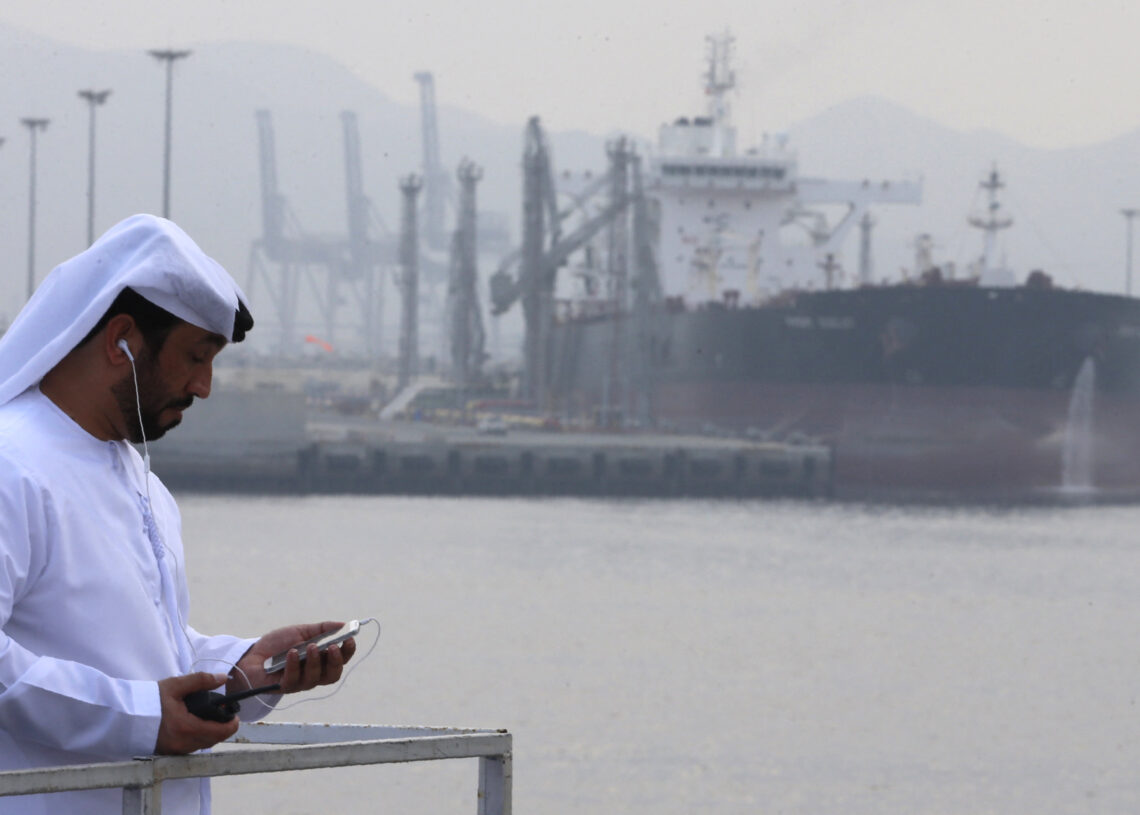
BEIRUT — The United Arab Emirates announced Tuesday that it would exit the Organization of the Petroleum Exporting Countries, or OPEC, along with the wider group of partners known as OPEC+, effective May 1, in what could be a blow to control over prices by the group, long led in practice by Saudi Arabia.
“We thank OPEC and its member countries for decades of constructive cooperation,” UAE Energy Minister Suhail Al Mazrouei said in a post to social media.
The move “reflects the UAE’s long-term strategic and economic vision and evolving energy profile,” read an official statement carried by a UAE state news agency, as turmoil in the Strait of Hormuz “continues to affect supply dynamics.”
Reports that the UAE would leave have circulated for years, and the country has had disagreements with Saudi Arabia over oil production quotas.
President Donald Trump has long criticized OPEC for its role in determining global oil prices, calling it a “monopoly” during his first term in office. Addressing the World Economic Forum in 2025, Trump urged OPEC countries to lower oil prices.
While tensions between the UAE and OPEC have been building, the move comes as the energy shock from the Iran war ripples through the world economy as a result of the near-closures of the Strait of Hormuz by Iran in response to U.S. and Israeli attacks. The United States has imposed its own blockade on Iranian ports.
The exit is a blow to Gulf unity. Tensions between Saudi Arabia and the UAE came to a head this year after UAE-backed separatists wrestled wide swaths of Yemen from the internationally recognized government. The territory was later retaken by Saudi-backed forces, but the incident put a dent in Saudi-UAE ties.
“Many of the countries in OPEC do not always get along, but they somehow found a working arrangement over the decades” said Toby Matthiesen, a professor and Gulf expert at the University of Bristol, “so it was a very significant move. It signals a rupture in the Gulf.”
The UAE is the second Persian Gulf country to leave the group after Qatar terminated its membership in 2019. It has been a member of OPEC since 1971. Abu Dhabi, the largest of the seven states that make up the UAE, independently joined OPEC in 1967 before the founding of the country.
The latest departure leaves in place 11 core members: Algeria, Congo, Equatorial Guinea, Gabon, Iran, Iraq, Kuwait, Libya, Nigeria, Saudi Arabia and Venezuela. Other countries, including Russia, considered members of OPEC+, coordinate with the group.
According to OPEC figures, the UAE is the third-largest producer of oil in the group, behind Iraq and Saudi Arabia. In recent years, OPEC members have produced about a third of the world’s crude oil, according to the U.S. Energy Information Administration.
The UAE relies on oil revenue but less than some of its Persian Gulf neighbors, said Bachar El-Halabi, a Dubai-based senior energy markets analyst at commodities research firm Argus Media.
“Of course, oil continues to be the backbone of their economy. But they don’t worry about prices a lot because, in practice, they need way lower prices to balance their budgets,” he said. The UAE has “diversified their economy in terms of trade, tourism and transportation.”
The decision to leave OPEC signaled the UAE’s intentions to further prioritize its diversification drive from oil into other sectors, such as artificial intelligence, El-Halabi said.
Because the Strait of Hormuz is still closed, Matthiesen said, the UAE’s exit from OPEC might not show up in oil prices yet, because “they can produce more, but not export more at the moment.”
Heba Farouk Mahfouz in Cairo contributed to this report.
The post UAE to leave OPEC amid Hormuz oil crisis, a blow to Saudi Arabia appeared first on Washington Post.