Dear reader,
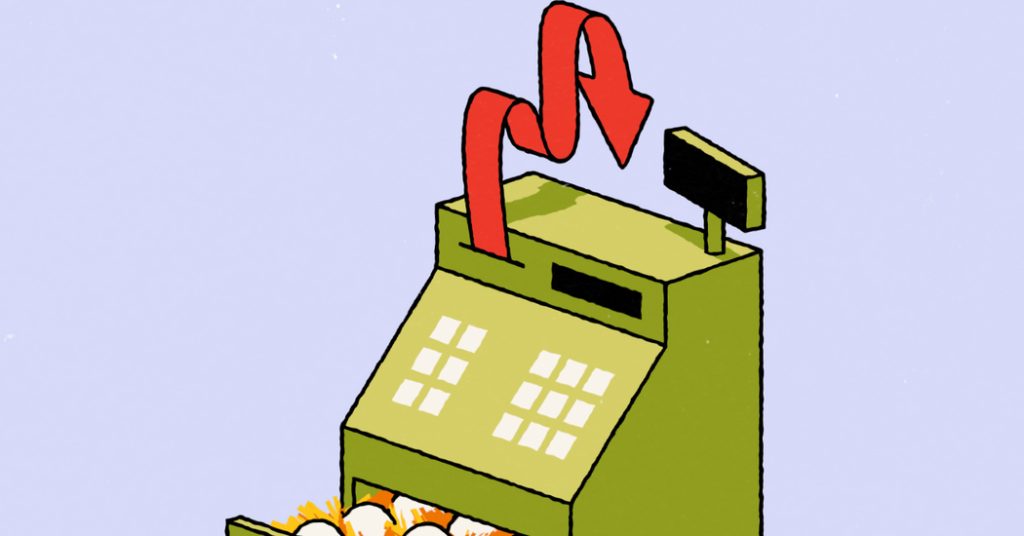
The cost of child care, the subject of last week’s newsletter, has been a perennial complaint in the U.S. But in the last couple of years, much attention has focused on another market signal: the price of eggs.
Rewind to a year ago. Waffle House was adding surcharges to its egg dishes. Grocery stores were limiting the number of cartons customers could purchase. Shoppers were found gasping at empty shelves, and hoarding the rare cartons they could find.
Now, the price of eggs has fallen significantly. We asked the reporter Susan Shain to look at where prices stand, and what we can learn about the broader economy from their recent fluctuations.
— Matt Thompson
How much do eggs cost right now?
The average price of a dozen eggs is $2.35, according to the Bureau of Labor Statistics, which tracks and publishes consumer prices on a monthly basis. That’s the average across all types of eggs: organic, nonorganic, cage-free, free-range and traditional. But that number could change by the time this newsletter hits your inbox, as the price of eggs is pretty volatile.
While this is a welcome plummet from eggs’ peak cost of over $6 a year ago, it’s still almost a dollar more than what an average carton cost in March 2020, before the price of eggs began its chaotic ascent.
And all bets are off if you live in a state that bans eggs from caged chickens, like California and Colorado. Cage-free and free-range chickens are more expensive to care for, which makes their eggs costlier.
Why did the price surge and then drop?
Starting in 2022, a virulent strain of the avian flu hit birds hard. More than 200 million were affected, throttling the nation’s egg supply. The cost of eggs rose substantially, inciting panicked headlines, political sparring, frustrated customers and a surge of backyard chicken owners. Some states even delayed their plans to ban cage-free eggs, fearing further price spikes.
Seeing the sky-high prices, farmers began to aggressively repopulate their flocks. (The Department of Agriculture paid producers for the birds they had lost, making repopulation seem like less of a financial risk.) Some may have been a bit too eager, said Dawn Thilmany, a professor of agricultural economics at Colorado State University. More birds caused an oversupply of eggs — and a dramatic downswing in pricing that’s been bad for farmers but good for shoppers.
Why are eggs an economic indicator?
Eggs are a staple of the American diet, regularly used for both cooking and baking. They’re also hard to substitute: You might make chili with beans instead of beef, but it’s tougher to swap out eggs in a frittata or a flan.
“People always want a dozen eggs in their fridge,” Thilmany said. “So knowing their prices and whether they’re affordable or not is going to tell you how much pain a typical household is feeling in their grocery bill.”
At least, that’s normally the case. But right now, Thilmany said, eggs could give a deceivingly rosy picture of grocery prices.
The national “market basket,” a collection of goods and services that the federal government uses to measure inflation, has dozens of staple foods in it, like bread, bacon and bananas. Nearly all of them are more expensive than they were a year ago. Eggs are a rare exception — in part because of the oversupply that was created after the recent bout of avian flu, and also because they are produced domestically, which means they aren’t subject to tariffs.
Thilmany isn’t sure how long egg prices will remain this low, given that high oil prices could increase the cost of transportation. And though tariffs don’t affect the price of eggs themselves, they could still drive up their price since they affect imported packaging materials.
In the past five years, grocery prices have shot up 26 percent. The biggest overall spike occurred in 2022 — when eggs quickly became the poster child for unaffordable food — mostly because of supply chain disruptions after the Covid-19 pandemic and the onset of the Russia-Ukraine War.
“That was very jarring for people,” said Elaine Waxman, a senior fellow at the Urban Institute. “We really hadn’t had significant food price inflation since the oil embargo in the ’70s.”
The cost of food was the top source of stress for Americans, beating out both housing and health care, according to an Associated Press poll from last year. Waxman said food prices were top of mind because most consumers buy groceries at least once a week, as opposed to, say, a house, which they might buy only once.
Groceries are also one of the few budget categories in which people feel as if they have some flexibility, so even small fluctuations are noticeable. You can skip the meat aisle, for example, but you can’t skip your car payment. Or, as the housing researcher Matthew Desmond has said, “rent eats first.”
One way to measure whether food is affordable, Waxman said, is to look at the rate of food insecurity. In 2024, the most recent year for which data is available, nearly 14 percent of households were food insecure at some point in the year. That’s the highest it’s been since 2014.
Last fall, however, the Trump administration announced it would no longer issue reports on food insecurity, saying, “These redundant, costly, politicized, and extraneous studies do nothing more than fearmonger.”
What can I check out next?
-
In March, a judge dismissed a lawsuit that the Trump administration brought against California over the cost of eggs in the state, saying that the federal government lacked standing.
-
High oil prices could make food more expensive by increasing the cost of fertilizer, shipping and more. Here’s how the war in Iran could impact food production globally.
-
Ligaya Mishan, one of The Times’s chief restaurant critics, waxes poetic about eggs and how they became a luxury.
-
NPR’s Marketplace breaks down why certain food products are so costly — and whether we can expect a respite anytime soon.
-
Our colleagues at The Times share tips for building a better grocery budget and saving money in the checkout line.
— Susan Shain
Your turn
Test your knowledge: Food prices in the U.S. are highly sensitive to changes in the price of oil. What percentage of the nation’s agricultural products (excluding dairy, fruit, vegetables and nuts) are hauled by trucks?
Tell us your thoughts: Has the cost of eggs affected how you plan your meals and prepare your grocery lists? Have you noticed changes in the cost over the last year? What is causing you sticker shock at the grocery store? Please email your thoughts to [email protected].
Following up: Many of you wrote in with thoughts and stories about the “market failure” of child care in the U.S. No one seemed to disagree with the premise, that the market for child care is failing families, care workers and cities. Some argued that the commodification of child care reflects a culture that is generally unfriendly to raising children, and a few of you linked this context to falling birth rates. Several of you mentioned that the cost of care — along with the high cost of housing and the need to maximize job income to sustain your household — had limited your ability to have more children. For some of you, the need to cover child care had affected your career decisions as well.
The Headway initiative is funded through grants from the Ford Foundation, the William and Flora Hewlett Foundation and the Stavros Niarchos Foundation (SNF), with Rockefeller Philanthropy Advisors serving as a fiscal sponsor. The Woodcock Foundation is a funder of Headway’s public square. Funders have no control over the selection, focus of stories or the editing process and do not review stories before publication. The Times retains full editorial control of the Headway initiative.
The post Making an Omelet Without Breaking the Bank appeared first on New York Times.