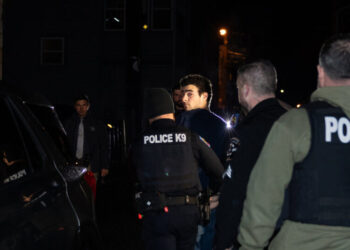
A marathon D.C. Council meeting Tuesday once again proved why “teen takeovers” — mass teen gatherings in the city’s buzziest corridors, sometimes resulting in disorder or violence — have emerged as one of officials’ most vexing issues this year.
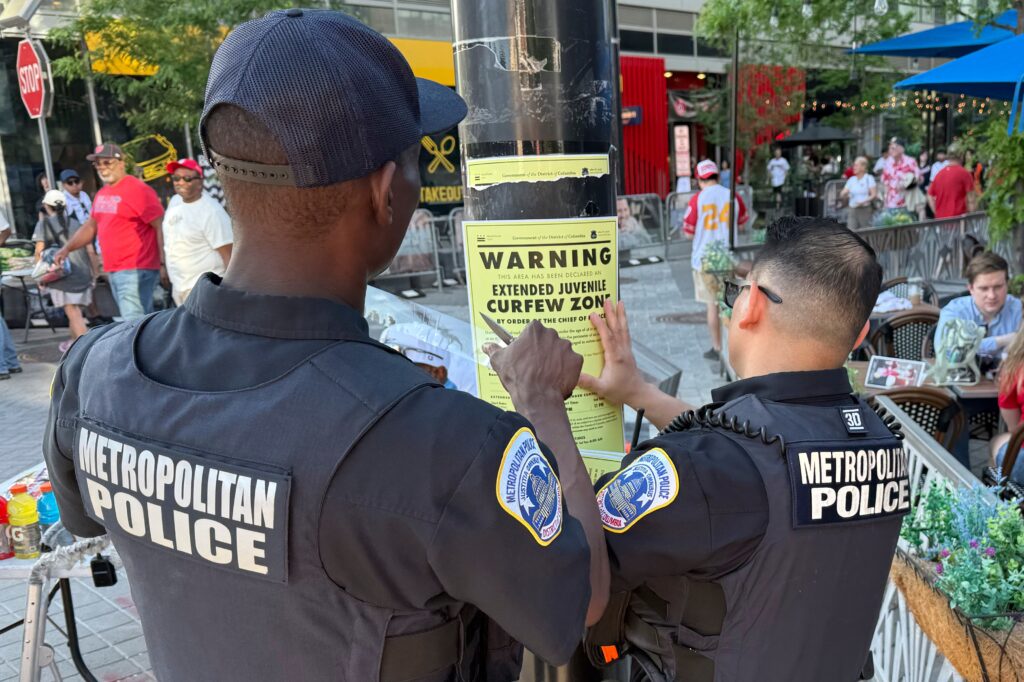
The city has been turning to special youth “curfew zones” that police say allow them to prevent or disperse the mass gatherings, but that law expired this month. On Tuesday, lawmakers voted to advance a bill permanently granting the police chief the power to declare the curfew zones, with some new restrictions.
Yet they failed for the second time in recent weeks to reach consensus on an emergency curfew measure that would go into effect immediately — rankling D.C. Mayor Muriel E. Bowser (D), who had spent weeks pressuring the council to urgently extend the curfew.
“While I am pleased that the Council advanced the permanent juvenile curfew legislation, their continued inaction on extending the juvenile curfew through the spring and summer leaves our city without a critical tool for keeping our neighborhoods safe and free from disorderly behavior,” Bowser said in a statement. “Doing nothing is not an option. The community is expecting their government — and we have a responsibility to our residents, businesses, and young people — to take action.”
Last summer, the city began imposing a daily 11 p.m. curfew for people under the age of 18, and authorized the police chief to set 8 p.m. “curfew zones” barring young people from gathering in groups of more than eight in designated areas. Yet after repeated extensions, and promises from city leaders and lawmakers to work toward a permanent solution, the policy expired last week — leading Bowser to impose a 15-day youth curfew to buy time before the council took up the issue again.
On Tuesday, in an 8-5 vote, lawmakers advanced a longer-term version of the curfew legislation after council members Brooke Pinto (D-Ward 2), the bill’s sponsor, and Doni Crawford (I-At Large) struck a compromise with Bowser. It sets guardrails around how police can enforce the curfew and would also require the mayor to offer alternative youth programming any time a curfew zone is in effect, which Crawford pushed for.
But the measure requires a second vote, is subject to congressional review and could take weeks or months to become effective, potentially leaving police without the curfew tool for that time.
An emergency bill would allow the city to fill in the gap for up to 90 days. It needs a supermajority to pass, however, and despite hours of backchanneling and public debate Tuesday, it became clear to D.C. Council Chairman Phil Mendelson (D) that lawmakers did not have the ninth vote required to get it past the finish line.
Rather than let the emergency fail, Mendelson successfully motioned to delay the vote again. He said he did not want to give political ammunition to critics of the District, a clear allusion to Republicans in Congress and the Trump administration. U.S. Attorney Jeanine Pirro, for example, berated the D.C. Council on Fox News the last time it failed to act to extend the teen curfew.
“There are folks who are not friends to the District who are looking very intently at what we are doing and what we are not doing,” Mendelson said. “It’s not just how we deal with these gatherings, which is the paramount concern, but it’s also whether we are self inflicting some wounds on ourselves.”
The frequent “teen takeovers,” at hot spots like Navy Yard and the U Street corridor, are part of a national phenomenon often driven by social media. Some teens say the gatherings are meant to give young people ways to socialize, and that D.C. lacks late-night hangout spots. In some cases, though, the large gatherings have ended in violence — including robberies and, on some occasions, gunfire — fueling arguments from curfew supporters that the measure is intended to keep young people safe.
Opponents of the District’s curfew argue it’s led to more confrontations between youth and National Guard or police officers, who they say have in some cases blocked teens from accessing Metro stations and harassed them. Video published by Fox 5 showed a D.C. police officer grabbing a young woman and pulling her off a bike next to the Navy Yard Metro station in a curfew zone on Saturday night, an incident that a D.C. police spokesman said was under investigation.
The debate over how to respond to takeovers has also exposed fault lines between top candidates in two of the city’s marquee open races, for mayor and House delegate.
While Pinto led the effort to extend the youth curfew, her top opponent in the Democratic primary to replace Del. Eleanor Holmes Norton (D), council member Robert C. White Jr. (At-large), opposed it. “I understand the political pressure to not be seen as soft on crime, but at some point we at least gotta be logical. This is not logical,” he said, pointing out that the mass gatherings have persisted despite the existence of the curfew tool.
Likewise, in the mayoral race to replace Bowser, former council member Kenyan R. McDuffie said at a candidate forum Monday night that he saw the curfew as a tool to keep teens safe when hundreds gather — while his top opponent, council member Janeese Lewis George (D-Ward 4), stood firm in her opposition on Tuesday, believing it has done the opposite.
“Utilizing this tool while this city is currently under federal occupation is dangerous,” Lewis George said, decrying increased interactions between teens and armed police and troops. “It is dangerous for our young people. It’s dangerous for our community as a whole, and the risk does not outweigh the perceived benefits.”
The persistence of the disagreement has lent a kind of Groundhog Day effect to the council’s debates, as lawmakers and the mayor have repeatedly butted heads over the same sticking points.
“Sometimes I feel that we kick the can, and the can doesn’t move very far, and we kick it again, and it may move a half of an inch, and we continue to put off what we cannot put off,” said council member Anita Bonds (D-At Large), who, frustrated with Mendelson’s motion to again delay a vote, broached staying till midnight to hammer out the disagreements.
Crawford, who is running in a special election to fill the council seat vacated by McDuffie, said she hoped several amendments she crafted would work as a compromise to satisfy concerns raised by her colleagues.
Under the permanent version that advanced Tuesday, the Bowser administration must host an event, or partner with a community organization to host one, that could function as an alternative supervised space for kids to have fun any time a special youth curfew zone is declared. The city has recently hosted such events at recreation centers, which youth advocates say have been working well, even as some oppose the curfew.
“They deserve to have spaces where they’re safe, where they are having fun, where they can gather,” said Samantha Davis, a lead organizer with Free DC and Youth Power & Safety Collective.
The amended version would also add guardrails around police enforcement intended to minimize unnecessary interactions between officers and teens, such as restricting police from stopping individual teens or those in small groups for questioning, or dispersing them before the curfew begins. It also changes the citywide youth curfew from 11 p.m. to midnight on Fridays and Saturdays and in July and August.
Bowser initially expressed strong opposition to many of the changes, including the programming requirement, arguing it was infeasible. But she ultimately agreed to absorb the costs of expanded programming this summer.
“I was not comfortable voting for the emergency three weeks ago without pairing juvenile curfew zones with some type of activity for youth, and I felt the same way today,” Crawford said in an interview. “I relayed that to the mayor and I think she understood where I was coming from.”
Pinto stressed to colleagues Tuesday that the curfew could not prevent every teen takeover, that it was only one tool. She told reporters that she would be working with lawmakers and the mayor to rally support for the emergency version so there is no gap in the law, inviting those in opposition to come to the table to be clear about what they want to see to reach agreement.
“This is really all about protecting our kids and making sure they can enjoy their city safely, and we as adults in the city need to be on the same page about that,” she said.
The post D.C. lawmakers punt another vote to extend emergency youth curfew appeared first on Washington Post.