A controversy over free speech was not how Utah Valley University had hoped to end an academic year that traumatized the campus, and shocked the nation, when the conservative activist Charlie Kirk was assassinated there in September.
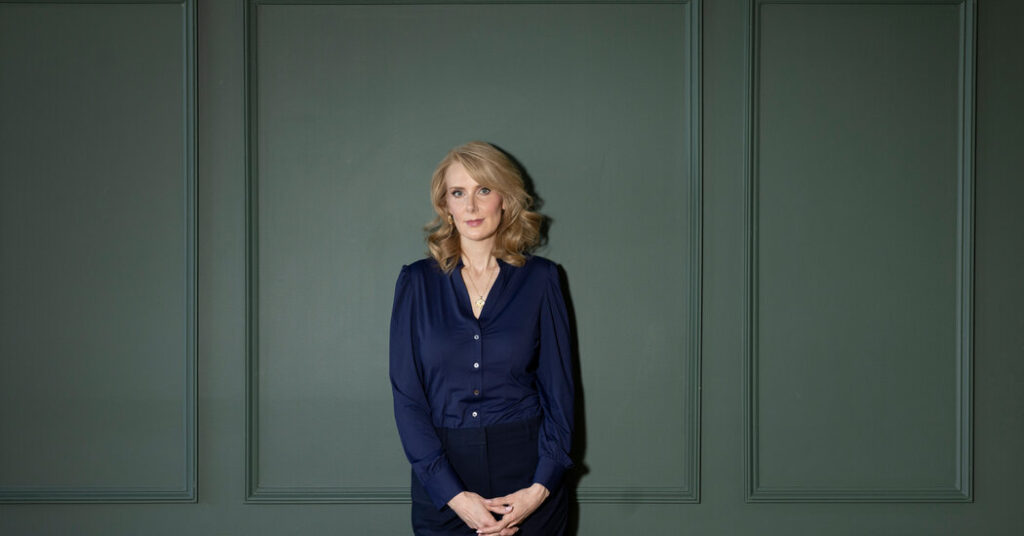
But that is exactly what happened when it invited Sharon McMahon, a best-selling author of inspirational nonfiction, to be its keynote commencement speaker. After Mr. Kirk’s assassination, she had lamented his death, but also said some of his rhetoric was bigoted.
Many of Mr. Kirk’s legions of fans, their grief and anger all too raw, accused the university of callous indifference.
Mr. Kirk was killed while making the kind of appearance for which he had become famous — a lively, often tense debate over politics, religion, gender and other touchy topics. He and his followers saw these events as defiant celebrations of free expression in the very place they said they had felt silenced.
Ms. McMahon was no stranger to Utah Valley herself, having spoken there before. She had a fan in Astrid Tuminez, the university’s president, who thought Ms. McMahon’s message about unsung heroes in American history would be healing.
“She is a force of nature and a force for good,” Ms. Tuminez said in a news release in late March. “Our graduates are very lucky to have her as commencement speaker!”
Gratitude was not what many of Mr. Kirk’s fans felt. They demanded a new speaker.
Social media lit up over comments that Ms. McMahon had posted two days after the assassination and then deleted, in which she said she understood the reasons some people found it distasteful to exalt Mr. Kirk. She cited and repeated several derogatory statements he had made about Black people, Muslims and gay people.
“The murder that was horrific and should never have happened does not magically erase what was said or done,” Ms. McMahon said. “But if you were a Charlie Kirk fan, you might not realize why there is so much backlash to posts eulogizing his death.”
The resurfaced posts angered conservative commentators and Republican lawmakers, who rushed to defend Mr. Kirk and urged others to tell the university they felt the same.
Senator Mike Lee of Utah led a campaign over several days on X to pressure the university to revoke the invitation.
“Raise your hand if you’d like @UVU to reconsider inviting Ms. McMahon,” he wrote in one post.
Scores of people — health care workers, lawyers, journalists, waiters and waitresses — had already been fired or faced other repercussions for their comments about Mr. Kirk. Vice President JD Vance urged people to inform the bosses of anyone who might have celebrated the assassination.
Ms. McMahon was not an especially polarizing figure before Mr. Kirk’s death. Her first reaction to the killing was one of shock and sadness as someone who had spoken at the campus herself and believed the country was becoming dangerously divided.
“I am really so upset that this happened,” she said in a video she posted to Facebook the day of the assassination. “This isn’t the kind of America I want to live in.”
In an interview, Ms. McMahon said she had written her posts about Mr. Kirk’s insulting remarks later to explain the polarized response to his death.
“I was encountering many people who were saying, ‘I don’t get why this is such a big deal — who was he?’” she said. “And then there were the people who were absolutely devastated.” She said she counted herself among the latter category. “I was gutted.”
Ms. McMahon said she felt like the victim of an organized cancellation campaign — the kind, she said, Mr. Kirk probably would have opposed. She defended her deleted post, noting she had used Mr. Kirk’s words. “There’s nothing I said that I believe was incorrect or that I feel I need to apologize for,” she said.
But pulsing underneath the outrage was a sense that feelings were too raw for any speaker who had criticized Mr. Kirk after his killing and that the choice showed, at the very least, insensitivity over the trauma on campus that year.
The campus chapter of Mr. Kirk’s organization, Turning Point USA, called the invitation “hurtful and callous.”
“They’re just laughing in our face,” Andrew Kolvet, a co-host of “The Charlie Kirk Podcast,” said in an episode last week. “Sure, maybe they have the right to make a dumb decision,” he said of the university, adding, “We have our free speech to criticize how stupid that decision is.”
Mr. Kolvet said in an interview that he agreed with the university’s decision to cancel the speech: “You can say that’s cancel culture. I call it common decency.”
Ms. Tuminez, the Utah Valley president, described the threats and intimidation directed at Ms. McMahon and the university during the last two weeks as anything but decent. The university, she added, had to balance free speech against public safety.
“When these things collide,” Ms. Tuminez said, “we need voices of reason and human decency.”
Jeremy W. Peters is a Times reporter who covers debates over free expression and how they impact higher education and other vital American institutions.
The post College Where Charlie Kirk Was Killed Cancels Speech appeared first on New York Times.