European Union ambassadors were meeting on Wednesday to discuss a loan of about $106 billion to Ukraine. If they reach agreement, they would end months of deadlock and extend a needed lifeline to Ukraine in the war with Russia.
The loan — 90 billion euros — has been held up since February by Prime Minister Viktor Orban of Hungary. But Mr. Orban’s defeat in elections this month paved the way for the measure to proceed, even though officials had thought that it would have to wait until the newly elected Hungarian government formally took over in May.
Mr. Orban had objected to the loan because Ukraine had not yet reopened a damaged pipeline that carries Russian oil across the country and into Hungary and Slovakia. In recent days, progress toward repairing that pipeline has helped efforts to end the impasse.
The ambassadors, from the 27 countries in the European Union, were scheduled to discuss issues including the loan starting from 9 a.m. in Brussels on Wednesday. The day before, bloc officials expressed optimism that the loan would be made.
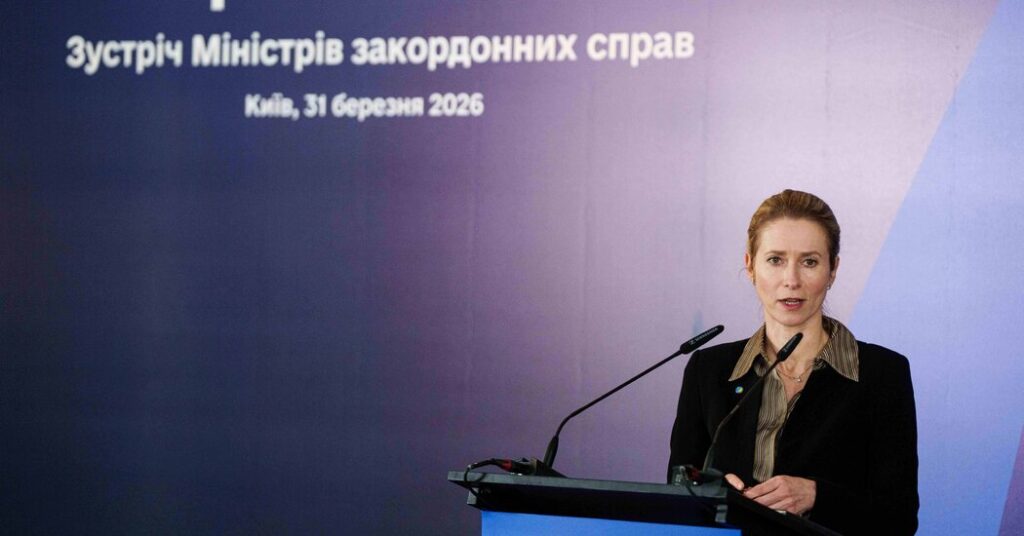
“We expect some positive decisions tomorrow on the 90 billion loan,” Kaja Kallas, the European Union’s top diplomat, said on Tuesday morning while entering a meeting of foreign ministers in Luxembourg. “Ukraine really needs this loan, and it’s also a sign that Russia cannot outlast Ukraine.”
Hungary had shocked its partners in the European Union when, in late February, it blocked the loan to Ukraine. Mr. Orban had agreed to allow the loan through as recently as December.
His government blamed the about-face on the pipeline, the Druzhba, which carried Russian oil across Ukraine and into Hungary and Slovakia. The pipeline was damaged in what Ukraine said was a Russian attack, and its oil flows had ground to a costly standstill. Mr. Orban argued that Ukraine was slow-walking repairs.
Ukrainian and E.U. officials saw Mr. Orban’s opposition to the loan as an example of pre-election postering before a vote on April 12, and his ad campaigns had been anti-Ukraine and skeptical of the European Union.
But Mr. Orban suffered a resounding defeat, and Peter Magyar, the winning candidate, quickly suggested that he would lift Hungary’s veto on the loan once he takes office next month. Within a few days, Mr. Zelensky had announced that the Druzhba pipeline would be operational by the end of April.
Mr. Orban posted on social media on April 19 that the pipeline could be fixed imminently. “Once oil deliveries are restored, we will no longer stand in the way of approving the loan,” he added, indicating that there might be room for even earlier progress.
If E.U. ambassadors agree on Wednesday, money could soon begin to replenish an increasingly desperate Ukraine.
While European officials had found ways to keep Kyiv funded during the delay, the loan will provide more substantial financial support for Ukraine as Moscow’s full-scale invasion extends into a fifth year.
The loan itself will come at no eventual cost to Hungary, or to the Czech Republic and Slovakia, all of which opted out of helping to pay for it as a condition for allowing it to pass. The loan is backed by the European Union’s shared budget.
Ukraine would only need to repay the no-interest loan if Russia were to pay reparations. Kyiv needs the cash to buy air defenses and military equipment, and it has been rapidly depleting its existing finances.
In Hungary, in addition to signaling that he would unblock the loan, Mr. Magyar has struck a more friendly tone toward the European Union than Mr. Orban did. But it remains unclear how much he will change Hungary’s broader approach toward Ukraine. He has stopped short of endorsing additional financial aid to Kyiv, and he has made it clear that he opposes an accelerated timeline for Ukraine’s integration into the European Union.
Jeanna Smialek is the Brussels bureau chief for The Times.
The post Back on the E.U. Agenda: A $106 Billion Loan to Ukraine appeared first on New York Times.