Are the US and Iran on the verge of a full peace agreement — or a return to all-out war?
On the one hand, President Donald Trump has told multiple reporters in recent days that Iran has effectively agreed to all US conditions and that talks are going well, with Vice President JD Vance set to land in Pakistan for more this week. On the other hand, after briefly declaring it reopened last week, Iran once again declared the Strait of Hormuz closed, firing on ships transiting the waterway over the weekend, and the US continues to maintain a partial blockade on Iranian ports, seizing an Iranian vessel on Sunday. It’s unclear if Iranian negotiators will even be there to meet Vance in Islamabad.
There may also be a third option: The current status quo — definitely not peace, but not quite a return to war either — could simply continue for the time being. At the moment, that’s an outcome that both the US and Iran would probably prefer over making what each would view as a humiliating compromise. But the costs of that state of affairs continue to grow every day that the Strait of Hormuz remains closed and the region remains under the threat of a return to war.
In some ways, the dynamic is not all that different from what it was throughout the weeks of the US-Israeli bombing campaign: a competition to see which side can endure pain the longest. The difference in this new phase of the war is that when it stops is now primarily Iran’s decision.
Can the US and Iran get to yes?
The main dynamic at the moment is that the US has incentive to end the war but isn’t sure how. Iran has the means to end the war but isn’t sure if it wants to.
Prior to the war, the US was seeking to pressure Iran to fully give up its nuclear program, with hawks hoping for a broader deal that also included Iran giving up its support for foreign proxy groups like Hezbollah in Lebanon and the Houthis in Yemen and accepting limits on its ballistic missile program. Trump’s most confident statements to reporters notwithstanding, the latter two goals have mostly fallen by the wayside. This is now a negotiation about Iran’s nuclear program and future control of the Strait of Hormuz — something that wasn’t an issue at all before this war started.
If Iran had an actual nuclear weapon right now, it would probably not be in this situation, but it’s clear that its enrichment program did more to paint a target on the country than protect it. Even before the war started, Iran was reportedly considering agreeing to major concessions on its nuclear program, including diluting its 400 kilogram stockpile of highly-enriched uranium. The US-Israeli bombing campaign may have made a nuclear deal more likely, but not quite in the way that was promised.
“The fact that [the Iranians] now have the Strait of Hormuz, thanks to the US-Israeli attack on Iran — that’s nice leverage, which means that they have a freer hand now on making concessions on the nuclear issue,” said Alex Vatanka, director of the Iran program at the Middle East Institute.
Last week, Axios reported that the United States was considering a deal to release $20 billion in frozen Iranian assets in exchange for Iran turning over or diluting its 400 kilogram stockpile of highly-enriched uranium. This would be a tough deal for Trump to sell politically, though, considering that even this week he has continued to attack the Obama administration for “1.7 Billion dollars in ‘GREEN’ cash” released to Iran as part of the 2015 nuclear deal. But, if coupled with inspections and verification, it would constitute more progress on the Iranian nuclear issue than seemed possible just a few weeks ago, and Iran’s more confident position as a result of taking Hormuz is at least partially to thank for it.
The issue of the strait may be harder to resolve than the nuclear issue. Iran’s proposal to impose tolls on ships exiting the strait will be unacceptable not only for the United States but for its trading partners as well. The strait is an international waterway, and Iran’s attempt to take control of it challenges the principles of free navigation that underlie the global trading system. But that doesn’t mean Iran will let go of its new economic weapon without getting anything in return.
The Iranian regime’s main goals in this conflict have been, first, to survive and second, to impose costs on the US and its allies so severe that they wouldn’t be tempted to attack the country again in a few months. By seizing the strait, Iran has succeeded on the second goal, perhaps even more than it expected. But a debate has now opened up over whether it’s time for Iran to compromise and move on from the conflict or to continue to inflict punishment on its enemies.
In an interview on Iranian state television over the weekend, parliament speaker Mohammad-Bagher Ghalibaf, Iran’s main negotiator with the United States, defended the talks, saying that while Iran would drive a hard bargain, US military capabilities should not be underestimated, and Iran’s position should not be exaggerated. Ghalibaf was likely responding to criticism from newly ascendant hardliners within Iran’s Republican Guards and to the large nightly rallies in Tehran by regime supporters calling on the government to not to compromise and continue the fight.
Would $20 billion — in “GREEN” cash or some other form — be enough to get Iran to part with both its uranium and its control of the strait? Perhaps. But as Ali Vaez, Iran director at the International Crisis Group puts it, “the strait has provided Iran with a weapon of mass disruption that certainly has deterrence value. But the new hardline leaders of Iran might want to combine that with a weapon of mass destruction nonetheless.”
In other words, rather than substituting an economic deterrent for a nuclear one, Iran may simply decide it should have both.
What happens in the meantime?
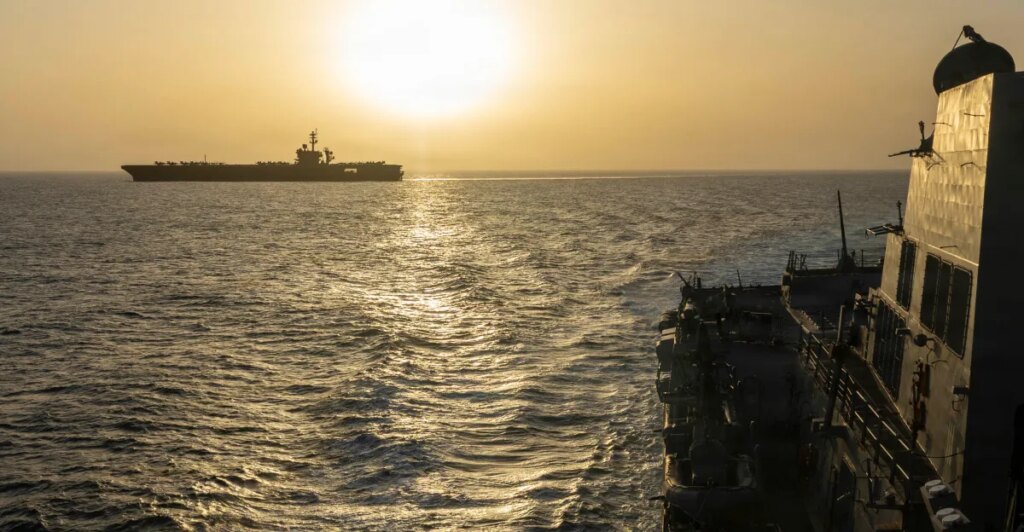
Trump said this week that he is “highly unlikely” to extend the Iran ceasefire, which ends on Tuesday. But privately, according to the Wall Street Journal, Trump is concerned about the prospect of using military force to reopen the strait, telling aides that US troops sent to occupy the strategic Kharg Island would be “sitting ducks” for Iranian reprisals and comparing the situation to Jimmy Carter’s failed rescue of US hostages in Iran in 1979. Despite Defense Secretary Pete Hegseth’s warning that the US is “locked and loaded” to follow through on Trump’s pre-ceasefire threat to destroy Iran’s electricity grid, a return to full-scale combat like we saw in March seems unlikely.
Even if the ceasefire formally ends this week — which is likely given that Vance may not even arrive in Pakistan until after it expires — that doesn’t necessarily mean the US will resume airstrikes against Iran or that Iran will resume its missile and drone strikes against the Gulf. The strait may simply remain mostly closed, with periodic skirmishes, a situation some have compared to the 1980s “Tanker War” in the strait that went on for years on the sidelines of that decade’s Iran-Iraq war.
The difference today is that the Tanker War never disrupted more than 2 percent of the ships passing through the strait. The current crisis is disrupting more than 90 percent.
“As much as it likes to portray itself as not caring whether the Strait is open or not, the United States can’t afford to have the strait closed for much longer,” said Gregory Brew, Iran and energy analyst at Eurasia Group.
Trump has so far benefited from the fact that the US is less exposed to the shortages and disruptions caused by the strait’s closure than other regions, particularly in East Asia. And the stock market and oil futures markets have been volatile but less affected than one might expect. But a world where Europe is running out of jet fuel in a matter of weeks is not one that’s going to leave the US economy unaffected indefinitely. Energy Secretary Chris Wright is already saying US gas prices are likely to remain above $3 a gallon until after 2027 — after this year’s midterm elections. The relatively bullish markets are responding to expectations of an imminent deal, but they are likely to change if the administration appears to have settled for a permanently closed strait or even an Iranian toll booth.
Iran’s rulers, for all their newfound bravado, also badly need time and money to reconstitute their regime, replenish their defensive arsenal, and begin the process of rebuilding what the US and Israel have destroyed.
Both sides have incentive to prevent the strait crisis from escalating further. But the two sides’ positions are still far apart, and as long as the crisis continues, risk of miscalculation remains.
Though the 1980s Tanker War may have been on a far smaller scale than the current crisis, it notably included an infamous incident of a US warship accidentally shooting down an Iranian civilian airliner, killing nearly 300 people. This war has already included a notable example of faulty US targeting leading to a mass tragedy.
Both the US and Iran may want to keep this next phase of the war as a low-intensity conflict, but that doesn’t mean it will stay that way.
The post The war in Iran didn’t end; it became something new appeared first on Vox.