Lawless political violence landed on Silicon Valley’s doorstep this month when an attacker hurled a Molotov cocktail at the San Francisco compound of Sam Altman, OpenAI’s chief executive. The incident was a disturbing sign that simmering public anger about A.I. is spilling out of polling data and social media posts and into the real world.
The attack shook many tech employees, who in quiet conversations about safety wondered whether this was a watershed moment for the industry. I believe it should be — the whole thing is disturbing and jarring, but I’m hopeful it will change how some tech leaders deal with the societal consequences of their success.
Up until very recently, Americans viewed tech more positively than any other business sector. Now, I increasingly fear, tech is heading down the same path as health care, government and other institutions that Americans believe no longer serve them. A.I. may be accelerating this shift. We’re already seeing jobs replaced by technology that doesn’t fully work, deepfake pornography generated without consent, and digital communications overrun with fraud and scams. Seventy-seven percent of Americans believe A.I. could pose a threat to humanity — an idea Mr. Altman himself has advanced.
Yet the vast majority of Americans feel they have no say or recourse. Unlike essentially every other industry, tech has faced little to no accountability for its failures. No regulator has the power to recall a harmful software update. Boycotts don’t work for infrastructure such as cloud services (which store all your digital files), your email or your phone. When anger has no productive outlet, it takes only one unhinged person to turn it into something dangerous.
This lack of accountability is the model. Let’s start with Meta, which after several years of enormous investment pivoted away from its virtual reality namesake and stopped developing the metaverse. Imagine if General Motors decided the future of transportation was jet packs, rebranded itself as Copter, spent $80 billion on it, completely missed the electric-vehicle wave while its biggest competitors did not, then laid off 20 percent of the company. Does anyone believe G.M.’s chief executive would still have a job? Yet because his “super-voting” shares allow him to control the company board, Meta’s chief executive, Mark Zuckerberg, remains in charge — despite championing one of the most expensive failures in corporate history.
Meanwhile, families are filing wrongful death claims against OpenAI, arguing its chatbot, ChatGPT, sent messages to their relatives that encouraged them to die by suicide. Roblox, an online platform that lets users (mostly children and teenagers) create and play their own games, faces numerous lawsuits from state governments that allege the platform has enabled child endangerment, sexual exploitation and grooming.
If these companies sold food, cars, medicine or any other consumer goods, their products would almost certainly be recalled while federal regulators investigate the allegations. Yet tens of millions of kids under 13 still use Roblox every single day, and ChatGPT counsels more than one million people a week who show explicit signs of suicidal intent. The idea that one of these platforms would go dark for even a day to address such harms seems laughable.
You would think an industry creating this kind of outrage would reflect or recalibrate. Business experts teach us that companies facing customer backlash should acknowledge the failure, change their approach and earn back public trust. But the titans of tech no longer seem interested in convincing the public. Marc Andreessen, a founder of the venture capital firm Andreessen Horowitz, proudly announced last month that he practices “zero” introspection. Mr. Zuckerberg has said he is done apologizing. An industry that once inspired us to “think different” has changed its message to “deal with it.”
This attitude shift has led some tech leaders to give up persuasion for force. Employees aren’t using your A.I. tools? Executives will make them. Brands don’t want to advertise next to white supremacist content on your social media network? Elon Musk will sue them. Don’t like a magazine’s tech coverage? Some venture capitalist will threaten to try to buy them.
As Big Tech has become more powerful, I’ve previously compared it to finance, where profits and growth matter more than values, but I now believe health care is the better analogy. When the UnitedHealthcare chief Brian Thompson was shot to death, many read that act of deplorable violence as an indictment of a health care system defined by corporate apathy and greed. Fifty-three percent of Americans held an unfavorable view of the health care system, according to 2024 polling, a stance formed by decades of denied claims, medical debt and corporate indifference to the patients who have no choice but to use it.
Health care of course is heavily regulated, but consumers still view insurers, pharmaceutical companies and hospital networks as institutions that do not answer to them. Both health care and tech offer the same frustrating message: You’re stuck with us, and there’s nothing you can do about it.
It’s not too late for tech to avoid the same reputational fate. Tech companies used to have a strong record of getting buy-in for new products with uncomfortable trade-offs. Apple scans your face, but in return gives you infinite, searchable storage for a lifetime of images. Google knows your exact location at any moment, but gives you the comfort of never feeling lost again. In the end, these companies asked for our private data and won our consent by offering us amazing utility in return.
Interestingly it is OpenAI’s chief rival, Anthropic, that is demonstrating an understanding of Silicon Valley’s history of mythmaking. The company has stood up to the Pentagon, argued that A.I. labs should be liable for causing large-scale harm, and highlighted safety as a core principle at every opportunity. The company’s annualized revenue jumped from $9 billion to $30 billion in the past three months.
I frequently point to Anthropic as an example of a company that understands how clear, aspirational values can help it stand out in a noisy and cynical time. (Anthropic is not a client, though I’ve worked with firms that have invested in it.) To be clear, its choices are not selfless. Anthropic is competing for business: If you’re going to share your life, health, fears and desires with a chatbot, you’re more likely to choose the one that actually stands for something. In a bitter war over jaded consumers, trust can offer a competitive advantage.
Taking responsibility works. Uber spent years rebuilding its brand after executive turmoil, sexual harassment claims, labor issues and widespread campaigns to #deleteuber wrecked its image. Its chief executive resigned, and the company began issuing reports on safety incidents that voluntarily disclosed ugly data, and partnered with its competitor Lyft to create a shared database of drivers accused of violent behavior. Uber is now the 30th most valuable brand in the world according to Brand Finance, moving up nearly 60 spots since Dara Khosrowshahi took over in 2017 and declared: “We do the right thing. Period.” Other tech companies should follow its lead.
The foundation of Silicon Valley’s appeal has always been the implicit promise that great technology serves you, and that the people behind it understand your problems and want to solve them. That promise is starting to feel broken. Fixing it requires something much of Silicon Valley has forgotten how to do: listen and learn.
A Molotov cocktail is the absolute wrong way to send a message to tech. Its leaders need to hear it anyway.
Aaron Zamost is a tech communications consultant and former head of communications, policy and people at Square.
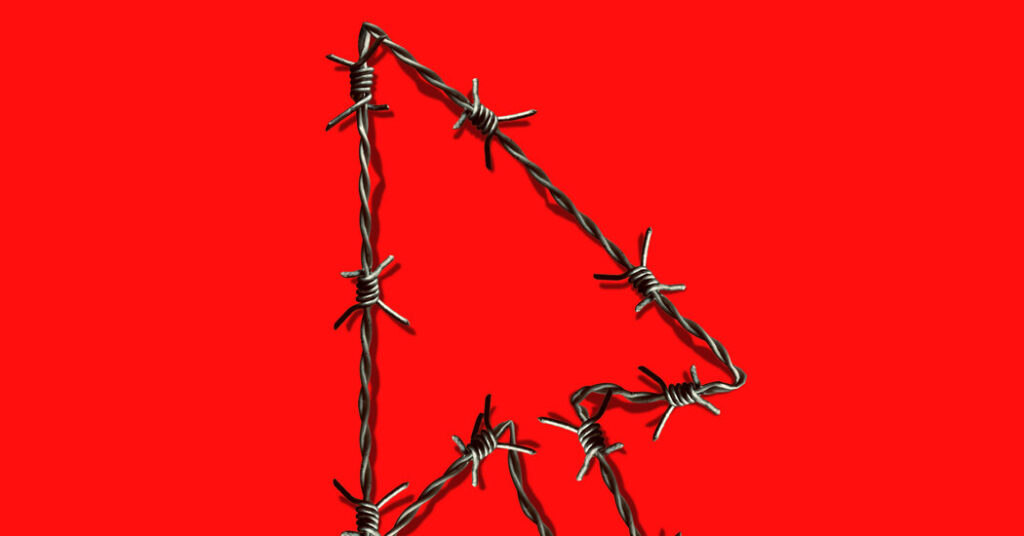
Source photograph by Douglas Sacha/Getty Images.
The Times is committed to publishing a diversity of letters to the editor. We’d like to hear what you think about this or any of our articles. Here are some tips. And here’s our email: [email protected].
Follow the New York Times Opinion section on Facebook, Instagram, TikTok, Bluesky, WhatsApp and Threads.
The post Silicon Valley Needs to Notice That Molotov Cocktail appeared first on New York Times.