As stocks soared this week and oil prices dropped amid an apparent cooling of tensions between the United States and Iran, it may have left the impression that the energy shock that rattled the world is quickly fading, along with the risk of sending the global economy into recession.
But beneath that surface, a starkly different reality is unfolding. It is defined by disrupted supply lines and damaged infrastructure, sparking increased concern among the people who produce, transport and depend on energy.
“The people closest to the industry are far more concerned about these disruptions and recognize the length of time it will take for things to return to normal — if they ever do,” said Gerry Morton, oil and gas co-chair at the law firm Baker Botts. “The further away you get from actually being involved in producing oil, the less you seem to be concerned about the physical reality and problems that are there.”
Even investors rushing to tap into market optimism warned in interviews that it masks deep, underlying problems that threaten a reckoning in the not too distant future.
“We know supply chains are breaking down in Asia and even Europe,” said Ritesh Jain, founder of the investment firm Pinetree Macro. “We know a correction is eventually coming. But everybody wants to live the present moment. People are just saying to themselves, ‘They will solve these issues. And if they don’t get solved, we will sell then.’”
“We have to dance while the music lasts and hope you are near the exit door when it stops,” he said. “I am in that exact situation, despite talking to people in the background who know something is going to break.”
That disconnect between what the market is signaling and what is actually happening is increasingly shaping the global economy. As investors and the trading algorithms they rely on react to headlines and hints of diplomatic progress, analysts warn they are overlooking red flags around what is coming in the weeks and months ahead. It has led some of the world’s leading economic voices to warn that complacency is misplaced, including the head of the International Energy Agency and officials at the International Monetary Fund.
Europe is at risk of running out of jet fuel within six weeks. Fertilizer prices have spiked so high that they could force food prices up into next year. There are shortages of key ingredients to make not just products like surgical masks and toys, but all plastics — meaning the cost of any product with plastic packaging could be going up. Factories in countries such as Vietnam and Bangladesh that U.S. corporations rely on to make products are so crushed by soaring energy prices that they are at risk of shutting down.
“Some countries may be richer than the others,” Fatih Birol, executive director of the International Energy Agency, told the Associated Press on Thursday. “Some countries may have more energy than the others, but no country, no country is immune to this crisis.”
The booming stock market hardly seems to be pricing this in. Some analysts describe the disconnect as similar to the way markets reacted during the coronavirus pandemic. After initially plunging, they bounced back quickly — ignoring the lasting damage that had been done to the supply chains that drive world economies, and the steep inflationary risks those disruptions caused. Then came the hangover. As product inventories were exhausted, energy reserves tapped and government assistance for displaced workers depleted, the pain manifested itself in financially punishing aftershocks that ricocheted around the globe.
“People are fooling themselves into thinking this will all be resolved very quickly,” said Emma Ashford, a senior fellow at the Stimson Center, a foreign policy think tank, and the author of a book titled “Oil, the State, and War: The Foreign Policies of Petrostates.” “It is not true. At some point this reality has to snap back together.”
Many connected to the oil industry are puzzled by how cavalierly traders and investors are responding to a global disruption that will not be remedied quickly, regardless of what diplomatic breakthroughs happen in coming days. And they say Iran’s announcement that the Strait of Hormuz — a global chokepoint for about 20 percent of the world’s oil and natural gas — would be conditionally reopening is an incremental step, not the breakthrough lower oil futures suggest. Iran made clear it will only be permitting ships to pass through selectively and on certain routes. The narrow strait is still littered with mines. The U.S. is not lifting a military blockade of shipping traffic.
“If you had told me three weeks ago that the price of oil would be under $100 in the futures market, I would have called you a liar,” said Neil Crosby, head of oil research at Sparta, a market intelligence and analytics firm for the industry. “After Russia invaded Ukraine, price futures went to $130, and almost no oil was at risk. Right now, 20 percent of the world’s oil is still at risk and futures are doing nothing. It is crazy.”
He said the erratic market response seems to be driven to a “fog of war,” where traders, unclear on the U.S. objectives and willingness to prolong battle, are guided by a presumption that President Donald Trump is scrambling to find an off-ramp from the conflict. The confusion has his firm’s investor clients treading nervously, he said, cutting their bets on oil markets. That much is underscored by the unprecedented spread between the amount buyers are paying for a barrel of oil for use right now — which in some parts of the world has soared past $140 — and the price traders are paying for a barrel of oil that would be delivered months from now, which on Friday dropped below $90.
“At any point during the day, Trump might tweet something and the trading algorithms are just going to react to it,” Crosby said. “It makes life very hard.”
It can set off a chain reaction, market watchers say, where dropping prices for oil futures trigger market trading algorithms that push investors to buy stocks, as cheaper fuel should theoretically boost profits at most corporations. The danger is that it is all happening while the massive global energy disruption has not been resolved. Its economic fallout has still not been fully felt. The further stock prices diverge from economic realities, the steeper the risk of a reckoning.
“There is a disconnect between what the markets look like and what is actually happening in the world,” said Tibor Besedes, a professor of economics at the Georgia Institute of Technology. “The markets seem to be pricing this as a temporary shock even though people in the oil sector say this will be long term. It is not as simple as opening the faucet to get oil flowing again. I don’t understand why every time news comes out that we might have a ceasefire, the markets react this way. It is like investors do not realize we are still in a war.”
Energy infrastructure in key regions has been damaged, in some cases severely. Critical shipping routes face heightened risks, and the logistics of moving oil and gas around the world have been derailed in ways that cannot be quickly fixed.
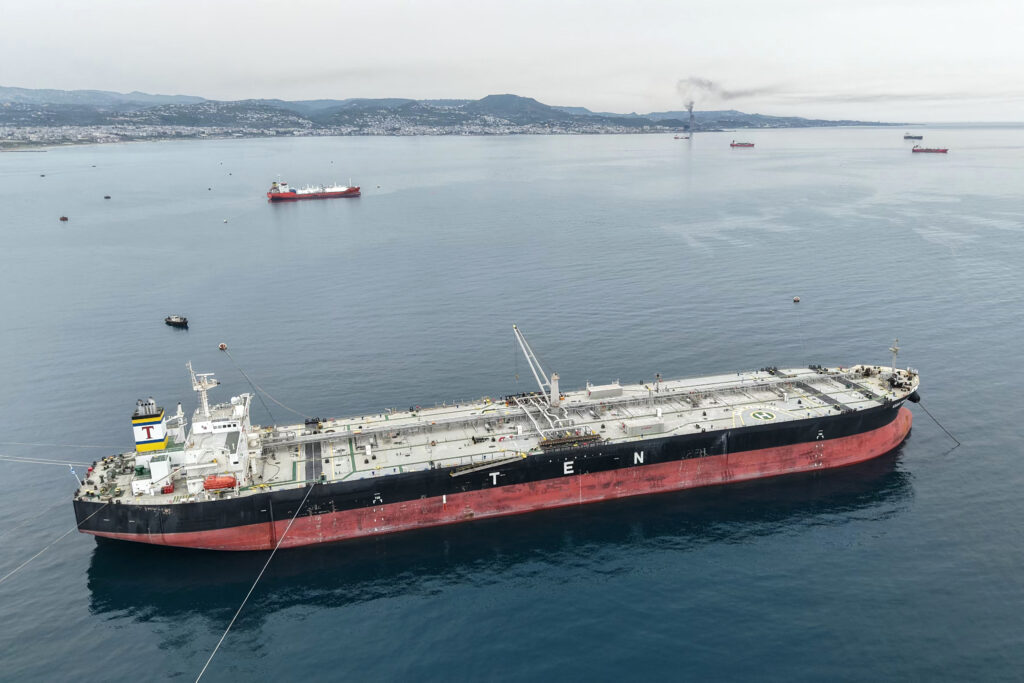
“You can ride a bike faster than a tanker moves,” said Morton. “It will take weeks, possibly months, for tanker traffic to return to normal.”
Repairs to damaged facilities can take far longer. Industry officials know Gulf state production facilities have suffered significant damage, but they have not been able to tally the extent of it yet. Repairs won’t begin until bombs stop dropping for good.
History offers a cautionary example, Morton said. Iraq set Kuwaiti oil fields ablaze when it invaded in 1990. After U.S. forces expelled Iraq from Kuwait, Morton recalled, “everyone said, ‘Great, everything can go back to normal.’” But that is not how it played out, he said. Restoring production took years.
That energy infrastructure is like the world’s coronary artery, said Amir Handjani, a board member at the nonprofit Quincy Institute for Responsible Statecraft. A patient typically doesn’t think about it until they go to the doctor and learn it is blocked, which sets in motion a life-altering cascade of medical concerns.
“We’ve already seen tremendous damage to Gulf energy infrastructure,” said Handjani, who is also a partner at the strategic advisory firm KARV. “The markets are signaling they can just lean on reserves while it is fixed. But what if there is another round of fighting and Iran launches more attacks on that infrastructure? You could be talking about enough supply disruption to give the global economy a stroke.”
The post Here’s what the stock market might have gotten wrong about the Iran war appeared first on Washington Post.