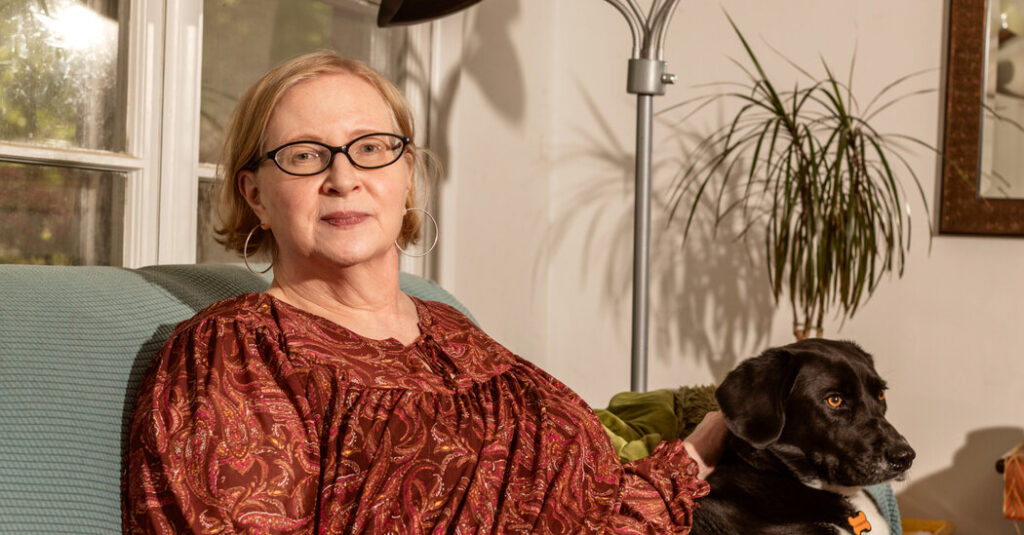
Amy Trojanowski liked the extra benefits her Humana Medicare Advantage plan provided — a $200 debit card replenished monthly to use toward groceries, over-the-counter pharmacy items and even her electric bill. She also appreciated the dental and vision coverage. But those things couldn’t compare to the doctor she had been seeing for nearly a decade.
“I love her so much,” said Ms. Trojanowski, 60, who lives near Raleigh, N.C. The doctor’s practice is part of UNC Health, a 20-hospital system affiliated with the University of North Carolina at Chapel Hill.
Last October, however, Humana informed her that UNC Health would no longer participate in the plan’s provider network in 2026. People with these private insurance policies, an alternative to government-run traditional Medicare, are required, with rare exceptions, to see medical professionals in their plan’s network. Traditional Medicare has no network; patients can see any provider who accepts it.
For Ms. Trojanowski, losing that connection was unthinkable. “UNC is everything,” she said. “It’s where I get all my care.” UNC Health also withdrew from two other Advantage plans last year, affecting about 65,000 people across the state.
Last November, the Centers for Medicare & Medicaid Services proposed a regulation with a solution for Advantage members “who experience provider network changes midyear” and “may want to stay with their current provider,” according to a C.M.S. fact sheet. Officials would streamline a complicated process “to allow these enrollees to change their coverage more easily.” State insurance officials, the American Medical Association and the American Hospital Association, along with other provider and patient advocacy groups, generally supported the idea.
But early this month, C.M.S. abandoned the proposal, which would have taken effect in 2027, even as disruptions in provider networks continue. C.M.S. officials declined to explain the reason for the reversal. But in an email, a C.M.S. spokesman, Christopher Krepich, wrote that the agency “routinely proposes policies to solicit public input and carefully considers all feedback” before finalizing them.
Currently, when a group of providers leaves an Advantage plan, the insurer must tell members so they can choose a new doctor in the plan’s network. C.M.S. is notified and decides whether the providers’ exit creates what is called a significant network change. If so, affected beneficiaries are entitled to a special enrollment period so they can swap plans or join traditional Medicare. Despite requests from the National Association of Insurance Commissioners; Senator Ron Wyden, Democrat of Oregon; and others, the agency hasn’t clearly described what qualifies as a significant change.
Under the proposal, C.M.S. would not have to decide if the change was significant. Patients assigned to or under treatment from any of those providers within the previous three months could automatically switch to other coverage their providers accept. Insurers would be required to tell beneficiaries that their doctor was leaving the plan and that they could leave, too.
Mr. Wyden, the ranking member of the Senate Finance Committee, which oversees C.M.S., criticized the reversal. “The Trump administration has betrayed seniors who enrolled in Medicare Advantage only to have the rug pulled out from under them when their doctors or local hospitals were dropped from their insurance coverage,” he wrote in an email.
Bonnie Burns, a consultant at California Health Advocates and a consumer representative for the National Association of Insurance Commissioners, said: “Beneficiaries want a solution to this. When their providers leave a Medicare Advantage plan, people want to be able to change plans or go back to original Medicare with supplemental insurance so they can continue to see the doctors of their choice.”
Ms. Trojanowski, who is under the typical Medicare eligibility age of 65 but qualifies because of a disability, is among the 35 million Americans with Medicare Advantage insurance. For many of them, it can be a smart financial decision, at least initially. They have access to a limited array of extra benefits and perks, plus the security of knowing their out-of-pocket expenses are capped — features not available from traditional Medicare. But their peace of mind can be shattered when a trusted doctor or hospital leaves the plan’s network.
Nationwide, nearly three million people were forced to find other coverage for 2026 because of service area cuts and plan cancellations. Insurers predict further market retrenchment as small increases in federal reimbursement fail to keep pace with medical costs. Last week, C.M.S. announced that plans would get a nearly 2.5 percent pay increase, about $13 billion more, in 2027.
C.M.S. is expected to pay insurers an estimated $615 billion this year, or about 14 percent more than the government pays to care for similar patients in traditional Medicare, according to the Medicare Payment Advisory Commission, which monitors the programs for Congress.
Thousands more Advantage members lost access to their providers as the number of breakups between Advantage plans and health systems tripled from 2022 through 2025, according to FTI Consulting. Among them were six Minnesota hospital systems that left Aetna, Humana and UnitedHealthcare Advantage plans last year, affecting 75,000 members.
“We have seen over the years so many people stuck with a plan that is not providing them with the services and care they need, but they’re not able to change plans,” said Kelli Jo Greiner, director of the Minnesota State Health Insurance Assistance Program, known as SHIP, at the Minnesota Board on Aging. Federally funded SHIPs in every state offer free assistance navigating Medicare.
Even when beneficiaries can leave plans, finding an alternative with the right fit isn’t always easy.
“The biggest differences between Medicare Advantage plans are the providers in their network and the cost of specific medications,” said Jeanne Chamberlin, SHIP coordinator for Orange County, N.C. “When we have to move people to a different plan, the cost of their medications could be thousands of dollars higher.”
Breakups are increasing as hospitals and physician groups become more frustrated with insurance companies second-guessing medical decisions.
“Medicare Advantage plans have increasingly created challenges for patients and providers, including onerous prior authorization burdens that delay care, higher denial rates, prepayment claim audits and payment downgrades,” Alan Wolf, a UNC Health spokesman, said in an email. “It is a tactic to delay, deny or reduce reimbursement.” A Humana spokesman, Mark Taylor, said that he could not comment on private negotiations with providers, but that the company remained open to renewing a contract with UNC Health.
Last year, at least 41 hospital systems serving all or parts of 23 states withdrew from at least 15 Advantage plans, according to Becker’s Hospital Review and other news reports. And so far this year, at least 21 more hospital systems serving all or parts of 18 states have left at least 10 plans. In January, the Mayo Clinic in Minnesota stopped participating in UnitedHealthcare and Humana Advantage plans, which make up nearly half of Advantage enrollment nationwide.
Thousands of New Yorkers with UnitedHealthcare policies have been waiting to hear if the NewYork-Presbyterian Hospital system, with providers across the city and suburbs, will remain in UnitedHealthcare’s network. Both sides have warned patients of an imminent breakup multiple times since December. The deadline for a new contract has been extended to May 1.
Advantage members have no guarantee that their health care providers will stay in their network through December, when their plan ends. Contracts between providers and insurers don’t have to extend over the same period as the patients’ plans. But under federal law, C.M.S. cannot interfere with contract negotiations.
Locked Into Advantage
For beneficiaries who wanted to switch to traditional Medicare, the proposal would have removed an obstacle that has kept beneficiaries in many states locked into Advantage plans for most of the year. It drew sharp criticism from insurers and industry groups.
Beneficiaries who enrolled in traditional Medicare after losing an Advantage plan provider could buy Medigap supplemental insurance without going through medical underwriting, which allows companies to charge more or deny a policy based on a person’s pre-existing health conditions. Without affordable access to Medigap policies to pay some or all of the 20 percent of outpatient bills Medicare doesn’t cover, this choice remains out of reach for many.
UnitedHealthcare, the country’s largest health insurance company, opposed expanded access to Medigap plans, claiming it would encourage patients with complex medical needs to switch to traditional Medicare, burdening Medigap plans with greater costs. The “predictable” outcome, wrote Bobby Hunter, UnitedHealthcare’s chief of government programs, would be “higher premiums and reduced market competition, which may compromise affordability for existing policyholders and threaten the market’s long-term sustainability.”
AHIP, an industry group, was concerned that making it easier for beneficiaries to leave plans could increase pressure on insurers to make concessions. Mike Tuffin, chief executive of the group, said the change could have been leveraged, leading to threats of midyear terminations in exchange for rate increases. “If adopted, the proposal could undermine the Advantage program by driving up insurers’ costs and reducing benefits,” he added.
In rejecting the proposal, C.M.S. officials acknowledged “the broad interest related to this topic” and held out the possibility of reconsidering its decision.
In March, Ms. Trojanowski received a shocking letter from her new Advantage plan saying that her beloved doctor was leaving that plan, too.
“I was very angry at first because the whole point was to keep my doctor,” she said. Fortunately, the letter turned out to be an error. She didn’t need to switch plans yet again.
The post Help for Medicare Advantage Patients Who Lose Doctors Is Shelved, for Now appeared first on New York Times.