Beset by war, Watergate and the violent spectacle of assassinations, the late 1960s and early ’70s was a time cloaked in shadow. The feeling followed us into the movie theaters too, in works from Alan J. Pakula’s so-called Paranoia Trilogy to Francis Ford Coppola’s “The Conversation” to Brian De Palma’s “Blow Out.” The sense of dread in those films, the creeping feeling of corrupt and malicious forces beyond our control, is as resonant now as they were then.
A few years ago, the movies that make up this month’s paranoia quintet perhaps spoke viscerally to some in a country inundated with misinformation and conspiracy theories. Now, these films tap into a universal shivering truth that has permeated these times: We are small, and great evils are afoot.
‘Safe’ (1995)
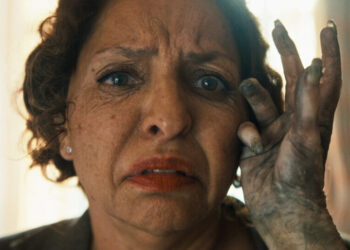
Are you allergic to the 20th century? Suffering and lost, Carol (Julianne Moore), a housewife from the San Fernando Valley, takes the flier bearing this message that she hopes will lead her to a solution about the mysterious physical maladies plaguing her. But ultimately, this is an omen for the century to come, for our pervasive sense of unease and overload in times that leaves you alienated at best, and perhaps genuinely sick at worst.
In Todd Haynes’s haunting masterwork, we follow Carol, struggling with an onset of various medical illnesses, as she goes down a rabbit hole to find answers. Decades later, a question still stirs fans: Is Carol actually sick? There are many different theories — that Carol is actually insane, that her illness is a metaphor for the AIDS crisis — but the sheer range of answers tells this is the wrong question to begin with. Really what the film is asking is if the modern world we live in is profoundly sick, how can you not be?
‘The Parallax View’ (1974)
A cheerleader, a barn, naked bodies, Hitler. Connect those images as you see fit — that’s the ominous montage flashing before Joseph Frady (Warren Beatty), a kind of psychological test, in this searing scene from Pakula’s film.
During this sequence, Frady, the cowboy journalist investigating a mysterious string of murders following a political assassination, has perhaps reached some inner sanctum. And yet, the quietly devastating revelation of “Parallax” is that there really isn’t one. When he follows the trail of the group’s latest violent conspiracy, he is only met by more shadows and the barrel of a gun at the end of a dark tunnel.
This isn’t exactly a movie about now, but if our era of Epstein investigations and institutional erosion has taught us anything it’s that there are indeed many backrooms. And in there, craven power and unspeakable evil are the same.
‘The Conversation’ (1974)
With a bird’s eye view of a bustling plaza, the camera slowly zooms in and across the city in the opening shot of Francis Ford Coppola’s “The Conversation.” Who is this voyeur observing exactly? It might be everyone.
Coppola wrote the script before Watergate, but this is a defining work of the paranoid reality the scandal opened our eyes to, one in which you never know who’s listening and what’s operating in the dark. In the film, Harry (Gene Hackman) is an expert audio bugger who slowly spirals after believing he’s learned of a murder plot in a conversation he’s been hired to record.
Even if you already know where the movie goes, what makes it spellbinding each time is its profound sense of melancholy in observing Harry’s solitary life. When you know that anyone might be watching or listening, it’s only logical to not only accept but insist that it’s better if we’re all alone in this world.
‘Blow Out’ (1981)
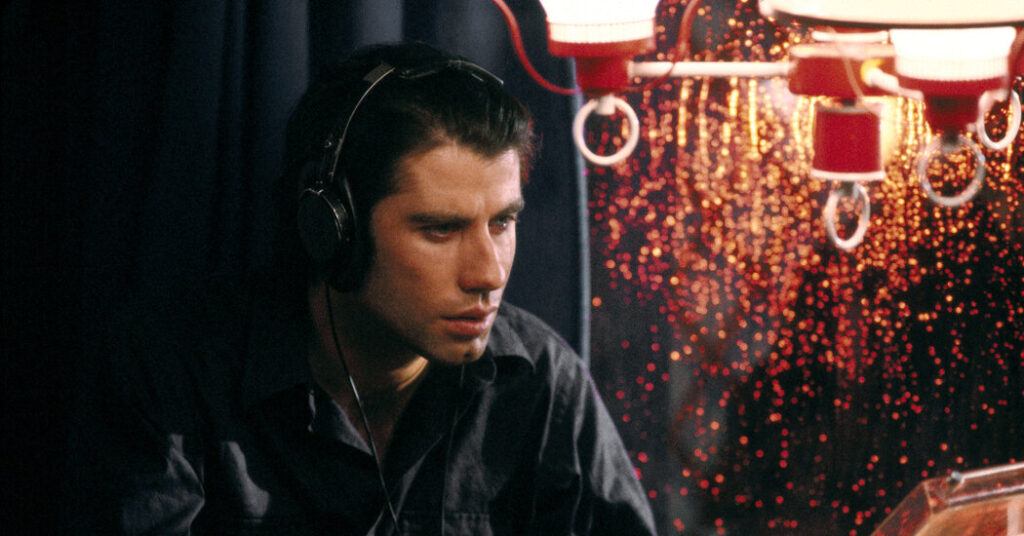
“Nobody wants to know about conspiracy, I don’t get it!” says Jack Terry (John Travolta) in Brian De Palma’s spiraling stunner. After inadvertently recording the audio to a car crash that kills an American governor and presidential hopeful, Jack begins to suspect foul play. A sound man for B-movies, he uses his footage to meticulously reconstruct the sequence of events, like a filmmaker mapping out the montage to a murder scene.
But is anyone paying attention? As Jack’s rabbit hole leads him to the film’s thrilling climax at a patriotic Philadelphia parade, full of stars and stripes, he’s the only one attuned to the possibility of sinister agents — everyone else is too busy marveling at the fireworks.
‘The Assistant’ (2019)
For both how harrowing and humdrum Kitty Green’s film is, it stands as one of the best works to speak to the #MeToo era. As we follow Jane (Julia Garner), an assistant to a production executive, across one single day in the office, we observe the small signs that begin to tell her of the routine sexual harassment that happens behind closed doors.
We never see what really happens or who her boss is, but instead how the casually manipulative and misogynistic rhythms of the corporate setting make these dark realities just part of the furniture of a workplace. The more Jane reacts, the more she’s glaringly out of step with the program. Green is intentional about the film’s structure, never really moving the story into a climax or reveal — the insidious mundanity of it all is what is most horrifying.
The post Five Free Movies to Stream Now appeared first on New York Times.