The White House declined to estimate the cost of the war with Iran at a congressional hearing on Thursday, prompting some Senate Democrats to criticize the Trump administration for its lack of transparency.
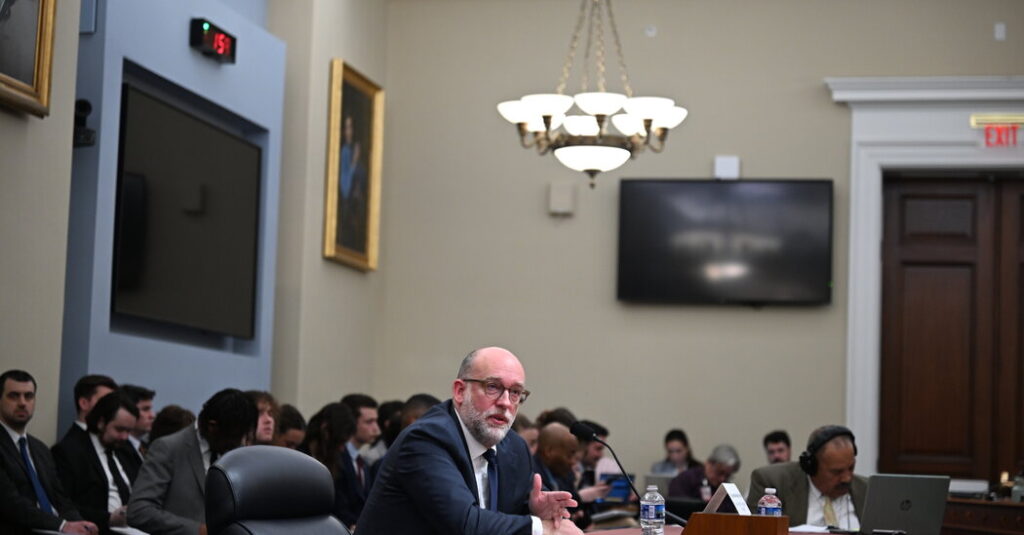
In a second appearance on Capitol Hill this week, Russell T. Vought, the White House budget director, sidestepped questions about the price tag of the U.S.- and Israel-led conflict. He said the “fluctuating” nature of the war made it hard to calculate either the expenses incurred to date or the amount that the president would seek soon in new military funding.
Pressed at one point to supply even a general range of the cost, Mr. Vought told lawmakers, “I’m not going to give you a range because I don’t want to be inaccurate.” He said the administration would furnish those details in a fuller request to Congress soon.
With the war stretching into its seventh week, the ambiguity did not sit well with Democrats, many of whom have forcefully opposed Mr. Trump’s actions and the money he has already sought for the military. In his 2027 budget request released earlier this month, the president asked Congress to approve about $1.5 trillion for defense — a vast increase, but one that did not include immediate funds for the war with Iran.
Two senior Democrats — Senator Jeff Merkley of Oregon, the ranking member on the Budget Committee, and Senator Patty Murray of Washington, the top Democratic appropriator — both took issue with Mr. Vought’s stance.
“I just find it outrageous that as director you’re not willing to tell us what those costs are,” Ms. Murray said.
Since the start of the war, administration officials and congressional lawmakers have batted only informal estimates of the cost to taxpayers. In March, the Pentagon estimated in private briefings on Capitol Hill that the price tag for just the first six days of the war exceeded $11 billion.
Later in the month, the Pentagon told the Trump administration that it might need around $200 billion in special, supplemental funding for Iran, triggering opposition from Democrats and Republicans alike. The administration is now widely expected to seek much less from Congress in the coming weeks.
Earlier in the hearing on Thursday, Senator Lindsey Graham, Republican of South Carolina and chairman of the budget panel, praised Mr. Trump for seeking additional military spending in the 2027 budget request, which the lawmaker described as “great on defense.”
Mr. Graham suggested at one point that Republicans could try to pass supplemental funding for the Iran war in a package that included “some things my Democratic colleagues want.” If that failed, however, the senator said that he would pursue “another reconciliation bill,” referring to the same, party-line process that Republicans hope to use to approve funding for immigration enforcement.
Tony Romm is a reporter covering economic policy and the Trump administration for The Times, based in Washington.
The post White House Declines to Offer Congress an Estimate of Iran War Cost appeared first on New York Times.