ISLAMABAD, Pakistan — President Donald Trump said leaders of Lebanon and Israel would speak Thursday for the first time in 34 years amid a flurry of regional diplomacy supporting the shaky ceasefire between the United States and Iran, which is set to expire next week.
“Trying to get a little breathing room between Israel and Lebanon,” Trump wrote in a social media post late Wednesday. “It has been a long time since the two leaders have spoken, like 34 years. It will happen tomorrow.”
Since Trump announced the ceasefire with Iran on April 8, Israel has insisted that Lebanon and Hezbollah, the Lebanese militant group backed by Iran, were not covered by the pause in fighting. But after U.S.-Iran talks in Islamabad last weekend, the Trump administration appears to be increasing diplomatic efforts in Lebanon as well.
Trump’s statement did not specify which Lebanese and Israeli leaders were due to speak, but Gila Gamliel, a member of Israel’s security cabinet, said Israeli Prime Minister Benjamin Netanyahu will speak with Lebanese President Joseph Aoun.
Lebanon’s presidential office said it was unaware of any plan for Aoun to speak with Netanyahu. In a separate statement Thursday, it added that Aoun spoke to U.S. Secretary of State Marco Rubio, who “affirmed his continuation of the ongoing efforts to achieve a ceasefire as a prelude to establishing peace.”
Pakistan, which helped mediate the U.S.-Iran ceasefire and hosted a through-the-night negotiating session last weekend, has said Lebanon was part of the deal and has described halting Israel’s attacks in that country as an intrinsic part of the agreement. Israel emphatically disputes that.
Despite that disagreement and Trump’s imposition of a military blockade in the Strait of Hormuz, the ceasefire has held — an indication that Washington and Tehran remain keen for an off-ramp from the war.
Defense Secretary Pete Hegseth, speaking at the Pentagon on Thursday morning, sent a message directly to Iran, warning that while the Iranian military is digging out from earlier U.S. and Israeli strikes, the U.S. is “reloading with more power than ever before” and is “locked and loaded” for more strikes on “dual-use infrastructure,” targets such as power plants that have both military and civilian uses, should a deal fail to materialize and the fighting resumes.
The U.S. enforcement of the blockade, Hegseth said, is “the polite way that this can go,” with U.S. warships and aircraft preventing tanker ships and other vessels transiting to and from Iranian ports.
Gen. Dan Caine, chairman of the Joint Chiefs of Staff, appearing alongside Hegseth, said that 13 ships have turned around and returned to Iran amid the blockade and that none have broken through. U.S. forces have not boarded any Iranian-flagged vessels in the effort, Caine said.
The historic talks between the U.S. and Iran last weekend broke down over several issues, notably Iran’s insistence on maintaining its nuclear enrichment program, which it says is for civilian purposes and Trump’s demand that the country end its nuclear program — at least for 20 years. Vice President JD Vance led those negotiations for the U.S.
In recent days, officials and diplomats have floated the possibility of a second round of talks.
Since the Islamabad meeting, Iran and the United States have continued to exchange messages, according to a Pakistani official who spoke on the condition of anonymity because he was not authorized to brief the media. The official said Pakistan is also exploring the possibility of extending the ceasefire.
“This is to create space for peace talks so that they could continue,” the official said. The Trump administration has dismissed reports that the ceasefire will be extended.
Senior Pakistani officials have also embarked on travel in the region to support the diplomatic effort. Pakistan’s army chief, Field Marshal Asim Munir, who has emerged as one of the most important figures in the peacemaking effort, traveled to Tehran on Wednesday “as part of the ongoing mediation efforts,” according to Pakistan’s military.
Also Wednesday, Pakistani Prime Minister Shehbaz Sharif arrived in Saudi Arabia. His office said he would discuss regional issues there before continuing on to Qatar and Turkey.
Iran and the U.S. remain far apart on critical issues, including Tehran’s nuclear program, control of the Strait of Hormuz and Iran’s demand that the U.S. and Israel pay compensation for war-related damages.
Trump announced the high-level talks between Israel and Lebanon just days after a rare face-to-face encounter between Lebanese and Israeli diplomats in Washington on Tuesday.
Rubio hosted the meeting, which participants described as a working group aimed at reaching a ceasefire amid cross-border hostilities. The meeting lasted more than two hours and was attended by Lebanon’s ambassador to the U.S., Nada Hamadeh Moawad, and her Israeli counterpart, Yechiel Leiter.
Tommy Pigott, a spokesperson for the State Department, said the two sides “agreed to launch direct negotiations at a mutually agreed time and venue.”
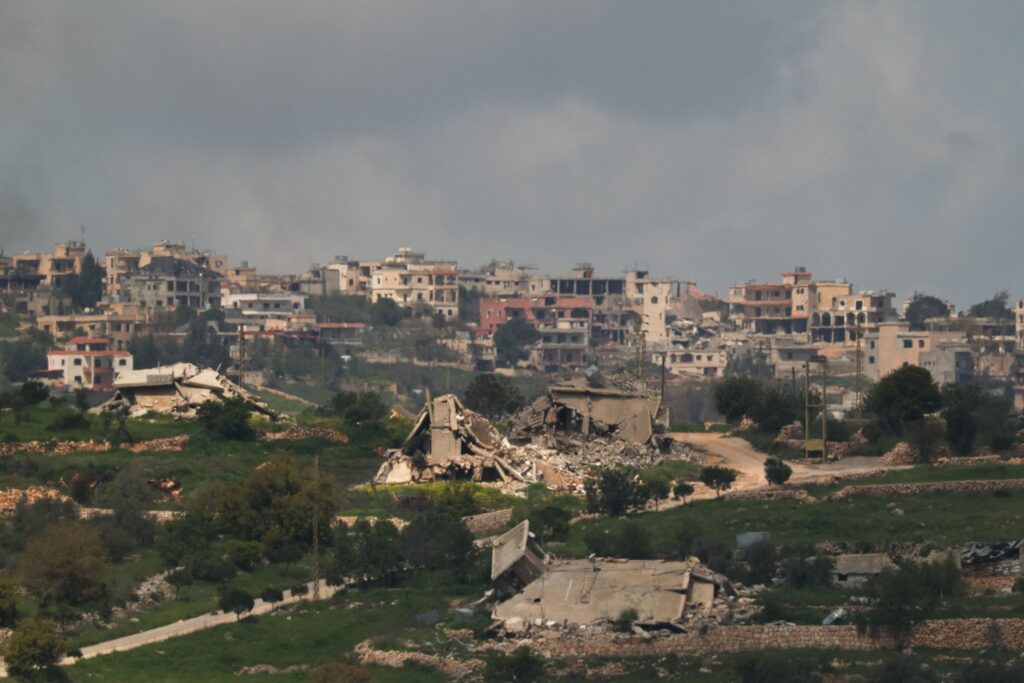
Netanyahu issued a statement late Wednesday declaring that Israel was continuing its military operations against Hezbollah.
“Our forces continue to strike Hezbollah; we are on the verge of decisive victory in Bint Jbeil,” Netanyahu said. “At the same time, I issued directives to the [Israel Defense Forces] yesterday to continue thickening the security zone, and also to deploy it eastward toward the Hermon mountain foothills.”
The Israeli leader also nodded to the diplomatic efforts. “In parallel, we are conducting negotiations with Lebanon,” he said. “These negotiations have not taken place for 40 years or more. … In the negotiations with Lebanon, there are two primary objectives: first, the disarmament of Hezbollah, and second, a sustainable peace. Peace through strength.”
Netanyahu, who has been criticized in Israel for not being part of Trump’s decision to pause the fighting with Iran, said Wednesday that he was being updated “constantly” by Washington. “Our goals are identical,” he said, though analysts have noted divergence between U.S. and Israeli interests, and some Israelis have opposed the ceasefire, saying it was too soon to halt the fighting.
Haidamous reported from Beirut. Dan Lamothe in Washington and Lior Soroka in Tel Aviv contributed to this report.
correctionA headline with a previous version of this article incorrectly said that President Donald Trump said leaders of Israel and Lebanon would meet. Trump said they would speak. The article also previously misstated the first name of a member of Israel’s security cabinet. It is Gila Gamliel.
The post Trump says Israeli, Lebanese leaders will speak amid push to extend ceasefire appeared first on Washington Post.