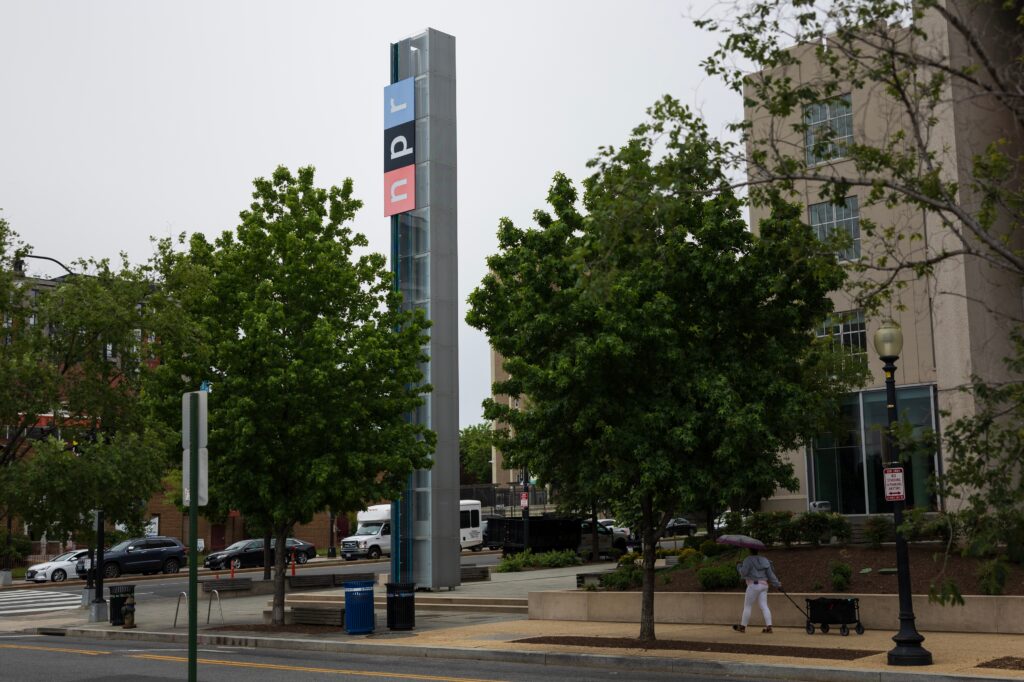
NPR announced a $113 million windfall on Thursday from two charitable donors including billionaire philanthropist Connie Ballmer, months after Congress voted to strip federal dollars for public media at President Donald Trump’s direction.
Ballmer, a former NPR board member, gave $80 million, the largest gift by a living donor in the organization’s history, NPR said. An anonymous donor gave an additional $33 million also announced Thursday.
“I support NPR because an informed public is the bedrock of our society, and democracy requires strong, independent journalism,” Connie Ballmer wrote in a statement. “My hope is that this commitment provides the stability and the spark NPR needs to innovate boldly and strengthen its national network.”
Ballmer, co-founder of the investment firm Ballmer Group, is the wife of Steve Ballmer, the owner of the NBA’s Los Angeles Clippers and formerly CEO of Microsoft.
Katherine Maher, NPR’s President and CEO, called the donations a “remarkable investment” that will fund the organization’s journalism for years to come.
Maher said the donations are crucial after last year’s rescission vote that stripped $1.1 billion in federal taxpayer dollars away from the Corporation for Public Broadcasting, which has long doled out funds to NPR, PBS and member stations across the country. The CPB, stripped of funding, voted to dissolve in January.
At the time of the rescission, NPR only received 1 percent of its budget from federal dollars. But many of its member stations relied much more heavily on public funds. The new donations to NPR will largely go toward innovating digitally and strengthening its network of stations.
“While these investments are extraordinary, they do not replace federal funding,” Maher wrote on NPR’s website. “The permanent loss of more than $1 billion in federal funding has created significant financial pressure across all of public media. No single benefactor can or should carry this responsibility alone.”
A federal judge on March 31 ruled that a Trump executive order from last year prohibiting taxpayer dollars from flowing to NPR and PBS was unconstitutional, violating the organizations’ rights under the First Amendment.
“The court made clear that the government cannot use funding as a lever to influence or penalize the press, whether as a national news service or a local newsroom,” Maher wrote at the time. While that decision did not reverse the defunding decision — made by Congress, not Trump — it opened the door for new federal funding in the future.
Joan B. Kroc, the wife of McDonald’s CEO Ray Kroc, gave the largest donation in NPR history when she bequeathed more than $200 million upon her death in 2003. That donation was credited with securing the financial future of the organization.
The announcement of new donations come one day after the death of former NPR president and CEO Kevin Klose, also a longtime Washington Post correspondent, who was instrumental in securing the Kroc gift.
The post NPR receives $113 million from two donors after federal funding cut appeared first on Washington Post.