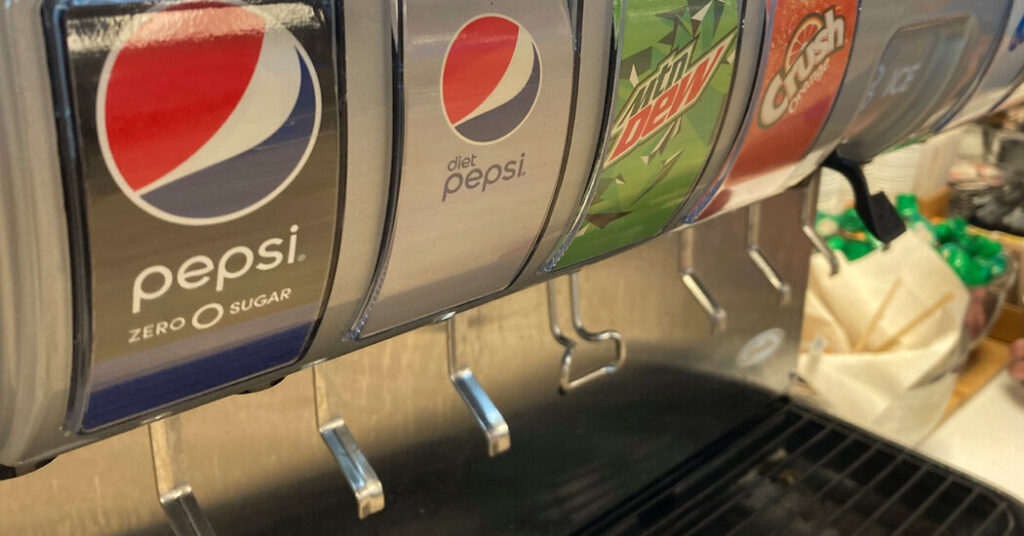
PepsiCo said on Thursday that the war in Iran, which has driven energy costs up sharply in the past month, has so far not dampened spending on its snacks and beverages.
At the same time, executives warned that inflation could rise as the war continues.
For the first time in two years, sales volumes in the company’s food business, which includes its Frito-Lay unit, rose, showing resilient demand among consumers despite the squeeze of higher gas prices and other energy-linked costs.
Earlier this year, PepsiCo announced plans to cut prices on some popular snacks, including Lay’s potato chips and Doritos, to lure consumers who had cut back on purchases. In the first quarter, revenue at the company rose 8.5 percent, to $19.4 billion.
When asked on an earnings call about the effects of the war, executives said that PepsiCo had not seen a significant impact on its costs, noting that it had various six- and 12-month hedges in place for some key expenses.
On top of that, the company said that its vast supply chain, which has built in significant redundancies in recent years to ensure a steady flow of ingredients and other goods, had played a role in keeping costs down.
“In some markets, we’re seeing a benefit because we have a better supply chain than some of our competitors, especially in the food business,” Ramon Laguarta, PepsiCo’s chief executive, told analysts on the call.
But company leaders also warned that they expected inflationary pressures to build.
“Our assumption is that inflation will come,” Steve Schmitt, PepsiCo’s chief financial officer, said on the call. “The order of magnitude is something we’re still working through and I think a lot of that is still to be determined.”
Julie Creswell is a business reporter covering the food industry for The Times, writing about all aspects of food, including farming, food inflation, supply-chain disruptions and climate change.
The post Consumers Are Still Spending on Snacks Despite War’s Effects, PepsiCo Says appeared first on New York Times.