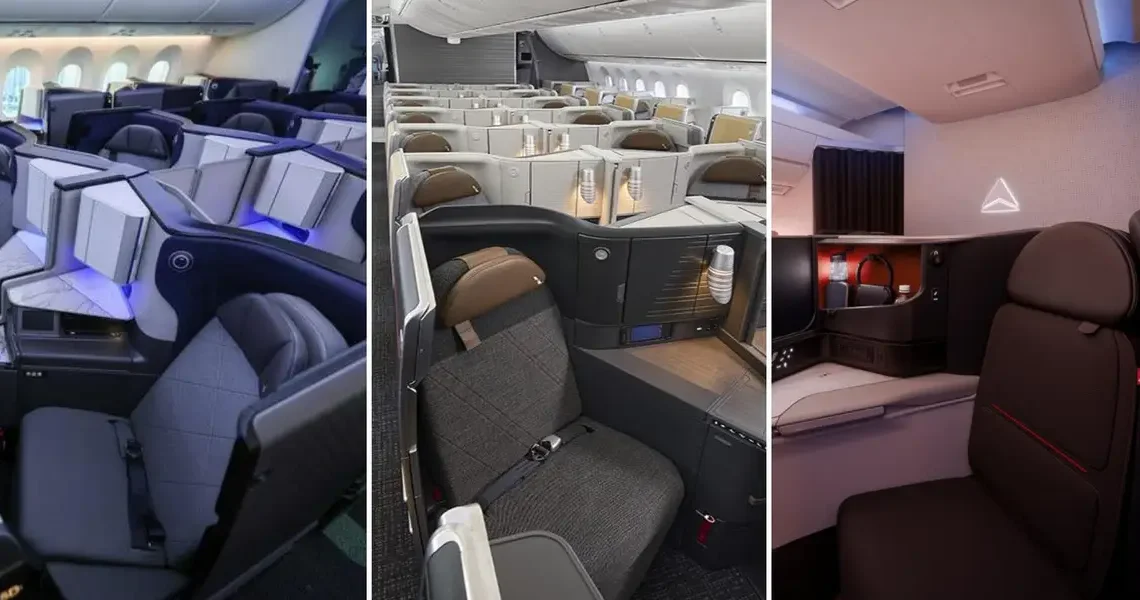
Business class just lost one of its biggest differentiators.
When United Airlines unveiled its newest Polaris business-class cabin in March, it cemented the industry-wide shift to sliding-door suites. What was once a standout feature is now table stakes for US carriers as they compete for premium revenue.
Delta Air Lines became the first of the Big 3 to adopt doors in business class in 2017; it one-upped itself on Monday with a new, even more high-end version, set to deploy on its Airbus A350-1000 planes in 2027.
Eight years later, in June 2025, American joined the trend with its new door-equipped Boeing 787 Flagship Suite. United’s latest Polaris seat will launch this month on 787s, though the doors are still awaiting certification and will remain locked open for now.
Other airlines are reinforcing this focus on privacy: JetBlue Airways and Alaska Airlines — the only other US airlines flying long-haul international routes — also fly suite-style business class.
Still, airlines are finding new ways to stand out and claim a slice of the booming premium pie — from self-serve snack bars and two-person suites to build-your-own ice cream carts.
The Big 3’s cozy new suites are mostly used for long-haul international flights. Looking at fares for mid-August, the suites at each airline cost roughly $5,800 roundtrip between the West Coast and London.
That price is United’s cheapest option under its new unbundled business class model. Seat assignments, lounge access, and other perks would cost about $300 more to add. Delta’s newest long-haul suite isn’t yet on sale; it’s unclear whether it’ll cost more.
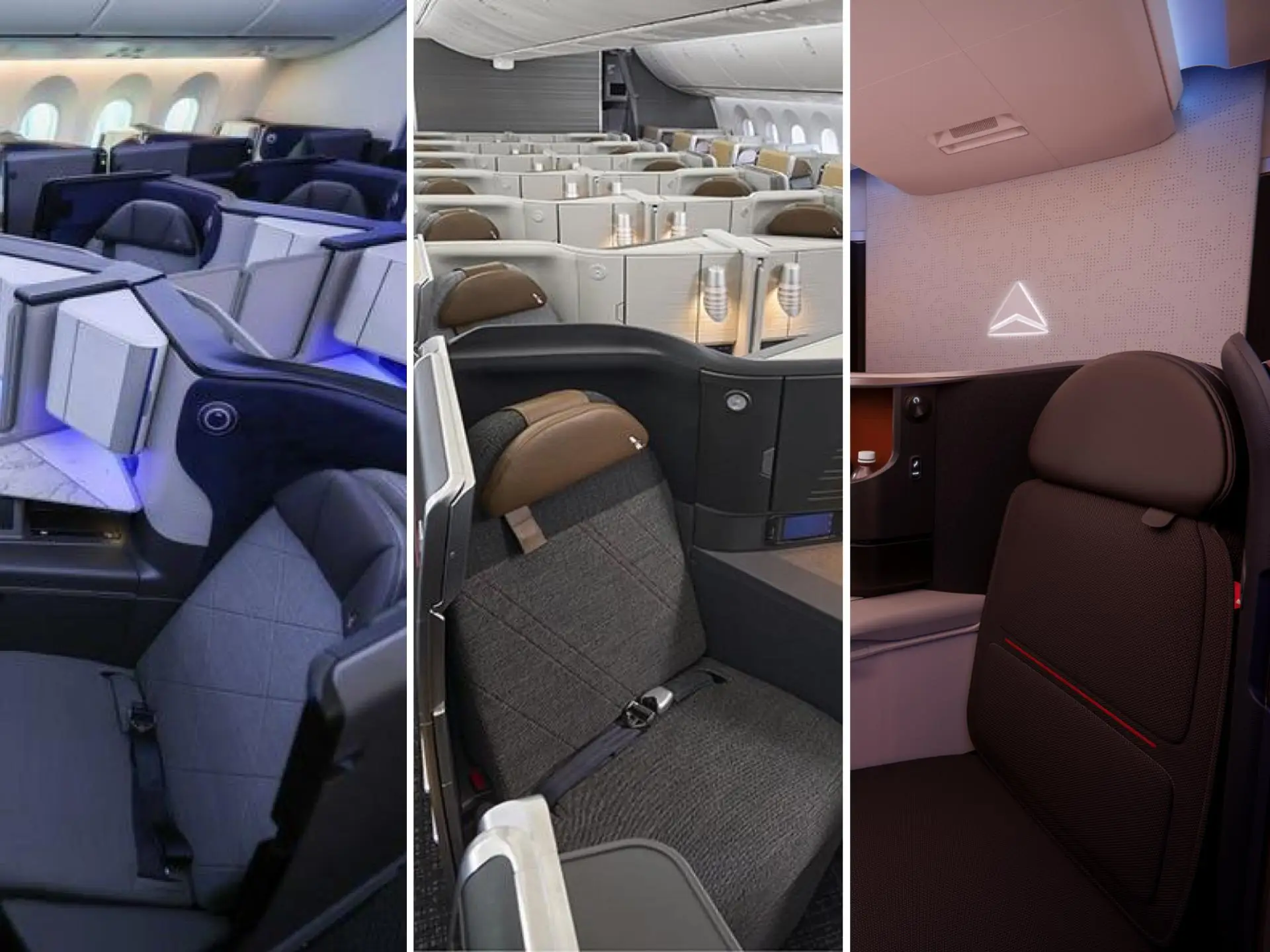
Here’s how American, Delta, and United’s door-equipped business-class cabins compare.
Doors in business class are now standard on new airplanes.
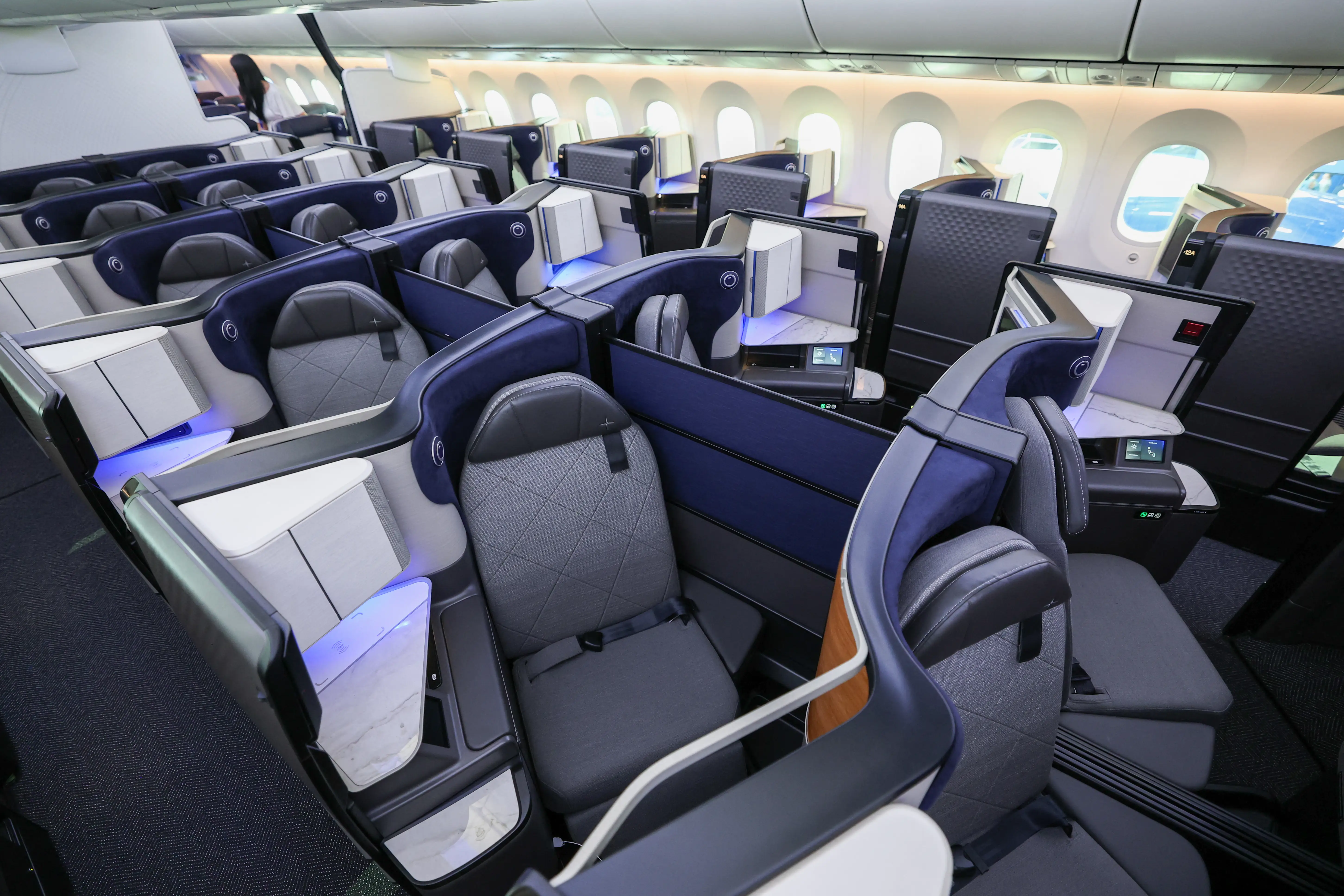
Virtually every new widebody aircraft delivered to the Big 3 will have sliding doors.
Delta’s current business class uses the Vantage XL platform from Northern Ireland’s Thompson Aero Seating; its future Airbus A350-1000 Delta One Suite will use the next-generation VantageNOVA with slimmer doors for more space.
United and American’s new 787s are being delivered with doors-equipped business class from Elevate Aircraft Seating (formerly Adient Aerospace).
Delta has more suite-style seats flying than any US airline.
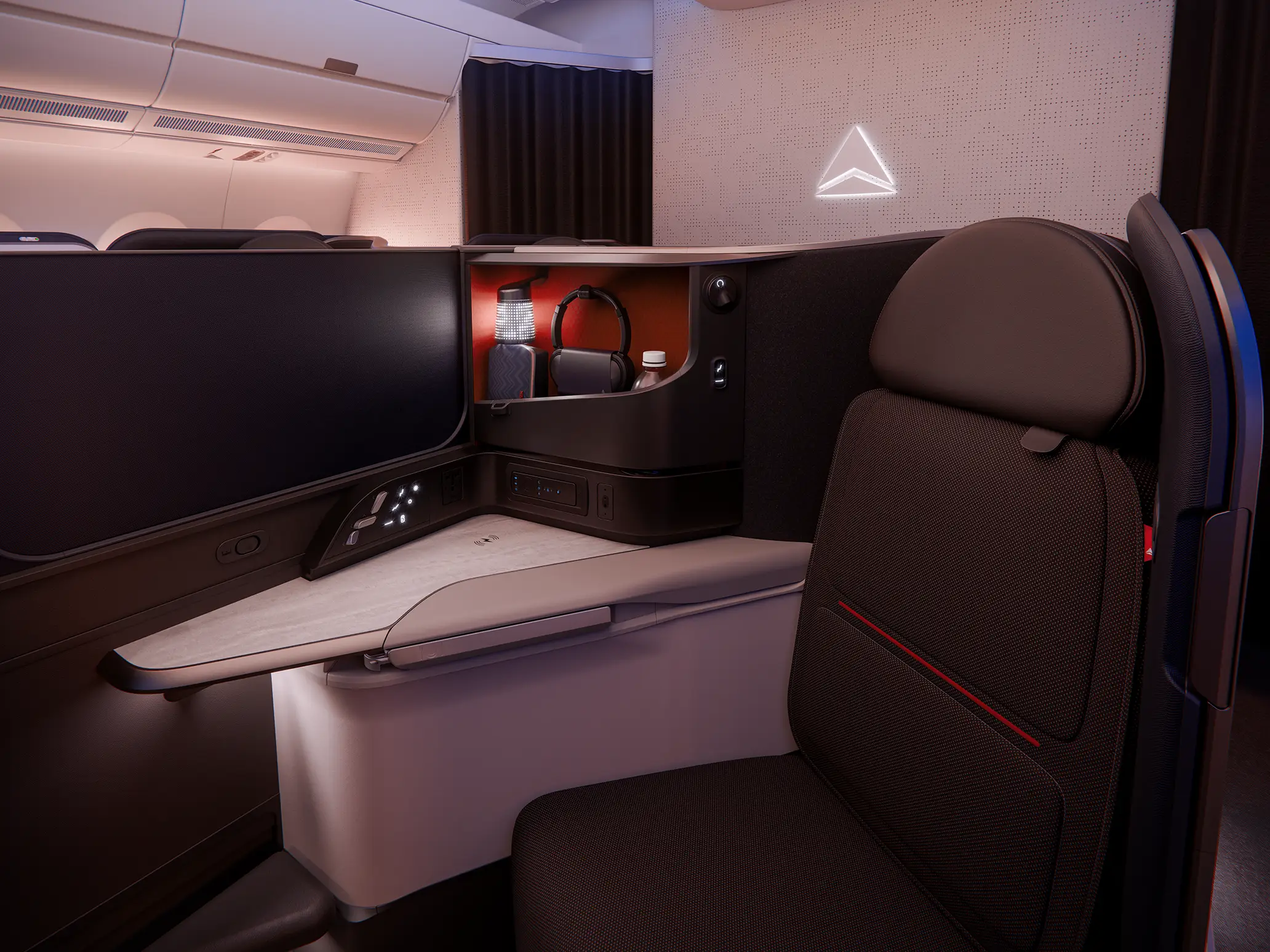
Delta’s door-equipped business class was years ahead of its rivals, and today it has hundreds of suites flying across its A350-900 and A330-900neo fleets. Its A330-200 and -300s are also getting a retrofit. Delta said it expects 90% of its business seats will have doors by 2030.
American has more than half a dozen premium 787s flying; it has 30 total on order, all to be delivered with the new Flagship Suite.
United’s first long-haul door-equipped Polaris flight will be to Singapore on April 22; it’s unclear when the doors can close. It has more than 100 Dreamliners on order.
The physical suites are more similar than they are different.
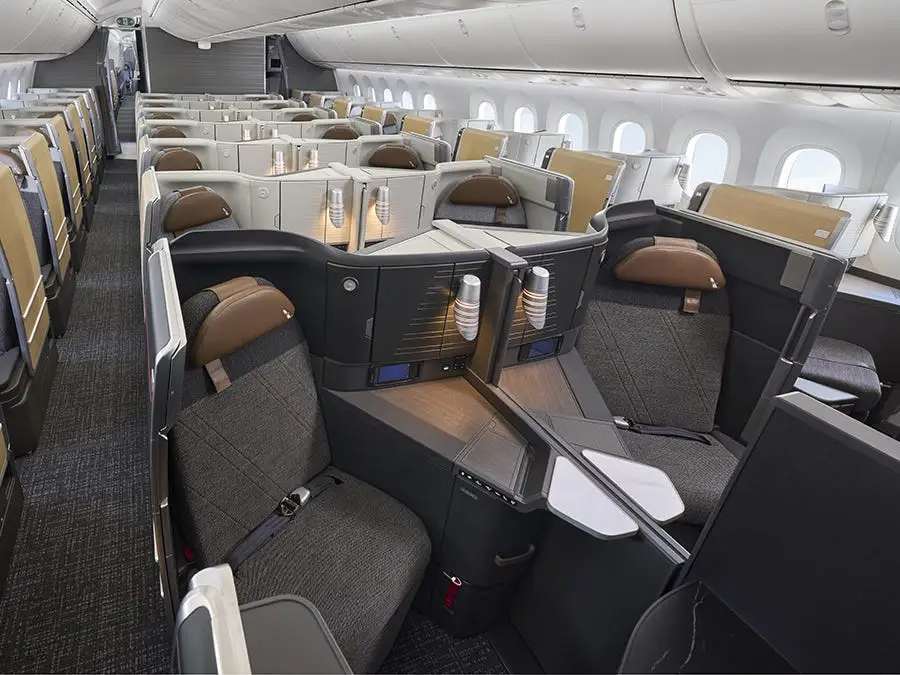
Pod-style suites are now the baseline in business class. The beds stretch about six and a half feet, though Delta said its new A350-1000 suite’s bed will be longer.
All of the Big 3 suite seats also angle in, giving flyers a better view out the window. All cabins also feature standard cubbies, power ports, wireless charging, and large Bluetooth-capable televisions.
Delta will have the largest seatback screen; United has Starlink.
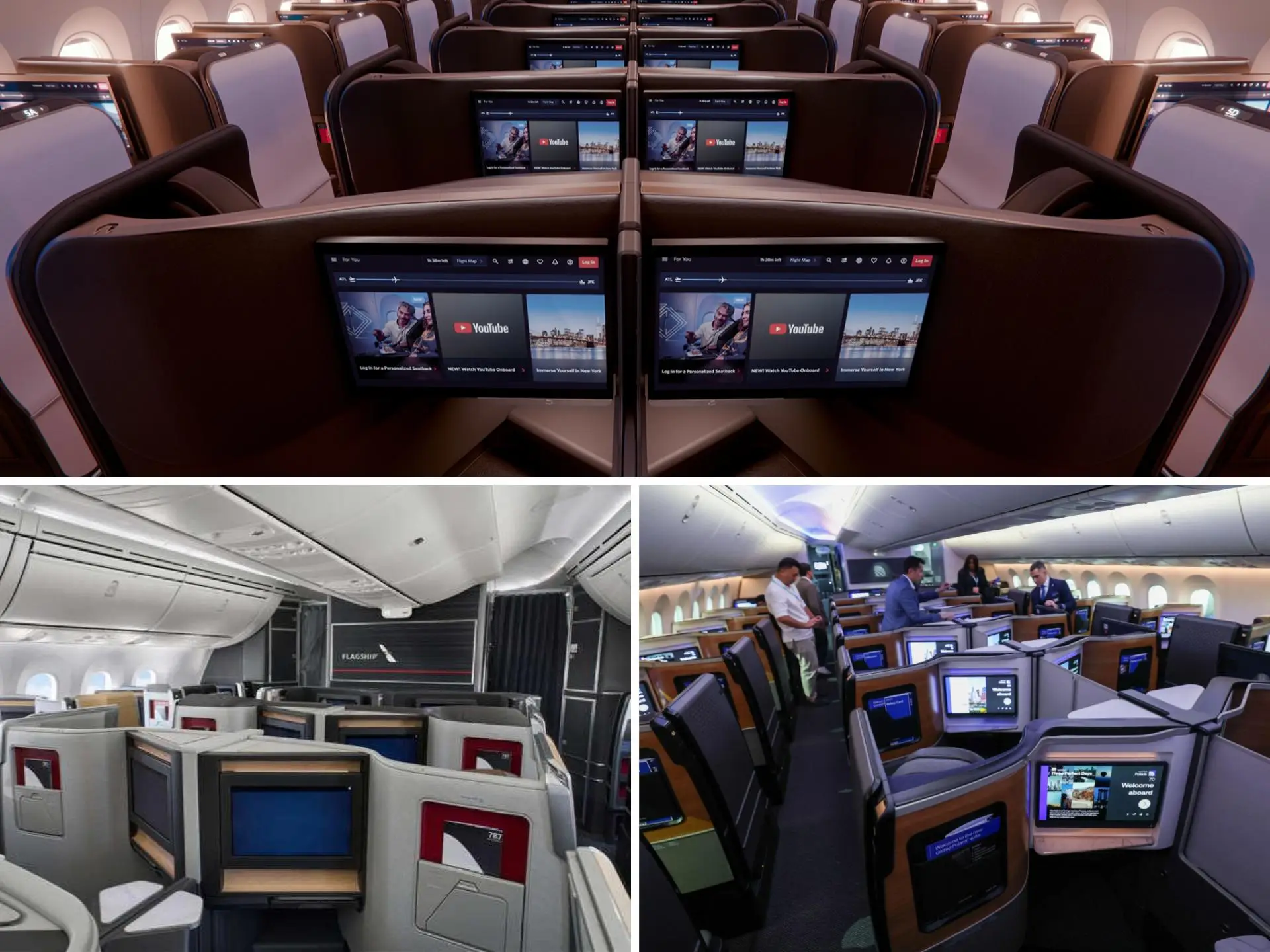
Delta’s next-generation suite will have 24-inch screens, up from the about 18 inches in current suites. American’s screens are about 17 inches; United’s new Polaris screen will be about 19 inches.
United also plans to offer hyperfast Starlink on its future 787s, while American and Delta still use satellite-based providers that support streaming on most aircraft. All three have made WiFi free for loyalty members, regardless of cabin.
American and United have ‘business-class-plus’ seats.
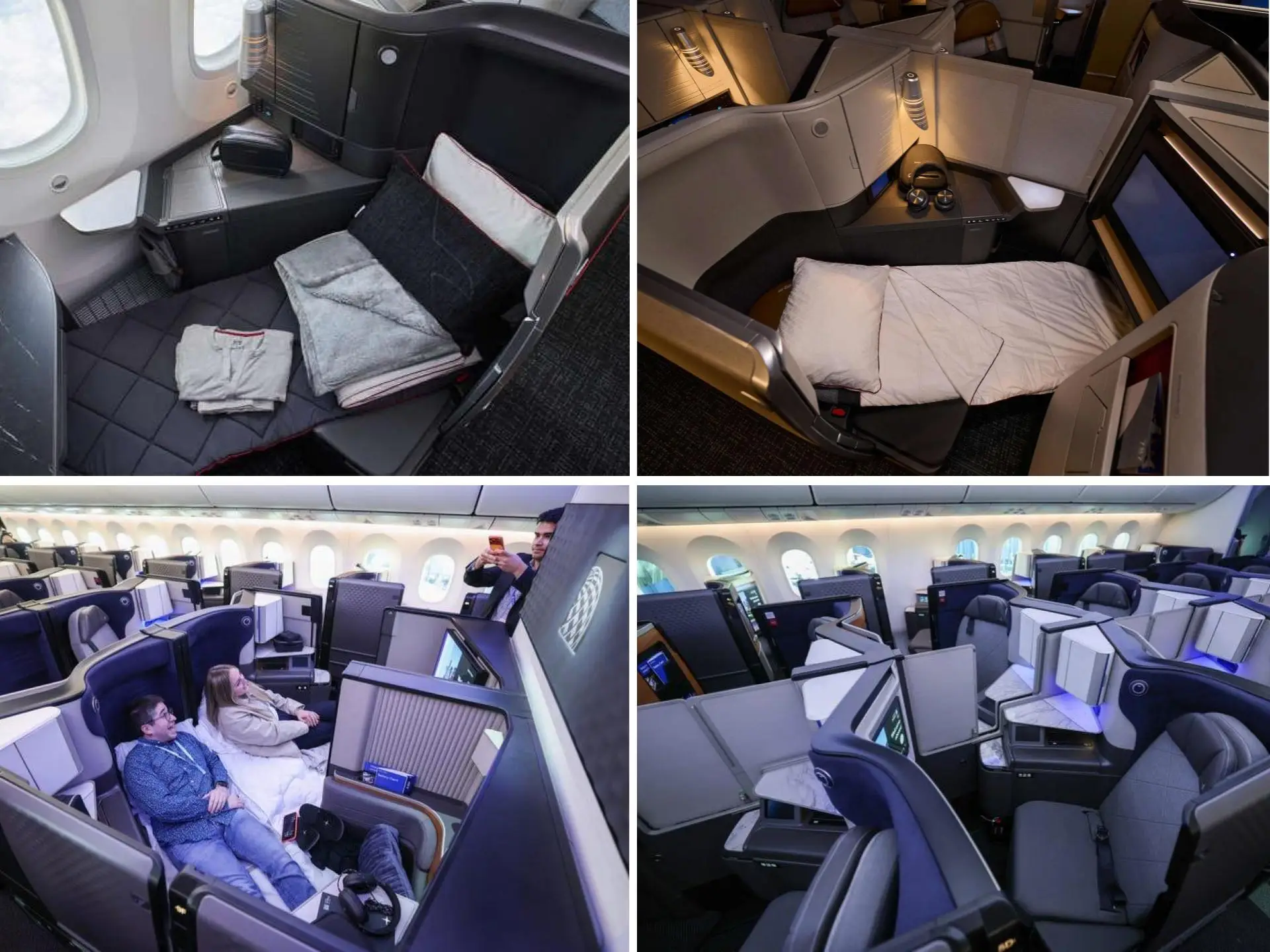
These are oversized seats that use the bulkhead to increase the living space. American’s eight “Preferred” seats are up to 42% bigger, has a larger footwell, and comes with pajamas. It doesn’t currently carry an additional fee.
United’s “Polaris Studio” is 25% larger than the standard seat and also features an ottoman to let two people meet, dine, or socialize in-flight. It will also have what United says is the largest seatback television of any US carrier at 27 inches. The fee is $499 each way.
United and Delta will have special business-class-only treats.
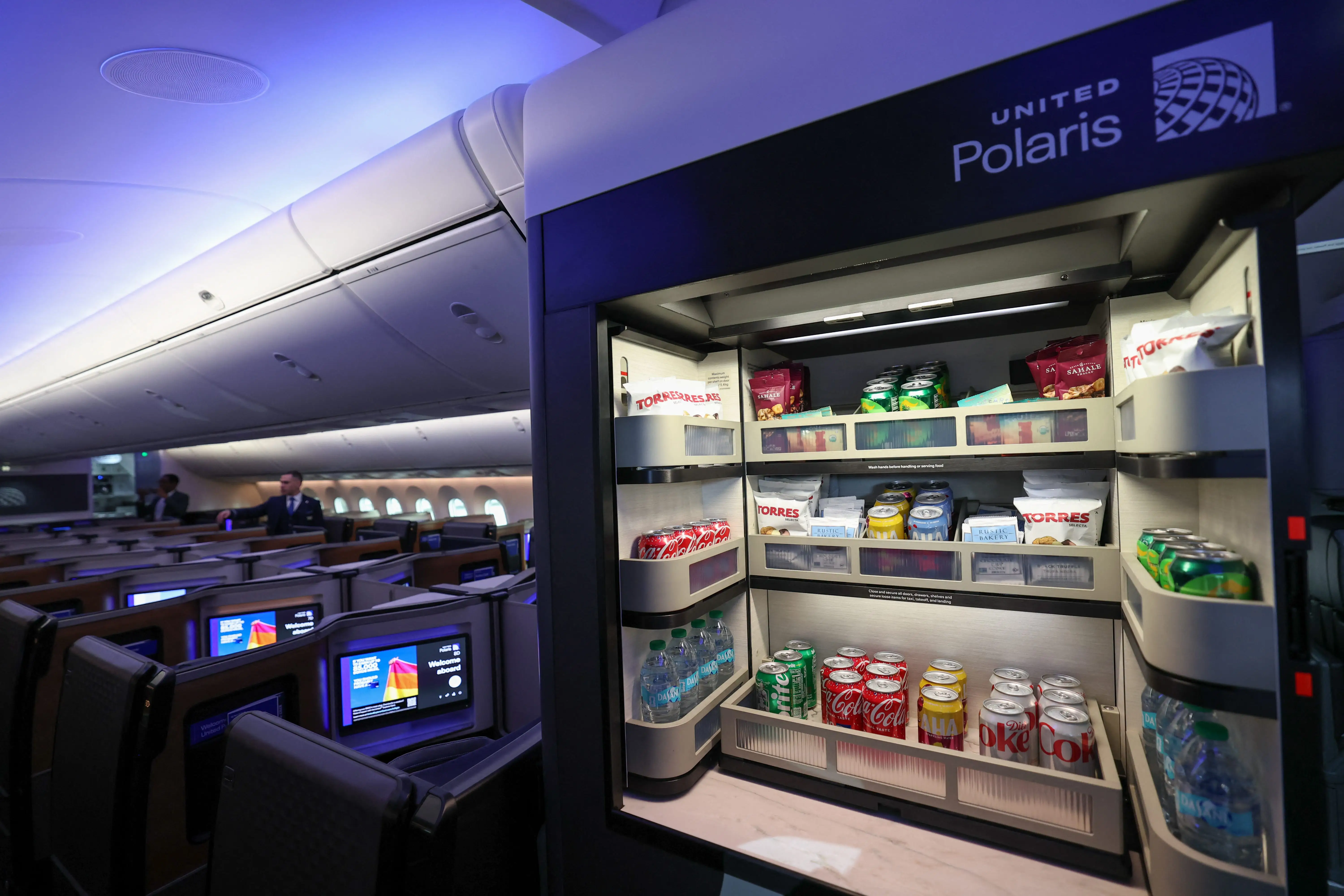
United and Delta are both introducing onboard self-service refreshment areas with snacks and drinks in their long-haul business-class cabins.
They also both offer a build-your-own sundae cart exclusive to business-class flyers.
Some Big 3 airplanes will still fly business class seats without doors.
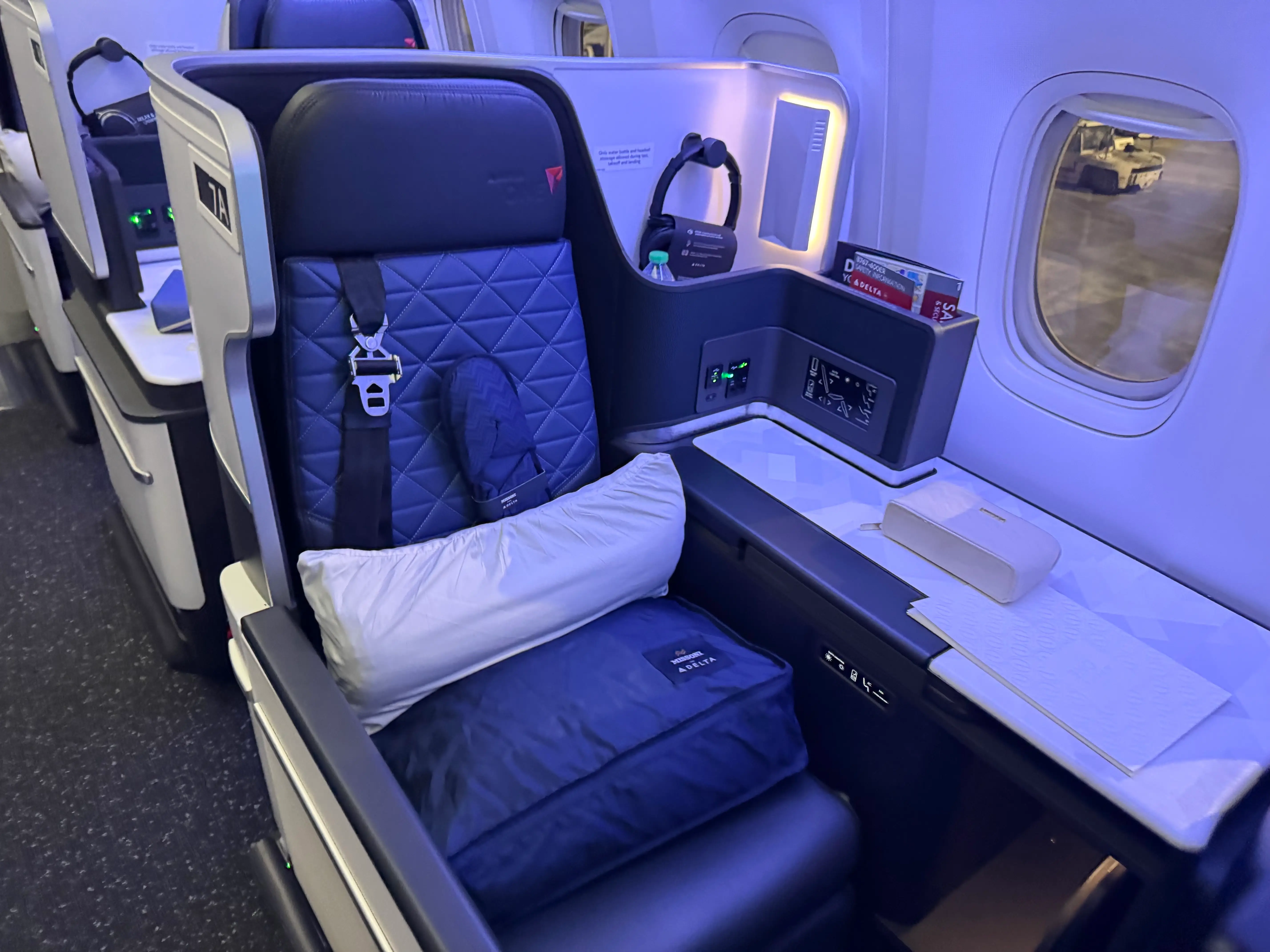
While standardizing business class is the goal, Big 3 fleets will remain fragmented for years, as retrofitting every aircraft is not always economical. This means the premium experience will still turn on the aircraft type.
Delta’s Boeing 767s will remain without doors as the fleet is gradually retired later this decade. American’s older 787s will not get the Flagship Suite, but it plans to retrofit it onto its 777s.
United is limiting its refreshed Polaris cabins to new 787 deliveries, leaving existing Dreamliners and 777s with older business-class seats. Passengers who prioritize privacy should check the aircraft type when booking to confirm whether a door-equipped suite is available.
Read the original article on Business Insider
The post American, Delta, and United are in a business-class arms race for premium flyers. See how their newest suites compare. appeared first on Business Insider.