After marathon talks over the weekend failed to secure an agreement, officials are reportedly looking at a second round of negotiations to end the U.S. and Israeli war against Iran.
President Donald Trump and his Administration are open to resuming in-person talks as soon as he believes Iran is prepared to meet his demands, sources told CNN. That could mean a second meeting with Iranian officials before the two-week cease-fire expires on April 21 or potentially extending the cease-fire, officials said.
Read More: Why the Iran-U.S. Peace Talks Failed
Pakistan has proposed hosting a second in-person meeting in Islamabad, Pakistani officials told the Associated Press. Turkey, which was among several intermediaries involved in weeks of negotiations, is also stepping in to try and resolve the differences between the U.S. and Iran, a regional source told CNN.
The Trump Administration has also ramped up pressure on Tehran to accept their demands by imposing a naval blockade on vessels going to or from Iranian ports through the Strait of Hormuz. The narrow waterway through which a fifth of the world’s oil trade passes has been a key point of leverage for Iran, which militarized the Strait at the start of the war and has allowed only a small number of vessels to transit through.
Read More: Why Iran Thinks It’s Winning
“They’d like to make a deal very badly,” Trump told reporters at the White House on Monday afternoon. The President said Iran had called the U.S. that morning.
“After 21 hours of negotiations, the Iranians chose the pursuit of a nuclear weapon over peace. The President has already ordered a naval blockade on the Strait of Hormuz, ending the Iranian extortion, and wisely keeps all additional options on the table,” White House spokesperson Olivia Wales told TIME on Monday in response to reports that Trump is considering limited military strikes on Iran in addition to the blockade.
“Anyone who thinks that they know what President Trump will do next is purely speculating,” Wales added.
TIME has reached out to the White House for further comment.
But the naval blockade has also raised tensions around possible renewed fighting between the U.S. and Iran. Iran’s Islamic Revolutionary Guard Corps (IRGC) said that it would consider the encroachment of U.S. military vessels upon the Strait of Hormuz to be a cease-fire violation. In a Monday post on Truth Social, Trump warned that if any Iranian ships “come anywhere close to our BLOCKADE, they will be immediately ELIMINATED, using the same system of kill that we use against the drug dealers on boats at Sea”—an apparent reference to the Administration’s deadly strikes on alleged drug boats in the eastern Pacific Ocean.
Iran also previously said it wants to maintain control of the Strait even after the end of the war, potentially collecting toll fees that would serve as war reparations. Reuters reported early Tuesday, citing data from LSEG, MarineTraffic and Kpler, that a U.S.-sanctioned Chinese tanker passed through the Strait in spite of the naval blockade.
The continued disruptions in the Strait of Hormuz have led to surging oil and gas prices around the world, as well as supply bottlenecks affecting fertilizer and other goods, which the U.N.’s food and agriculture agency warned on Monday could lead to global food catastrophe.
Meanwhile, the U.K. has said it will not join Trump’s naval blockade. Earlier in the war, to Trump’s chagrin, NATO allies rebuffed the U.S. President’s call for them to provide military support to secure the Strait.
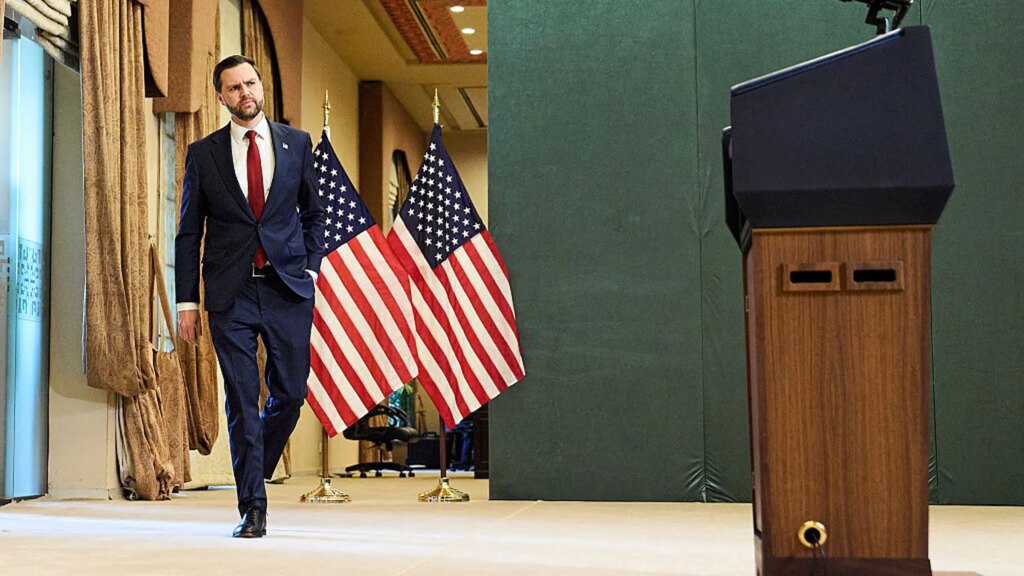
A fully reopened Strait of Hormuz is a red line for the U.S., Vice President J.D. Vance, who led negotiations in Islamabad over the weekend, told Fox News on Monday.
Iran’s Foreign Minister Abbas Araghchi said in a post on X that the two sides were “inches away” from an agreement when Iran “encountered maximalism, shifting goalposts, and blockade” from the U.S.
Israel’s escalating attacks on Lebanon, which have killed more than 2,000 people since March 2, have also threatened the possibility of a more lasting truce between the U.S. and Iran. Iran had earlier said that any cease-fire must extend to Lebanon and beyond, but Israel and the U.S. disagreed. Lebanese and Israeli ambassadors are set to meet in Washington, D.C., on Tuesday to discuss “a pause in military activity if not a cease-fire,” Lebanon’s Culture Minister Ghassan Salame told Al Jazeera, although Hezbollah Chief Naim Qassem reportedly urged Lebanon to cancel the meeting, calling the talks pointless.
Nuclear disagreement remains an obstacle
Among U.S. demands is that Iran abandon its nuclear program, which had been a sticking point in past talks towards a nuclear agreement, including negotiations that were interrupted by Israeli strikes on Iran last June and renewed talks in the days immediately before the U.S. and Israel attacked Iran on Feb. 28. Iranian officials previously said mistrust in the U.S. has been high ever since Trump withdrew the U.S. from the Barack Obama-negotiated Iran nuclear deal in 2018.
Trump officials proposed a 20-year suspension in Iranian uranium enrichment on Saturday, which Iranian negotiators countered with a proposal for a five-year suspension that the U.S. rejected, according to the New York Times. American negotiators also reportedly want Iran to dismantle its major nuclear enrichment facilities and hand over more than 400 kilograms of highly enriched uranium that U.S. officials have said was buried underground by the U.S. bombing campaign last year. The U.S. previously proposed that Iran stop enriching any uranium for 10 years in exchange for the U.S. paying for its nuclear fuel, which Iran rejected, U.S. envoy Steve Witkoff told Fox News in early March.
Russia has also renewed its offer to take Iran’s enriched uranium stockpile as part of a potential agreement, according to Russian state-owned RIA Novosti news agency.
Trump officials are not keen to resume the war, sources told CNN, especially as it has led to rising prices for Americans and is broadly unpopular with the public.
Vance told Fox News that Iranian negotiators “moved in our direction, … but they didn’t move far enough.” He said the Iranian negotiators had to return to Tehran from Islamabad to get approval for any deal with the U.S.
“There really is, I think, a grand deal to be had here, but it’s up to the Iranians, I think, to take the next step,” Vance said.
The post Officials Reportedly Considering Second Round of U.S.-Iran Talks As Sticking Points Remain appeared first on TIME.