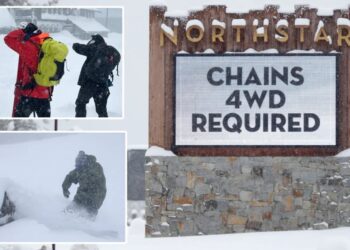
The avalanche in the California mountains on Tuesday that led to the rescue of six skiers and the deaths of at least eight others is one of the deadliest in recent North American history. One person remained unaccounted for on Wednesday.
Here’s more information on other deadly avalanches.
June 21, 1981: Washington State
Eleven members of a 29-person mountain climbing group scaling Mount Rainier, Washington State’s highest peak, were killed when ice falling from a glacier set off an avalanche, according to an account of the incident by the American Alpine Club. Those not in the path of the falling ice survived uninjured, but weather prevented rescue crews from reaching the scene immediately, according to a New York Times account of the accident.
March 12, 1991: Bugaboos Creek, British Columbia
Groups of people using helicopters to access remote areas for skiing were struck and buried by an avalanche in the eastern part of the mountainous Canadian province, according to Avalanche Canada. Members of the groups were swept into the flow of snow, and several people were completely buried. Nine people died.
Jan. 1, 1999: Kangiqsualujjuaq, Quebec
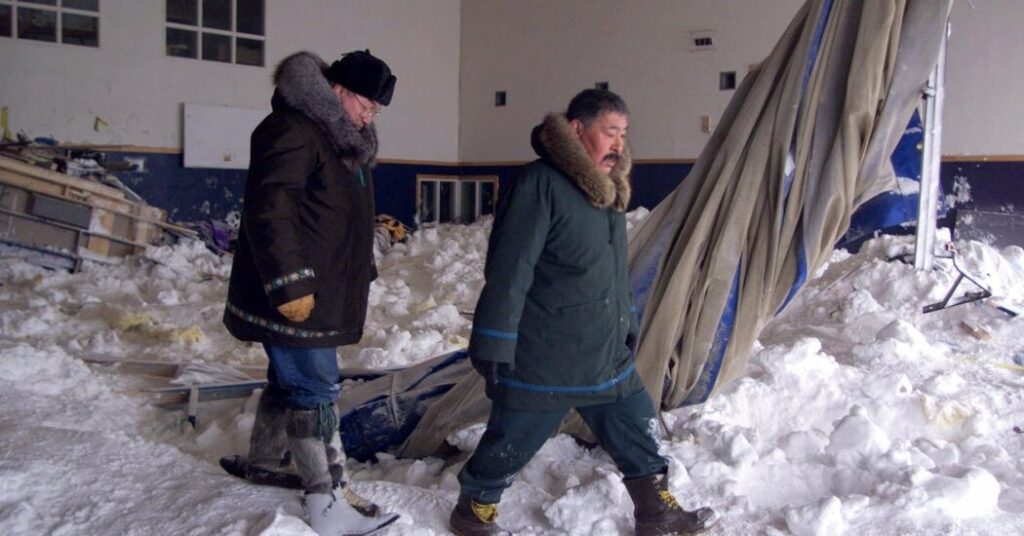
New Year’s revelers were gathered in a school gymnasium in an Inuit community in Northern Quebec around 1:30 a.m. when they heard the roar of an approaching avalanche, according to a report by the public safety organization Avalanche Canada. Nine people were killed, including eight children, and 25 people were injured. The avalanche buried people outside the building and “smashed large holes” through its wooden frame, the report said.
Dec. 28, 2008: Harvey Pass, British Columbia
An avalanche fell from cliffs in a remote area where a group of seven people were riding snowmobiles. A second cascade buried another group working to rescue members of the first. Eight people were killed, according to Avalanche Canada.
March 31, 1982: Alpine Meadows Ski Area, California
Seven people were killed at a ski resort in the Sierra Nevada when avalanches covered a parking lot and crushed buildings. But a ski-lift operator, 22-year-old Anna Conrad, was discovered alive by rescue dogs after surviving for five days in a building buried by the avalanche. “I tried to sleep as much as possible, and forget about where I was,” she later told a local television station from her hospital bed. “You just keep pushing, knowing that eventually, sometime, you’re going to make it.”
March 23, 1987: Thunder River Drainage, British Columbia
Nine backcountry skiers and their guide were deposited by a helicopter above the treeline in the Cariboo Mountains, according to Avalanche Canada. Seven people were carried down a slope by an avalanche and killed.
Jan. 20, 2003: Tumbledown Mountain, British Columbia
Members of a backcountry ski group ascending a slope set off an avalanche that buried 13 people, killing seven, according to Avalanche Canada. One man was resuscitated and survived after having been buried for 30 minutes.
Feb. 1, 2003: Connaught Creek, British Columbia
Less than two weeks after the Tumbledown avalanche, a group of high school students skiing in Glacier National Park as part of an outdoor education program were buried in an avalanche that swept into them just before noon, according to Avalanche Canada. Within five minutes, a teacher who had himself been buried was able to call for help on a satellite phone he had carried in his backpack. Seven people were killed.
Camille Baker is a Times reporter covering New York City and its surrounding areas.
The post The Worst Avalanches in Recent North American History appeared first on New York Times.