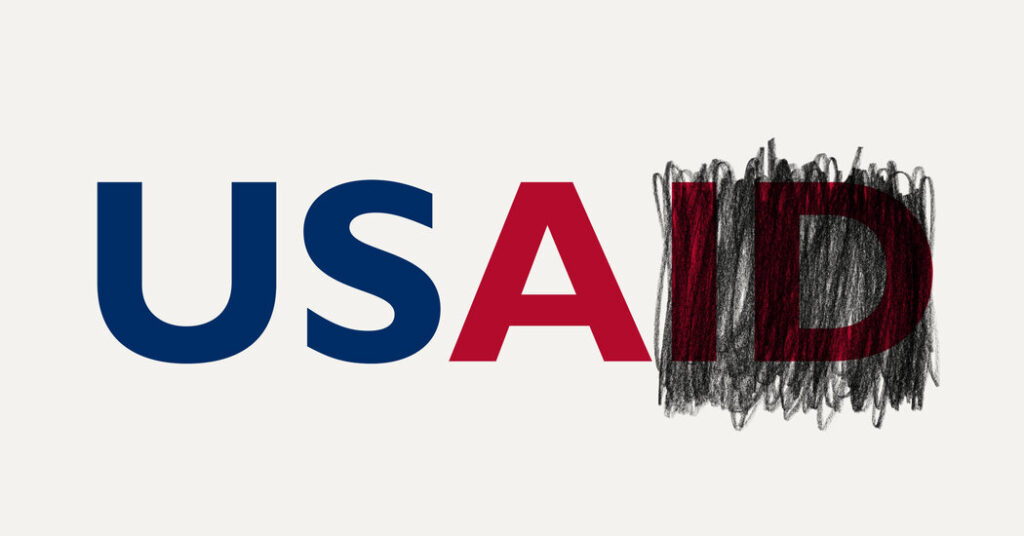
Last February, Elon Musk boasted of “feeding USAID into the woodchipper” as President Trump kicked off his second term with an unanticipated assault on the agency. A year later, the brutal fallout is coming into focus. Humanitarian aid last year reached 25 million fewer people than in 2024 despite rising global need. More than 2,000 health clinics have closed in crisis zones around the world. Global food aid funding dropped by 40 percent from 2024 to 2025. Millions of people have lost access to critical H.I.V. treatment and testing.
This damage is severe on its own merits. But it also previewed something larger about America’s engagement with the world under an “America first” foreign policy. An administration that began its tenure by abandoning aid recipients has proceeded to alienate treaty allies over Greenland and launch legally dubious military strikes. In retrospect, U.S.A.I.D.’s early demise looks like a canary in the geopolitical coal mine, heralding a dark shift in America’s values.
The brutality of U.S.A.I.D.’s closure and the disregard for the human toll betrayed a vision of a crueler, meaner, more insular world — one in which America aspires not to any pretense of moral leadership but simply to naked power, dominance and extractive self-interest. U.S.A.I.D., after all, was not only a humanitarian endeavor; it was also a symbol of who America seeks to be in the world, and the sort of world America seeks to build. Mr. Trump’s new order, inaugurated with his assault on U.S.A.I.D., is now corroding America’s influence and standing and leaving global leaders with little choice but to treat the United States as an erratic adversary rather than a stable ally.
The impact of U.S.A.I.D.’s demise also provides a preview of the shattering toll of this approach to global affairs on other countries and communities, particularly those living in humanitarian crises. After Secretary of State Marco Rubio canceled more than 80 percent of U.S. relief and development programs, total U.S. spending on lifesaving humanitarian relief dropped from over $14 billion in 2024 to just $3.7 billion in 2025. Withholding $10 billion for global relief amounts to a rounding error in federal budget terms (not to mention a pittance relative to the estimated $300 billion increase in Mr. Musk’s net worth last year). But those funds are critical to sustaining people’s lives in crisis zones, from Sudan to Bangladesh to Gaza to refugee camps in Kenya and Chad.
Secretary Rubio has tried to argue that no one has died from these cuts, and his department has claimed that the United States can achieve more good with less funding. Those fanciful claims have been debunked thoroughly. Numerous cases of such deaths have been documented: refugee children dying of starvation in Kenya after food aid cuts, other people dying of treatable diseases after health programs closed. And disruptions to H.I.V. programming have resulted in children being born needlessly with H.I.V.
Beyond the avoidable deaths that are already visible, something ominous is happening below the surface in crisis zones. Households are being forced to adopt devastating survival strategies akin to the patterns often observed before a large-scale famine. People first cope by resorting to increasingly damaging tactics: selling off their few remaining assets, skipping meals, going deep into debt, selling sex, consuming next year’s seed stocks, and other practices that leave them more and more vulnerable. Over time, as these survival strategies are exhausted, deaths begin to rise.
Evidence from multiple crises around the world points to such a trend. In Somalia, Doctors Without Borders reports that admissions for children with severe malnutrition have risen by 73 percent since 2024. At one hospital, the rate of malnutrition deaths among children has nearly doubled. Among refugees in Bangladesh, rates of child marriage are rising as families cope with the burden of dwindling aid. In Kenya, ration cuts for refugees have prompted mass protests in camps and have been directly linked to starvation deaths. Vulnerable refugee families have struggled to pay for food because local merchants ended informal credit after the aid cuts were announced, forcing families to sell off assets. In Afghanistan, services for women and girls are collapsing, and some women are reducing the number of meals they eat to prioritize food for the males in their families. In South Sudan, deaths from cholera are at a record high after the closure of health and sanitation programs.
Meanwhile, Mr. Rubio’s State Department has found ample funding for politicized boondoggles. Under pressure from the Israeli government, the State Department waived nine federal procurement requirements and circumvented credible humanitarian organizations to give $30 million to the Gaza Humanitarian Foundation, an entity observers say contributed to the deaths of hundreds of Palestinians by sending aid seekers on dangerous routes and found to be recruiting personnel from an Islamophobic American motorcycle gang before shutting down amid a wave of global criticism.
The State Department also diverted $7.5 million of funding intended for refugee aid to the notoriously corrupt government of Equatorial Guinea in order to secure its agreement to accept third-country nationals deported from the United States. Even some more benign aid policy changes — like shifting some health aid directly to government ministries — have taken place under a cloud of U.S. demands for access to mineral resources and pressure to accept noncitizen deportees.
This kind of politicized, wasteful use of aid dollars is far removed from the vision President John F. Kennedy articulated when he launched U.S.A.I.D. in 1961 with the explicit dual purpose of showcasing American values and advancing American national security. Through its six decades of work, U.S.A.I.D. was grounded in a belief that those two American aims were aligned, even overlapping. Shifting aid leadership from U.S.A.I.D. into the State Department has led to aid policy that seeks to extract concessions, not build partnerships.
For 80 years, the legacy of World War II pushed the world toward greater collaboration. That larger philosophy unlocked the greatest period of security and economic growth in world history. U.S.A.I.D. was founded in recognition that moral U.S. leadership in the world is a positive-sum endeavor: Doing good in the world will also do well by the American people.
Ultimately, American foreign assistance policy is a reflection of who our country wants to be in the world, and of the kind of world we seek to build. Ten years from now, a world shaped by Mr. Trump’s aid policies will be meaner and more opaque — one where hunger, preventable diseases and desperation spread. It will be a world in which America stands isolated and friendless.
Jeremy Konyndyk is the president of Refugees International and was a senior U.S.A.I.D. official in the Biden and Obama administrations.
The Times is committed to publishing a diversity of letters to the editor. We’d like to hear what you think about this or any of our articles. Here are some tips. And here’s our email: [email protected].
Follow the New York Times Opinion section on Facebook, Instagram, TikTok, Bluesky, WhatsApp and Threads.
The post The Demise of U.S.A.I.D. Was a Warning appeared first on New York Times.