In the weeks to come, about 1,800 ruby red, white-speckled, pink or “novelty” poinsettias will brighten holiday displays at Smithsonian museums and other locations across Washington.
Each vibrant shrub is the culmination of a doting, months-long, effort overseen by the team at the Smithsonian Gardens Greenhouse Facility in Suitland, Maryland.
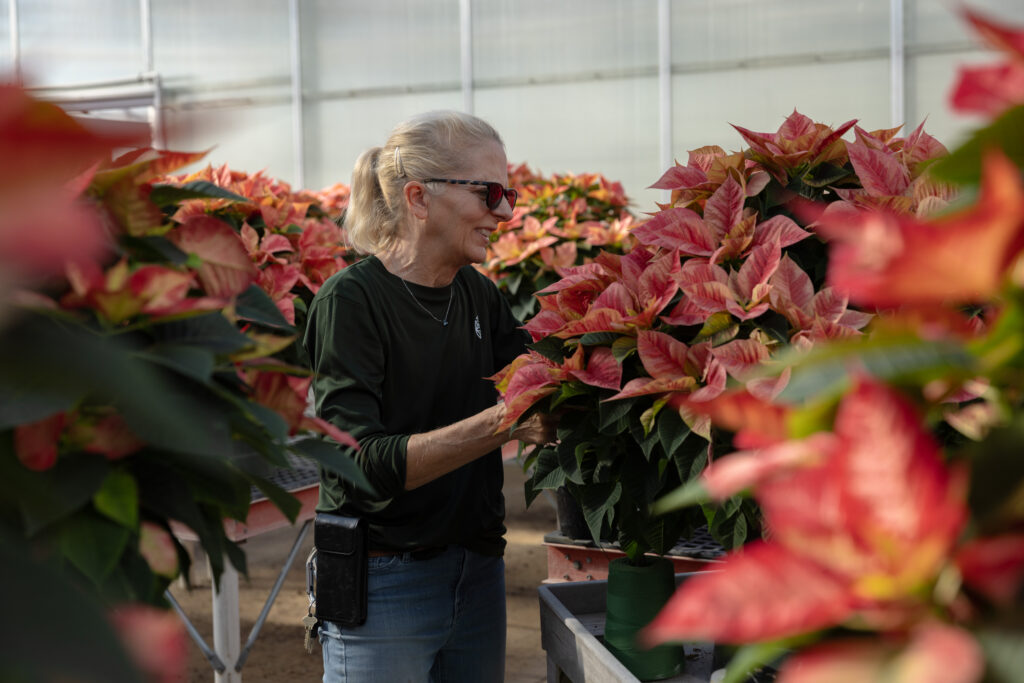
This is where horticulturist Jill Gonzalez has spent nearly half of her 40-year career, embracing a role that is largely unknown to the public but is a significant contributor to D.C.’s festive joy: She is Smithsonian Gardens’ poinsettia whisperer.
“It takes a lot to get them to do what they need to do. It’s a six-month crop, one of our longest crops here,” Gonzalez said. “But it’s the one that gives me the most instant gratification when I start to see them turn in the fall.”
And now, she said, comes the joy of seeing them “in their full glory, coming out of the greenhouse, and going into the museums for everybody to see.”
Gonzalez inherited her green thumb from her grandmother and great-grandmother, adept gardeners with a flair for posies, she said. As a young girl in central Pennsylvania, Gonzalez dedicated summertime hours to growing flowers in her yard.
Horticulture, Gonzalez said, has been her life’s devotion. Her first big job in retail was growing Easter lilies, and she later sold annuals and perennials.
But if she had to pick her highlight, Gonzalez said, “I think it’s always been the poinsettias.”
Gonzalez, who leads poinsettia production with support from fellow horticulturist Joe Curley, said she begins holiday preparations around March and April, after her colleagues share their poinsettia dreams: How many are needed for the museums’ holiday displays? What size? What colors?
The Gardens team has some sway over which poinsettias adorn the National Portrait Gallery’s Robert and Arlene Kogod Courtyard, where Gonzalez said they tend to supply nontraditional “novelty” versions. Those might feature splotches, creamy orange shades or a lime-like hue called “green envy.”
In early May, she places orders for poinsettia cuttings that have grown roots, with the first of three shipments arriving in late June or early July.
The Gardens team staggers the times it grows the plants so there are multiple batches, which helps keep the museum displays looking fresh, Gonzalez said. She pinches the plants with her fingers about three weeks into planting, which helps them begin to branch.
Gonzalez said the poinsettias do a lot of their initial growing inside the greenhouses during the summertime, which can be a complicated endeavor because the plants are sensitive to heat.
“We’re babying them through the summer with mist and shade cloth,” Gonzalez said. “So it’s a lot of observation going on just to get them through the summer.”
Around early to mid-September, Gonzalez begins hand-tying each poinsettia with green string because their brittleness can cause them to fall apart, she said. It also helps them develop into a nice shape.
Some mass growers might use plastic rings for their batches, but Gonzalez said that doesn’t always “fit the plant.” That step is one of her favorite parts. It allows her to observe each individual plant — and the showy, specialized leaves bursting with color — to see if everything is healthy.
“Each poinsettia has my hands on it at some point,” Gonzalez said.
It’s bittersweet when all the poinsettias leave the greenhouses, she said. It makes the space a little less colorful. But in a few months, she will start again.
The post It’s the poinsettia whisperer’s time appeared first on Washington Post.